Circle Key Results 2025
In the heart of Falling Walls Science Summit, visionary leaders from science, business, politics and society come together to debate and address the world’s most pressing challenges. In 2025, we welcomed 774 active speakers, Nobel Prize winners, university leaders and federal ministers from 88 countries to exchange insights and expertise across 134 different sessions.
OUR 2025 TOPICS - ANSWERS TO THE WORLD'S MOST PRESSING CHALLENGES
Key discussions in the framework of our Plenary and Round Table formats brought new answers and insights. The results and calls to action of Falling Walls Science Summit 2025:
SECURITY
7 November | 13:00 - 14:00
Download Key Results (PDF)
This Round Table brought together speakers from basic research, the biotech and pharmaceutical industries and society. It explored the principles of early research, the challenges in translating innovative ideas into clinical development, the impact of recent political and legislative developments around the globe and how these will impact funding and innovation. The goal: to navigate change and accelerate therapeutic breakthroughs for better patient care.
This event was supported by Bayer.
With the following speakers:
- Alice Aiken, Dalhousie University
- Julianne McCall, California Council on Science and Technology (CCST)
- Gustavo Pesquin, AskBio
- Hendrik Streeck, German Bundestag
- Moderator: Krysia Sommers, Bayer
7 November | 13:00 - 14:00
Download Key Results (PDF)
This Round Table brought together speakers from basic research, the biotech and pharmaceutical industries and society. It explored the principles of early research, the challenges in translating innovative ideas into clinical development, the impact of recent political and legislative developments around the globe and how these will impact funding and innovation. The goal: to navigate change and accelerate therapeutic breakthroughs for better patient care.
This event was supported by Bayer.
With the following speakers:
- Alice Aiken, Dalhousie University
- Julianne McCall, California Council on Science and Technology (CCST)
- Gustavo Pesquin, AskBio
- Hendrik Streeck, German Bundestag
- Moderator: Krysia Sommers, Bayer
7 November | 14:00 - 15:00
Download Key Results (PDF)
Germany and Europe have strong defence R&D, but the urgent challenge is accelerating transfer and commercialisation so innovations reach the field quickly; the war in Ukraine makes this imperative—requiring concrete changes to procurement, regulation and commercialisation tools to boost capability and European value creation. Key experts from research, industry and politics focused on the need for a strong European innovation system in defence.
This event was supported by Fraunhofer-Gesellschaft.
With the following speakers:
- Johannes Boie, Helsing
- Marten Tossings, Netherlands Organisation for Applied Scientific Research TNO
- Roderich Kiesewetter, German Bundestag
- Susanne Wiegand
- Moderator: Constantin Häfner, Fraunhofer Institute for Lasertechnology ILT
7 November | 14:00 - 15:00
Download Key Results (PDF)
Germany and Europe have strong defence R&D, but the urgent challenge is accelerating transfer and commercialisation so innovations reach the field quickly; the war in Ukraine makes this imperative—requiring concrete changes to procurement, regulation and commercialisation tools to boost capability and European value creation. Key experts from research, industry and politics focused on the need for a strong European innovation system in defence.
This event was supported by Fraunhofer-Gesellschaft.
With the following speakers:
- Johannes Boie, Helsing
- Marten Tossings, Netherlands Organisation for Applied Scientific Research TNO
- Roderich Kiesewetter, German Bundestag
- Susanne Wiegand
- Moderator: Constantin Häfner, Fraunhofer Institute for Lasertechnology ILT
8 November | 11:00 - 12:00
Download Key Results (PDF)
Experts from Sweden, the UK, Canada and Germany came together to discuss how institutions can safeguard knowledge in international research without undermining academic freedom or trust. This KIWi Policy Talk contrasts national approaches, examines governance and researcher-level challenges, and reflects on practical and strategic ways to navigate grey areas while sustaining open, high-value collaboration and long-term international partnerships.
This event was supported by German Academic Exchange Service (DAAD).
With the following speakers:
- Annette Barkhaus, Science Council
- Jennifer Johnson, Loughborough University
- Jessica Adam, Carleton University
- Tommy Shih, KTH Royal Institute of Technology
- Moderator: Marianna Evenstein, Deutsche Welle
8 November | 11:00 - 12:00
Download Key Results (PDF)
Experts from Sweden, the UK, Canada and Germany came together to discuss how institutions can safeguard knowledge in international research without undermining academic freedom or trust. This KIWi Policy Talk contrasts national approaches, examines governance and researcher-level challenges, and reflects on practical and strategic ways to navigate grey areas while sustaining open, high-value collaboration and long-term international partnerships.
This event was supported by German Academic Exchange Service (DAAD).
With the following speakers:
- Annette Barkhaus, Science Council
- Jennifer Johnson, Loughborough University
- Jessica Adam, Carleton University
- Tommy Shih, KTH Royal Institute of Technology
- Moderator: Marianna Evenstein, Deutsche Welle
8 November | 13:00 - 14:00
Download Key Results (PDF)
This Plenary Table explored the growing challenges to academic freedom amid rising populist and authoritarian tendencies in Western democracies. It examined how these forces are manifesting in various contexts, from subtle policy shifts to overt censorship and attacks on academic freedom and academic institutions. Focusing on the US and Europe, the discussion aimed to inspire action to protect a central cornerstone of intellectual inquiry and democratic societies.
This event was supported by Volkswagen Foundation.
With the following speakers:
- Patrick Cramer, Max Planck Society
- Maria Leptin, European Research Council
- Anna-Sara Lind, Uppsala University
- Eva Inés Obergfell, Leipzig University
- Daniel Ziblatt, Harvard University
- Moderator: Jens Martin Gurr, University of Duisburg-Essen
8 November | 13:00 - 14:00
Download Key Results (PDF)
This Plenary Table explored the growing challenges to academic freedom amid rising populist and authoritarian tendencies in Western democracies. It examined how these forces are manifesting in various contexts, from subtle policy shifts to overt censorship and attacks on academic freedom and academic institutions. Focusing on the US and Europe, the discussion aimed to inspire action to protect a central cornerstone of intellectual inquiry and democratic societies.
This event was supported by Volkswagen Foundation.
With the following speakers:
- Patrick Cramer, Max Planck Society
- Maria Leptin, European Research Council
- Anna-Sara Lind, Uppsala University
- Eva Inés Obergfell, Leipzig University
- Daniel Ziblatt, Harvard University
- Moderator: Jens Martin Gurr, University of Duisburg-Essen
8 November | 16:00 - 17:00
Download Key Results (PDF)
Wildfires are increasing in incidence, severity and speed in many places around the world. Meanwhile, the sheer volume of data we are able to collect, and the ways we process and use that data, are burgeoning. How can we harness these forces for greater wildfire resilience? These speakers are doing just that – through promising solutions in earth observation and modeling fire spread in the built environment and surrounding landscapes, they are charting a path to a more fire-resilient future.
This event was supported by the Gordon and Betty Moore Foundation.
With the following speakers:
- İlkay Altintaş, University of California San Diego
- Hussam Mahmoud, Vanderbilt University
- Cesilia Mambile, Nelson Mandela African Institution of Science and Technology
- University of Dodoma
- Karen O'Connor, Earth Fire Alliance
- David Winnacker, XyloPlan
- Moderator: Michael Falkowski, Former NASA Wildland Fire Program Manager
8 November | 16:00 - 17:00
Download Key Results (PDF)
Wildfires are increasing in incidence, severity and speed in many places around the world. Meanwhile, the sheer volume of data we are able to collect, and the ways we process and use that data, are burgeoning. How can we harness these forces for greater wildfire resilience? These speakers are doing just that – through promising solutions in earth observation and modeling fire spread in the built environment and surrounding landscapes, they are charting a path to a more fire-resilient future.
This event was supported by the Gordon and Betty Moore Foundation.
With the following speakers:
- İlkay Altintaş, University of California San Diego
- Hussam Mahmoud, Vanderbilt University
- Cesilia Mambile, Nelson Mandela African Institution of Science and Technology
- University of Dodoma
- Karen O'Connor, Earth Fire Alliance
- David Winnacker, XyloPlan
- Moderator: Michael Falkowski, Former NASA Wildland Fire Program Manager
The Future of Cyber Challenges and Countermeasures (Executive Table)
Rebuilding Science in Ukraine (Executive Table)
Bridging the Divide: Resilient Research Partnerships (Executive Table)
Dual Use Research Side by Side Open Science: Lessons Learned (Executive Table)
Science Rebuilds: Asylum Labs and Cross-Border Collaboration (Global Connections)
INTERNATIONAL SCIENCE RELATIONS
7 November | 12:00 - 13:00
Download Key Results (PDF)
International research cooperation is increasingly strained by geopolitical tensions, economic uncertainty and shifting priorities. Yet open scientific exchange remains vital to addressing global challenges such as climate change, health, technology and security. This high-level Round Table brought together political leaders from around the world to discuss how to safeguard trust, transparency and resilient collaboration in international science.
With the following speakers:
- Andrzej Szeptycki, Ministry of Science and Higher Education of Poland
- Jana Havlíková, Ministry of Science, Research and Innovation of the Czech Republic
- Violeta Vázquez-Rojas Maldonado, Secretariat of Science, Humanities, Technology, and Innovation (SECIHTI)
- Moderator: Jean-Claude Burgelman, Vrije Universiteit Brussel (VUB) / Frontiers Planet Prize
7 November | 12:00 - 13:00
Download Key Results (PDF)
International research cooperation is increasingly strained by geopolitical tensions, economic uncertainty and shifting priorities. Yet open scientific exchange remains vital to addressing global challenges such as climate change, health, technology and security. This high-level Round Table brought together political leaders from around the world to discuss how to safeguard trust, transparency and resilient collaboration in international science.
With the following speakers:
- Andrzej Szeptycki, Ministry of Science and Higher Education of Poland
- Jana Havlíková, Ministry of Science, Research and Innovation of the Czech Republic
- Violeta Vázquez-Rojas Maldonado, Secretariat of Science, Humanities, Technology, and Innovation (SECIHTI)
- Moderator: Jean-Claude Burgelman, Vrije Universiteit Brussel (VUB) / Frontiers Planet Prize
7 November | 13:00 - 14:00
Download Key Results (PDF)
In recent years, the Indian and German governments have emphasised innovation as a key area of cooperation, with HEIs in both countries central to research, innovation and transfer. In this KIWi Policy Talk, panellists discussed the potential of Indian-German academic cooperation in innovation; best practices—including the connection between the Indian start-up sector and academia; how innovation exchange can be fostered; and what political actors on both sides can do to support this initiative.
This event was supported by the German Academic Exchange Service (DAAD).
With the following speakers:
- Alexandra-Gwyn Paetz, Federal Ministry of Research, Technology and Space
- Katja Lasch, German Academic Exchange Service (DAAD)
- Suman Chakraborty, Indian Institute of Technology Kharagpur
- Tessa Flatten, Technische Universität Dortmund
- Moderator: Andreas Zaby, Federal Agency for Disruptive Innovation (SPRIND)
7 November | 13:00 - 14:00
Download Key Results (PDF)
In recent years, the Indian and German governments have emphasised innovation as a key area of cooperation, with HEIs in both countries central to research, innovation and transfer. In this KIWi Policy Talk, panellists discussed the potential of Indian-German academic cooperation in innovation; best practices—including the connection between the Indian start-up sector and academia; how innovation exchange can be fostered; and what political actors on both sides can do to support this initiative.
This event was supported by the German Academic Exchange Service (DAAD).
With the following speakers:
- Alexandra-Gwyn Paetz, Federal Ministry of Research, Technology and Space
- Katja Lasch, German Academic Exchange Service (DAAD)
- Suman Chakraborty, Indian Institute of Technology Kharagpur
- Tessa Flatten, Technische Universität Dortmund
- Moderator: Andreas Zaby, Federal Agency for Disruptive Innovation (SPRIND)
8 November | 09:00 - 10:00
Download Key Results (PDF)
Transatlantic scientific relations are caught between conflicting geopolitical shifts and emerging global challenges. Leading science policymakers and researchers from Europe, the US and Canada discussed key issues such as maintaining and strengthening scientific cooperation, ensuring secure and equitable access to critical research databases, protecting academic freedom, fostering talent mobility and creating resilient frameworks to support innovation under political and economic pressures.
This event was supported by the Max Planck Society.
With the following speakers:
- Robbert Dijkgraaf, International Science Council
- Pradeep Khosla, University of California San Diego
- Bettina Martin, Ministry of Science, Culture, Federal and European Affairs of Mecklenburg-Vorpommern
- Ibrahim Yimer, National Research Council Canada
- Moderator: Patrick Cramer, Max Planck Society
8 November | 09:00 - 10:00
Download Key Results (PDF)
Transatlantic scientific relations are caught between conflicting geopolitical shifts and emerging global challenges. Leading science policymakers and researchers from Europe, the US and Canada discussed key issues such as maintaining and strengthening scientific cooperation, ensuring secure and equitable access to critical research databases, protecting academic freedom, fostering talent mobility and creating resilient frameworks to support innovation under political and economic pressures.
This event was supported by the Max Planck Society.
With the following speakers:
- Robbert Dijkgraaf, International Science Council
- Pradeep Khosla, University of California San Diego
- Bettina Martin, Ministry of Science, Culture, Federal and European Affairs of Mecklenburg-Vorpommern
- Ibrahim Yimer, National Research Council Canada
- Moderator: Patrick Cramer, Max Planck Society
8 November 2025 | 15:00 - 15:50
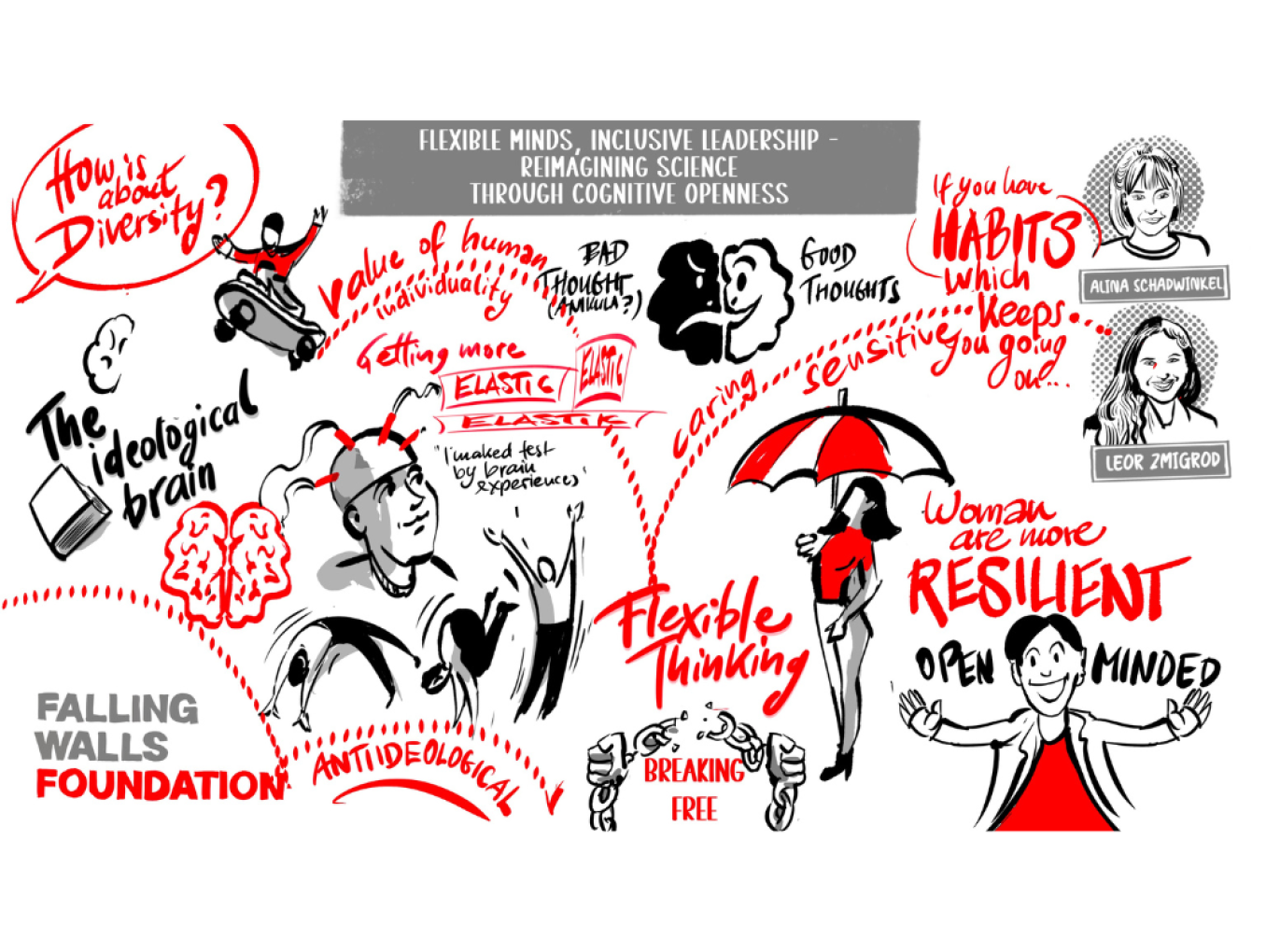
In this 60-minute session, political psychologist and neuroscientist Leor Zmigrod shared insights from her book The Ideological Brain, unpacking how our brains shape ideologies and how open-mindedness can be nurtured in polarized times. The conversation explored the link between cognitive flexibility and inclusive leadership, with a spotlight on how female leaders model adaptability and challenge rigid systems. Attendees reflected on diversity, resilience and the role of global scientific communities in fostering equity.
This event was supported by Volkswagen Foundation, Elsevier Foundation, Bayer Foundation, Deutsche Forschungsgemeinschaft (DFG) and Female Science Talents (Falling Walls Foundation).
With the following speakers:
- Leor Zmigrod, University of Cambridge
- Alina Schadwinkel, DER SPIEGEL
8 November 2025 | 15:00 - 15:50
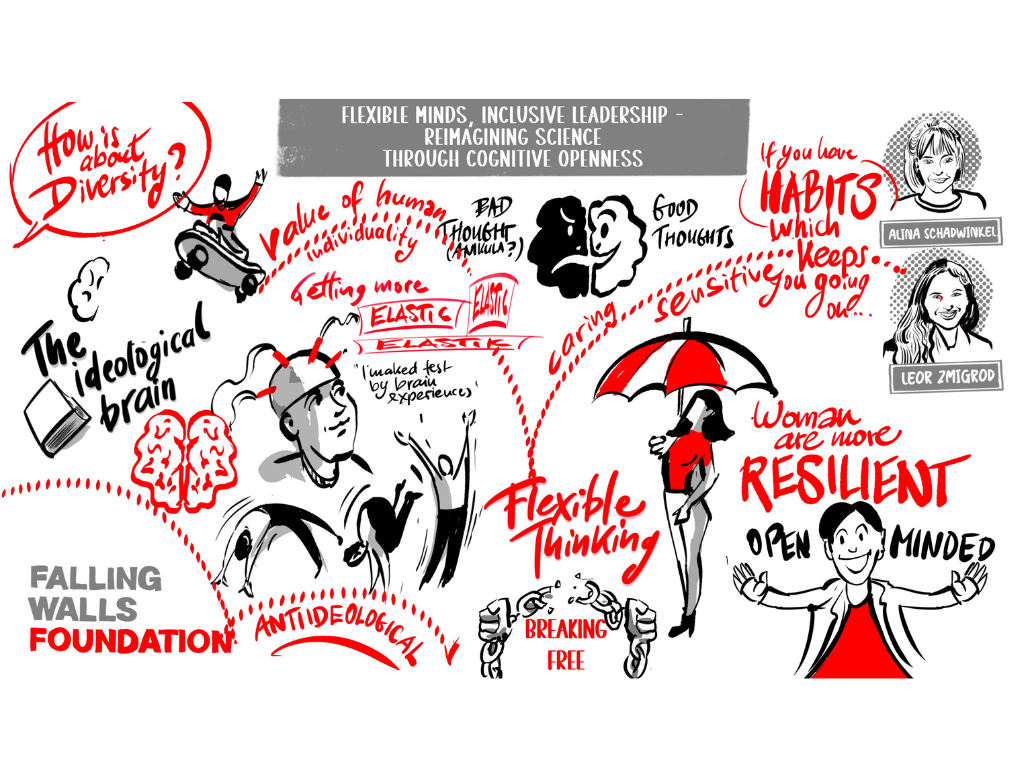
In this 60-minute session, political psychologist and neuroscientist Leor Zmigrod shared insights from her book The Ideological Brain, unpacking how our brains shape ideologies and how open-mindedness can be nurtured in polarized times. The conversation explored the link between cognitive flexibility and inclusive leadership, with a spotlight on how female leaders model adaptability and challenge rigid systems. Attendees reflected on diversity, resilience and the role of global scientific communities in fostering equity.
This event was supported by Volkswagen Foundation, Elsevier Foundation, Bayer Foundation, Deutsche Forschungsgemeinschaft (DFG) and Female Science Talents (Falling Walls Foundation).
With the following speakers:
- Leor Zmigrod, University of Cambridge
- Alina Schadwinkel, DER SPIEGEL
9 November | 10:00 - 11:00
Download Key Results (PDF)
Celebrating 60 years of Israel-Germany relations, this panel explored how scientific cooperation laid the groundwork for robust diplomatic ties. Experts discussed the evolution from scientific partnerships to diplomatic bonds, highlighting key milestones and collaborative projects. They examined the resilience of these ties during crises and offered strategies for fostering relations where diplomacy is challenging, emphasising science as a bridge between nations.
This event was supported by the Hertie Foundation.
With the following speakers:
- Gabriele Hermani, German Federal Ministry of Research, Technology and Space
- Jenny Hestermann, Heidelberg University of Jewish Studies
- Menahem Ben Sasson, Hebrew University of Jerusalem
- Patrick Cramer, Max-Planck-Gesellschaf
- Moderator: Georg Schütte, Volkswagen Foundation
9 November | 10:00 - 11:00
Download Key Results (PDF)
Celebrating 60 years of Israel-Germany relations, this panel explored how scientific cooperation laid the groundwork for robust diplomatic ties. Experts discussed the evolution from scientific partnerships to diplomatic bonds, highlighting key milestones and collaborative projects. They examined the resilience of these ties during crises and offered strategies for fostering relations where diplomacy is challenging, emphasising science as a bridge between nations.
This event was supported by the Hertie Foundation.
With the following speakers:
- Gabriele Hermani, German Federal Ministry of Research, Technology and Space
- Jenny Hestermann, Heidelberg University of Jewish Studies
- Menahem Ben Sasson, Hebrew University of Jerusalem
- Patrick Cramer, Max-Planck-Gesellschaf
- Moderator: Georg Schütte, Volkswagen Foundation
9 November | 12:00 - 13:00
Download Key Results (PDF)
Liberal democracies face growing challenges – from declining trust in democratic institutions to rising armed conflicts. This panel explored how science and academia can support evidence-based decision-making, strengthen democratic resilience, and counter disinformation. Panelists discussed how academia can play a vital role in fostering inclusive dialogue, shape policy through research, and reinforce democratic institutions in an increasingly complex global landscape.
This event was supported by the Alfred Landecker Foundation.
With the following speakers:
- Andrew Thompson, Nuffield College
- Fabian Klose, University of Cologne
- Sudha David-Wilp, German Marshall Fund
- Moderator: Silke Mülherr, Alfred Landecker Foundation
9 November | 12:00 - 13:00
Download Key Results (PDF)
Liberal democracies face growing challenges – from declining trust in democratic institutions to rising armed conflicts. This panel explored how science and academia can support evidence-based decision-making, strengthen democratic resilience, and counter disinformation. Panelists discussed how academia can play a vital role in fostering inclusive dialogue, shape policy through research, and reinforce democratic institutions in an increasingly complex global landscape.
This event was supported by the Alfred Landecker Foundation.
With the following speakers:
- Andrew Thompson, Nuffield College
- Fabian Klose, University of Cologne
- Sudha David-Wilp, German Marshall Fund
- Moderator: Silke Mülherr, Alfred Landecker Foundation
Global Big Science: Shaping International Cooperation (Executive Table)
The Transatlantic Big Science Conference (Executive Table)
Fostering Inclusive and Fair Africa–Europe Research Networks (Executive Table)
Which funding schemes can support European Collaboration? (Executive Table)
University Presidents Meeting (Executive Table)
Global Connections: Can Science Pave the Way for Peace? (Global Connections)
Mobility in Science, Pathway to Innovation and Peace (Global Connections)
Next Gen Frontiers: Emerging Voices in Science (Global Connections)
60 Years and Beyond – Israeli-German Science Collaboration (Global Connections)
Science Diplomacy by Europe: Shaping Global Engagement (Impact Dialogue)
The Changing Role of Science in Diplomacy (Impact Dialogue)
Universities Without Borders: Advancing Global Collaboration (Global Connections)
Science Diplomacy at SESAME: Light Beyond Borders (Global Connections)
Global Connections: Italy – Opening (Global Connections)
ENERGY & CLIMATE
7 November | 15:00 - 18:00
Boston Consulting Group´s Climate & Sustainability Summit, Back to square zero for sustainability? Breaking the wall of economic short-termism, explored how economic systems must evolve to meet sustainability challenges in times of political uncertainty and scientific urgency.
Our curated speaker lineup and forward-looking agenda addressed the realities of climate science, the resilience of Europe’s climate leadership, and the role of businesses in turning climate action into a competitive advantage.
This event was supported by the Boston Consulting Group.
With the following speakers:
- Brian Schmidt, Nobel Prize winner in Physics
- Frank Wetzel, State Secretary at the Federal Ministry for Economic Affairs and Energy
- Georg Stamatelopoulos, EnBW Energie Baden-Württemberg AG
- Guido Kerkhoff, Klöckner & Co
- Jens Burchardt, Boston Consulting Group
- Johan Rockström, Potsdam Institute for Climate Impact Research
- Kai Monheim, CEMUNE
- Katharina Tomoff, SVP Global
- Lilian Schwich, cylib GmBH
- Lucio Milanese, Proxima Fusion
- Maria Leptin, European Research Council
- Michael Bröcker, Table.Briefings
- Michael Karrer, ZF Group
- Patrick Herhold, Boston Consulting Group
- Saskia Bruysten, Carbon Equity and Yunus Social Business
- Stefan Kapferer, 50Hertz
- Ulf Zillig, Mercedes-Benz Group AG
- Veronika Grimm, Technische Universität Nürnberg
- Hosts:
- Johanna Puetz, Boston Consulting Group
- Michael Brigl, Boston Consulting Group
7 November | 15:00 - 18:00
Boston Consulting Group´s Climate & Sustainability Summit, Back to square zero for sustainability? Breaking the wall of economic short-termism, explored how economic systems must evolve to meet sustainability challenges in times of political uncertainty and scientific urgency.
Our curated speaker lineup and forward-looking agenda addressed the realities of climate science, the resilience of Europe’s climate leadership, and the role of businesses in turning climate action into a competitive advantage.
This event was supported by the Boston Consulting Group.
With the following speakers:
- Brian Schmidt, Nobel Prize winner in Physics
- Frank Wetzel, State Secretary at the Federal Ministry for Economic Affairs and Energy
- Georg Stamatelopoulos, EnBW Energie Baden-Württemberg AG
- Guido Kerkhoff, Klöckner & Co
- Jens Burchardt, Boston Consulting Group
- Johan Rockström, Potsdam Institute for Climate Impact Research
- Kai Monheim, CEMUNE
- Katharina Tomoff, SVP Global
- Lilian Schwich, cylib GmBH
- Lucio Milanese, Proxima Fusion
- Maria Leptin, European Research Council
- Michael Bröcker, Table.Briefings
- Michael Karrer, ZF Group
- Patrick Herhold, Boston Consulting Group
- Saskia Bruysten, Carbon Equity and Yunus Social Business
- Stefan Kapferer, 50Hertz
- Ulf Zillig, Mercedes-Benz Group AG
- Veronika Grimm, Technische Universität Nürnberg
- Hosts:
- Johanna Puetz, Boston Consulting Group
- Michael Brigl, Boston Consulting Group
8 November | 9:00 - 10:00
Download Key Results (PDF)
How can nature-based solutions be effectively scaled to address environmental challenges? Experts examined real-world case studies, highlighting both opportunities and challenges in expanding these solutions globally. The discussion provides insights into effectively scaling local initiatives for long-term, sustainable change across diverse regions. Topics include carbon storage, ecosystem restoration, climate resilience, and the social and political factors influencing success.
This event was supported by the German Federal Environmental Foundation (Deutsche Bundesstiftung Umwelt).
With the following speakers:
- Alan W. Organschi, Yale School of Architecture
- Alexander Bonde, German Federal Environmental Foundation
- Franziska Tanneberger, Greifswald Mire Centre
- Niklas Fanelsa, Technical University of Munich, Atelier Fanelsa
- Moderator: Conny Czymoch
8 November | 9:00 - 10:00
Download Key Results (PDF)
How can nature-based solutions be effectively scaled to address environmental challenges? Experts examined real-world case studies, highlighting both opportunities and challenges in expanding these solutions globally. The discussion provides insights into effectively scaling local initiatives for long-term, sustainable change across diverse regions. Topics include carbon storage, ecosystem restoration, climate resilience, and the social and political factors influencing success.
This event was supported by the German Federal Environmental Foundation (Deutsche Bundesstiftung Umwelt).
With the following speakers:
- Alan W. Organschi, Yale School of Architecture
- Alexander Bonde, German Federal Environmental Foundation
- Franziska Tanneberger, Greifswald Mire Centre
- Niklas Fanelsa, Technical University of Munich, Atelier Fanelsa
- Moderator: Conny Czymoch
8 November | 10:00 - 11:00
Download Key Results (PDF)
We need to transition towards a clean energy supply that is stable, secure and affordable. Renewable energies have become cost-competitive, but many technologies need to be integrated into the future net-zero supply and distribution system. The energy transition poses a huge socio-techno-economic challenge, and solutions need to be found at the EU level. This Plenary Table gathered interdisciplinary experts from science, industry and policy to “square the circle” and drive a successful energy transition.
This event was supported by Forschungszentrum Jülich.
With the following speakers:
- Peter Jansens, Forschungszentrum Jülich
- Rolf-Dieter Jungk, Federal Ministry of Research, Technology and Space
- Martin Keller, Helmholtz Association
- Peter Körte, Siemens
- Nils A. Røkke, SINTEF
- Moderator: Conny Czymoch
8 November | 10:00 - 11:00
Download Key Results (PDF)
We need to transition towards a clean energy supply that is stable, secure and affordable. Renewable energies have become cost-competitive, but many technologies need to be integrated into the future net-zero supply and distribution system. The energy transition poses a huge socio-techno-economic challenge, and solutions need to be found at the EU level. This Plenary Table gathered interdisciplinary experts from science, industry and policy to “square the circle” and drive a successful energy transition.
This event was supported by Forschungszentrum Jülich.
With the following speakers:
- Peter Jansens, Forschungszentrum Jülich
- Rolf-Dieter Jungk, Federal Ministry of Research, Technology and Space
- Martin Keller, Helmholtz Association
- Peter Körte, Siemens
- Nils A. Røkke, SINTEF
- Moderator: Conny Czymoch
8 November | 11:00 - 12:00
Download Key Results (PDF)
We need to transition towards a clean energy supply that is stable, secure and affordable. Renewable energies have become cost-competitive, but many technologies need to be integrated into the future net-zero supply and distribution system. The energy transition poses a huge socio-techno-economic challenge, and solutions need to be found at the EU level. This Plenary Table gathered interdisciplinary experts from science, industry and policy to “square the circle” and drive a successful energy transition.
This event was supported by the Frontiers Planet Prize.
With the following speakers:
- Robert Arlinghaus, Leibniz Institute of Freshwater Ecology and Inland Fisheries
- Genevieve Biggs, Gordon and Betty Moore Foundation
- Zahra Kalantari, KTH Royal Institute of Technology
- Johanna Pütz, Boston Consulting Group
- Michiel Scheffer, European Innovation Council
- Moderator: Jean-Claude Burgelman, Vrije Universiteit Brussel (VUB) / Frontiers Planet Prize
8 November | 11:00 - 12:00
Download Key Results (PDF)
We need to transition towards a clean energy supply that is stable, secure and affordable. Renewable energies have become cost-competitive, but many technologies need to be integrated into the future net-zero supply and distribution system. The energy transition poses a huge socio-techno-economic challenge, and solutions need to be found at the EU level. This Plenary Table gathered interdisciplinary experts from science, industry and policy to “square the circle” and drive a successful energy transition.
This event was supported by the Frontiers Planet Prize.
With the following speakers:
- Robert Arlinghaus, Leibniz Institute of Freshwater Ecology and Inland Fisheries
- Genevieve Biggs, Gordon and Betty Moore Foundation
- Zahra Kalantari, KTH Royal Institute of Technology
- Johanna Pütz, Boston Consulting Group
- Michiel Scheffer, European Innovation Council
- Moderator: Jean-Claude Burgelman, Vrije Universiteit Brussel (VUB) / Frontiers Planet Prize
8 November | 12:00 - 13:00
Download Key Results (PDF)
As the energy transition accelerates, green energy carriers are central to a just and inclusive future. This Plenary Table brought together voices from academia, industry, and government to explore how Africa and Europe can co-develop sustainable green fuel pathways. Focusing on innovations like green hydrogen corridors and supporting policy frameworks, the session highlighted how to foster co-innovation and build resilient, equitable energy systems through African-European collaboration.
This event was supported by Helmholtz-Zentrum Berlin.
With the following speakers:
- Candace Eslick, University of Cape Town
- Sven Godorr, Sasol
- Catherine Ngila, African Foundation for Women and Youth in Education, Sciences, Technology and Innovation
- Bernd Rech, Helmholtz-Zentrum Berlin
- Moderator: Jennifer Porto, NYU Berlin
8 November | 12:00 - 13:00
Download Key Results (PDF)
As the energy transition accelerates, green energy carriers are central to a just and inclusive future. This Plenary Table brought together voices from academia, industry, and government to explore how Africa and Europe can co-develop sustainable green fuel pathways. Focusing on innovations like green hydrogen corridors and supporting policy frameworks, the session highlighted how to foster co-innovation and build resilient, equitable energy systems through African-European collaboration.
This event was supported by Helmholtz-Zentrum Berlin.
With the following speakers:
- Candace Eslick, University of Cape Town
- Sven Godorr, Sasol
- Catherine Ngila, African Foundation for Women and Youth in Education, Sciences, Technology and Innovation
- Bernd Rech, Helmholtz-Zentrum Berlin
- Moderator: Jennifer Porto, NYU Berlin
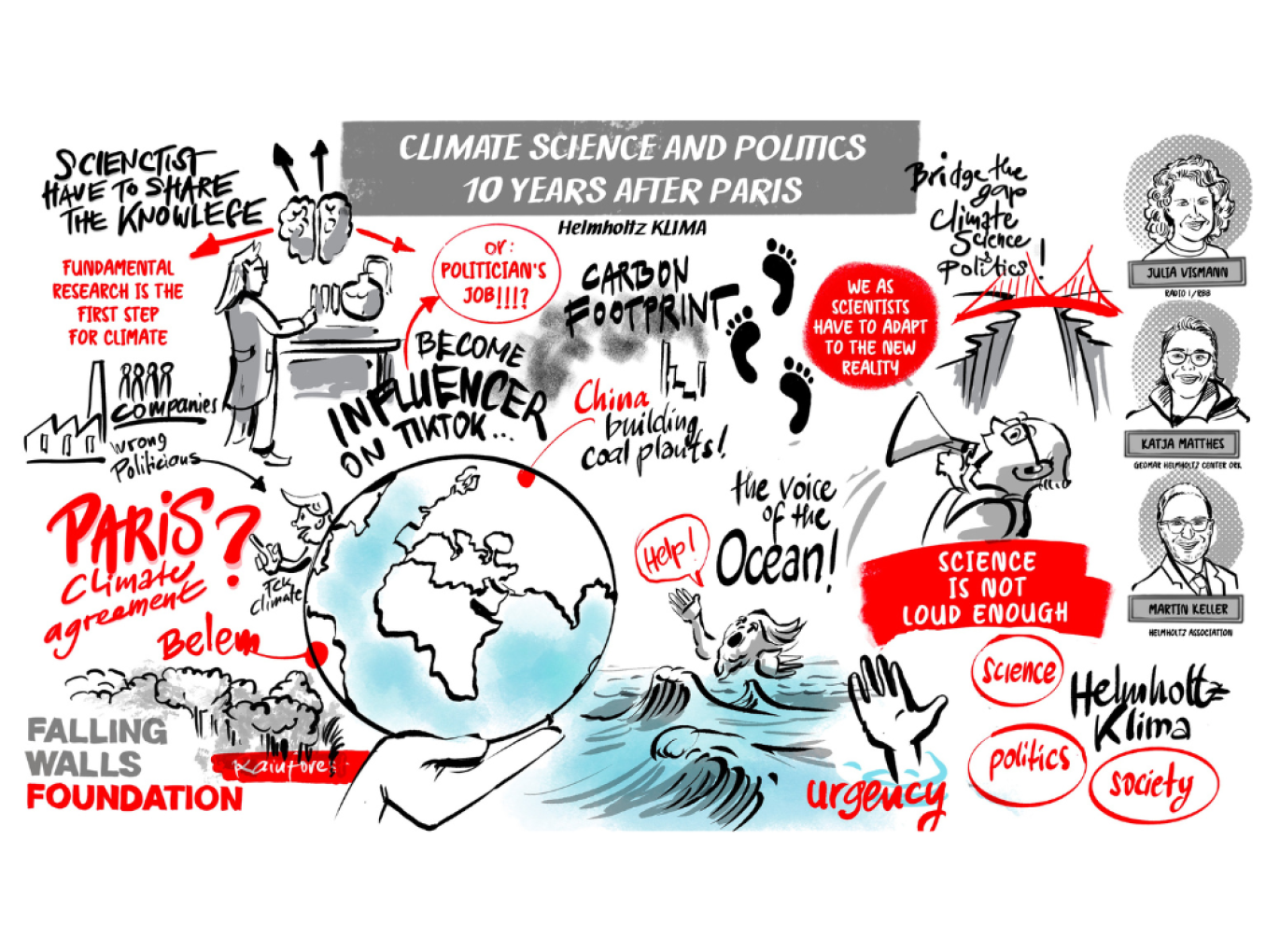
8 November 2025 | 12:00 - 13:00
Proposition of a new presentation online: A decade after the Paris Agreement, climate science has never been clearer—or more urgent. Three leading scientists reflected on what we have learned about the accelerating impacts already underway, and the key scientific directions that can help societies and policy-makers respond effectively to the climate crisis.
This event was supported by Helmholtz KLIMA.
With the following speakers:
- Martin Keller, Helmholtz Association
- Katja Matthes, GEOMAR Helmholtz Centre for Ocean Research Kiel
- Antoine Petit, CNRS
- Moderator: Julia Vismann, radioeins/rbb
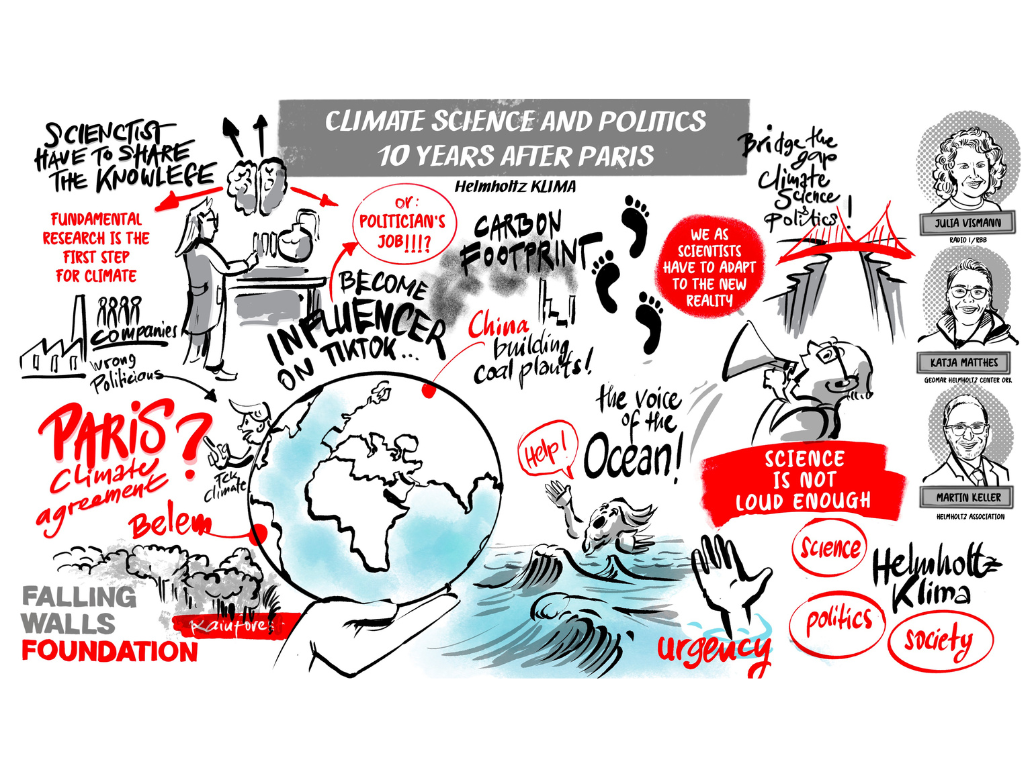
8 November 2025 | 12:00 - 13:00
Proposition of a new presentation online: A decade after the Paris Agreement, climate science has never been clearer—or more urgent. Three leading scientists reflected on what we have learned about the accelerating impacts already underway, and the key scientific directions that can help societies and policy-makers respond effectively to the climate crisis.
This event was supported by Helmholtz KLIMA.
With the following speakers:
- Martin Keller, Helmholtz Association
- Katja Matthes, GEOMAR Helmholtz Centre for Ocean Research Kiel
- Antoine Petit, CNRS
- Moderator: Julia Vismann, radioeins/rbb
8 November | 14:00 - 15:00
Download Key Results (PDF)
Few technological fields are advancing as rapidly as fusion, with the race to fusion power now underway. Against this backdrop, the German government has declared its goal to be the first to build a fusion power plant. But how realistic is this goal? Is Germany prepared for the technological and economic challenges that fusion power poses? How can fusion research strengthen Germany’s economy? The speakers on this Plenary Table explored possible answers to these crucial questions.
This event was supported by the Federal Ministry of Research, Technology and Space (BMFTR).
With the following speakers:
- David Gann, UK Industrial Fusion Solutions
- Frank Nürnberg, Heraeus Covantics
- Peter Schroth, Federal Ministry of Research, Technology and Space, Germany
- Hartmut Zohm, Max Planck Institute for Plasma Physics
- Moderator: Melanie Windridge, Fusion Energy Insights
8 November | 14:00 - 15:00
Download Key Results (PDF)
Few technological fields are advancing as rapidly as fusion, with the race to fusion power now underway. Against this backdrop, the German government has declared its goal to be the first to build a fusion power plant. But how realistic is this goal? Is Germany prepared for the technological and economic challenges that fusion power poses? How can fusion research strengthen Germany’s economy? The speakers on this Plenary Table explored possible answers to these crucial questions.
This event was supported by the Federal Ministry of Research, Technology and Space (BMFTR).
With the following speakers:
- David Gann, UK Industrial Fusion Solutions
- Frank Nürnberg, Heraeus Covantics
- Peter Schroth, Federal Ministry of Research, Technology and Space, Germany
- Hartmut Zohm, Max Planck Institute for Plasma Physics
- Moderator: Melanie Windridge, Fusion Energy Insights
8 November | 14:00 - 15:00
Download Key Results (PDF)
Breakthroughs in engineering biology and precision fermentation are unlocking new biomanufacturing industries that promise greater sustainability and consumer choice. Yet, scale-up challenges and cost barriers persist. Using Queensland as a case study, this panel explored how to turn innovation into action—building a skilled workforce, fostering engagement, and accelerating growth across the bioeconomy.
This event was supported by Trade and Investment Queensland.
With the following speakers:
- Claudia Vickers, Queensland University of Technology
- Denys Villa Gomez, University of Queensland
- Siobhan Coster, Eclipse Ingredients
- Volker Sieber, Technical University of Munich
- Moderator: Ian O'Hara, Queensland University of Technology
8 November | 14:00 - 15:00
Download Key Results (PDF)
Breakthroughs in engineering biology and precision fermentation are unlocking new biomanufacturing industries that promise greater sustainability and consumer choice. Yet, scale-up challenges and cost barriers persist. Using Queensland as a case study, this panel explored how to turn innovation into action—building a skilled workforce, fostering engagement, and accelerating growth across the bioeconomy.
This event was supported by Trade and Investment Queensland.
With the following speakers:
- Claudia Vickers, Queensland University of Technology
- Denys Villa Gomez, University of Queensland
- Siobhan Coster, Eclipse Ingredients
- Volker Sieber, Technical University of Munich
- Moderator: Ian O'Hara, Queensland University of Technology
Water Management in Decision Theater - Learning from Others (Impact Dialogue)
AI & QUANTUM
8 November | 10:00-11:00
Download Key Results (PDF)
The worldwide development of quantum computers and applications is underway at full speed. This panel brought together representatives from research, business and politics to discuss how science and industry can collaborate to accelerate development and promote technology transfer. They focused on framework conditions, infrastructure and effective channels of cooperation.
This event was supported by Munich Quantum Valley.
With the following speakers:
- Aimee Gunther, National Research Council Canada
- Ian Walmsley, Imperial College London
- Markus Blume, German Federal Council
- Sebastian Blatt, planqc
- Stefan Filipp, Munich Quantum Valley
- Moderator: Heike Riel, IBM Research
8 November | 10:00-11:00
Download Key Results (PDF)
The worldwide development of quantum computers and applications is underway at full speed. This panel brought together representatives from research, business and politics to discuss how science and industry can collaborate to accelerate development and promote technology transfer. They focused on framework conditions, infrastructure and effective channels of cooperation.
This event was supported by Munich Quantum Valley.
With the following speakers:
- Aimee Gunther, National Research Council Canada
- Ian Walmsley, Imperial College London
- Markus Blume, German Federal Council
- Sebastian Blatt, planqc
- Stefan Filipp, Munich Quantum Valley
- Moderator: Heike Riel, IBM Research
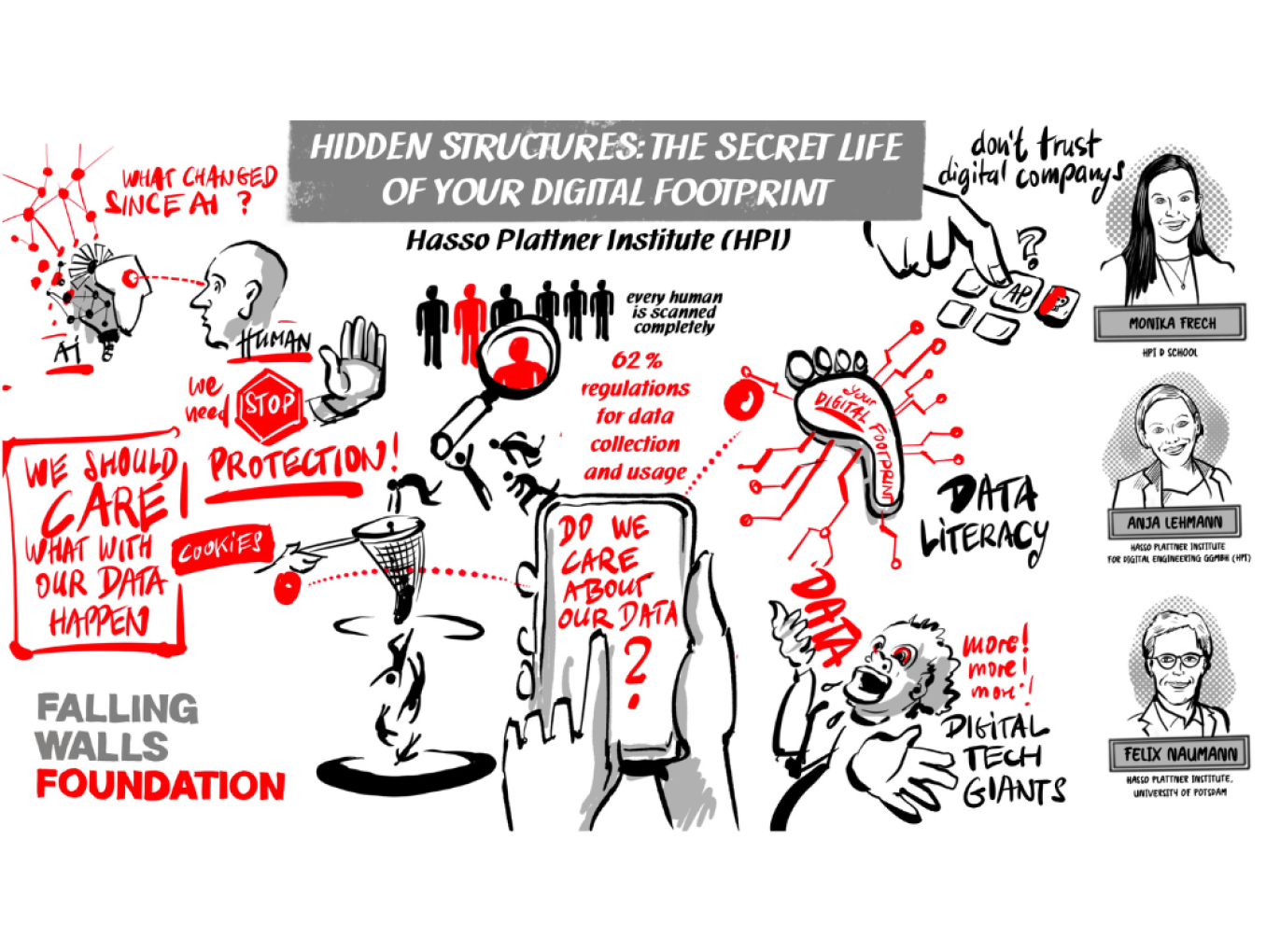
8 November 2025 | 11:00 - 12:00
Every click, search and swipe generates numerous data trails that fuel modern AI systems. Behind familiar interfaces lie complex algorithms transforming personal information into market value. This event invited attendees to question, discuss and share their perspectives on the technologies used every day. Together we examined how behavioural patterns drive algorithmic decisions, what users are sacrificing for free services and explored our society's uneasy relationship with digital privacy.
This event was supported by Hasso Plattner Institute (HPI).
With the following speakers:
- Monika Frech, HPI d-school
- Anja Lehmann, Hasso-Plattner-Institute, University of Potsdam
- Felix Naumann, Hasso Plattner Institute, University of Potsdam
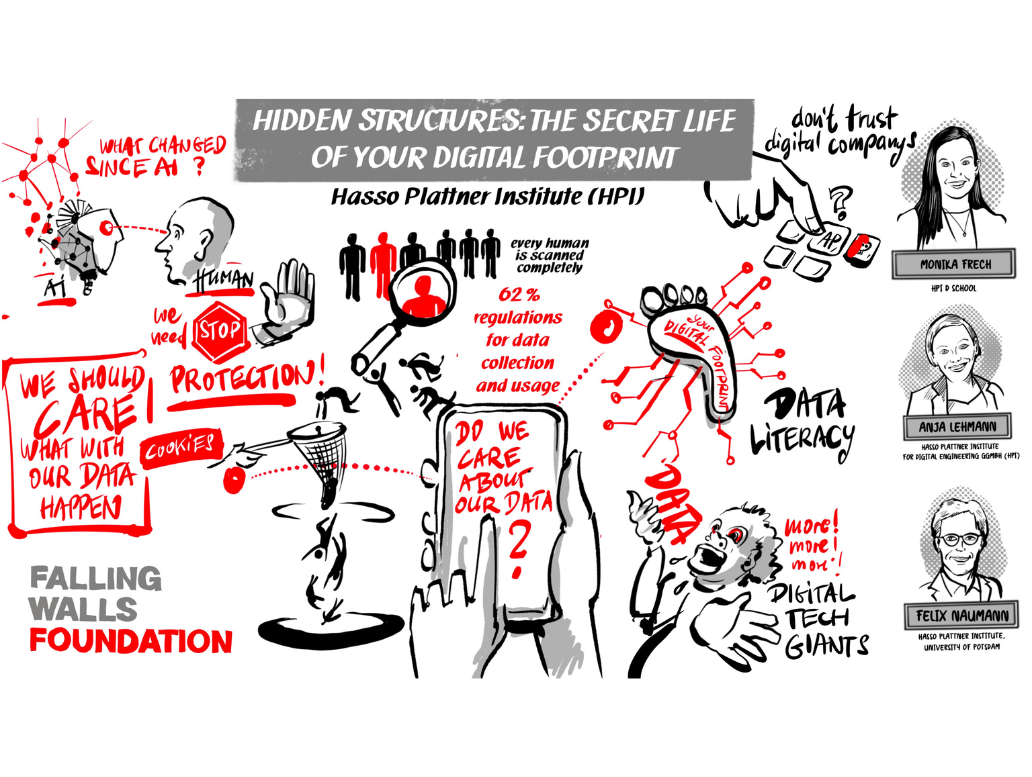
8 November 2025 | 11:00 - 12:00
Every click, search and swipe generates numerous data trails that fuel modern AI systems. Behind familiar interfaces lie complex algorithms transforming personal information into market value. This event invited attendees to question, discuss and share their perspectives on the technologies used every day. Together we examined how behavioural patterns drive algorithmic decisions, what users are sacrificing for free services and explored our society's uneasy relationship with digital privacy.
This event was supported by Hasso Plattner Institute (HPI).
With the following speakers:
- Monika Frech, HPI d-school
- Anja Lehmann, Hasso-Plattner-Institute, University of Potsdam
- Felix Naumann, Hasso Plattner Institute, University of Potsdam
8 November | 14:00-15:00
Download Key Results (PDF)
Artificial intelligence (AI) in health research promises disruptive improvements. Europe's AI Gigafactories, the TEF-Health testing facility and Germany's Hightech Agenda are emerging, but are still hindered by the ineffective use of health data. Experts from health research and infrastructures will discuss the need for central high performance computing structures and outline enablers and barriers to a future where AI and data improve health outcomes and strengthen resilience in public health.
This event was supported by the Berlin Institute of Health at Charité (BIH), Helmholtz Munich, and WomenX Collective.
With the following speakers:
- Philipp Gerbert, TUM Venture Labs
- Carsten Marr, Helmholtz Munich
- Peter Robinson, Berlin Institute of Health at Charité (BIH)
- Deepali Sood, United Nations Population Fund
- Moderator: Petra Ritter, Charité Universitätsmedizin Berlin
8 November | 14:00-15:00
Download Key Results (PDF)
Artificial intelligence (AI) in health research promises disruptive improvements. Europe's AI Gigafactories, the TEF-Health testing facility and Germany's Hightech Agenda are emerging, but are still hindered by the ineffective use of health data. Experts from health research and infrastructures will discuss the need for central high performance computing structures and outline enablers and barriers to a future where AI and data improve health outcomes and strengthen resilience in public health.
This event was supported by the Berlin Institute of Health at Charité (BIH), Helmholtz Munich, and WomenX Collective.
With the following speakers:
- Philipp Gerbert, TUM Venture Labs
- Carsten Marr, Helmholtz Munich
- Peter Robinson, Berlin Institute of Health at Charité (BIH)
- Deepali Sood, United Nations Population Fund
- Moderator: Petra Ritter, Charité Universitätsmedizin Berlin
8 November | 15:00-16:00
Download Key Results (PDF)
Securing a bright future for Europe in an AI-driven world presents a multifaceted challenge for universities. They must nurture top AI talent on a competitive global stage; ensure technological sovereignty alongside international collaboration; develop critical skills for AI enabled research; and adapt educational systems to prepare the workforce of tomorrow.
Academic leaders, funders, and policymakers discussed the current state of readiness, the barriers that exist, and strategies to succeed.
This event was supported by Elsevier.
With the following speakers:
- Antonio Krüger, German Research Center for Artificial Intelligence (DFKI)
- Katharina Lorenz, Justus-Liebig-University Giessen
- Liviu Știrbăț, European Commission
- Max Vögler, Elsevier
- Moderator: Tracey Brown, Sense about Science
8 November | 15:00-16:00
Download Key Results (PDF)
Securing a bright future for Europe in an AI-driven world presents a multifaceted challenge for universities. They must nurture top AI talent on a competitive global stage; ensure technological sovereignty alongside international collaboration; develop critical skills for AI enabled research; and adapt educational systems to prepare the workforce of tomorrow.
Academic leaders, funders, and policymakers discussed the current state of readiness, the barriers that exist, and strategies to succeed.
This event was supported by Elsevier.
With the following speakers:
- Antonio Krüger, German Research Center for Artificial Intelligence (DFKI)
- Katharina Lorenz, Justus-Liebig-University Giessen
- Liviu Știrbăț, European Commission
- Max Vögler, Elsevier
- Moderator: Tracey Brown, Sense about Science
8 November | 15:00-16:30
Download Key Results (PDF)
As AI becomes integral to research, public trust in science faces new challenges. This panel explored ethical dilemmas and journalistic responsibilities in accurately communicating AI-driven findings. Topics include the role of fact-checking, transparent reporting, and the impact of AI on scientific integrity. How can we ensure responsible use of AI while promoting unbiased, evidence-based information?
This event was supported by the Volkswagen Foundation.
With the following speakers:
- Alice Henchley, Springer Nature
- David Caswell, StoryFlow
- Volker Stollorz, Science Media Center Germany
- Moderator: Dagmar Schuller, audEERING
8 November | 15:00-16:30
Download Key Results (PDF)
As AI becomes integral to research, public trust in science faces new challenges. This panel explored ethical dilemmas and journalistic responsibilities in accurately communicating AI-driven findings. Topics include the role of fact-checking, transparent reporting, and the impact of AI on scientific integrity. How can we ensure responsible use of AI while promoting unbiased, evidence-based information?
This event was supported by the Volkswagen Foundation.
With the following speakers:
- Alice Henchley, Springer Nature
- David Caswell, StoryFlow
- Volker Stollorz, Science Media Center Germany
- Moderator: Dagmar Schuller, audEERING
8 November | 17:00 - 18:00
Download Key Results (PDF)
As imaging data grows in scale and complexity, so does the need for systems that are open, interoperable and AI-powered. This panel explores how new imaging technologies, combined with open data infrastructures and collaborative platforms, are transforming how we study biology across scales. Panelists will share how they are rethinking the imaging pipeline from acquisition to access – making it smarter, faster and more accessible so researchers can accelerate discovery and improve human health.
This event was supported by the Chan Zuckerberg Biohub Network.
With the following speakers:
- Martin Hetzer, Institute of Science and Technology Austria (ISTA)
- Paul Matthews, Imperial College London
- Stephani Otte, Chan Zuckerberg Initiative
- Jason Swedlow, Chan Zuckerberg Initiative
- Moderator: George Caputa, Nature
8 November | 17:00 - 18:00
Download Key Results (PDF)
As imaging data grows in scale and complexity, so does the need for systems that are open, interoperable and AI-powered. This panel explores how new imaging technologies, combined with open data infrastructures and collaborative platforms, are transforming how we study biology across scales. Panelists will share how they are rethinking the imaging pipeline from acquisition to access – making it smarter, faster and more accessible so researchers can accelerate discovery and improve human health.
This event was supported by the Chan Zuckerberg Biohub Network.
With the following speakers:
- Martin Hetzer, Institute of Science and Technology Austria (ISTA)
- Paul Matthews, Imperial College London
- Stephani Otte, Chan Zuckerberg Initiative
- Jason Swedlow, Chan Zuckerberg Initiative
- Moderator: George Caputa, Nature
November 8 | 17:00 - 18:00
Download Key Results (PDF)
Robust science is crucial for addressing the world’s challenges. AI is reshaping how research is created, reviewed, and published—raising new opportunities and challenges for research integrity.
This Round Table looked inside the scientific ecosystem: How can we ensure transparency, reproducibility, and credibility of scientific findings when AI tools are involved? Experts from science, publishing, and industry discussed practical safeguards and systemic solutions to uphold trustworthy science.
This event was supported by Springer Nature.
With the following speakers:
- Rachael Gooberman-Hill, UK Committee on Research Integrity
- Chris Graf, Springer Nature
- Philipp Herzig, SAP
- Julia Priess Buchheit, Kiel University
- Moderator: Katrin J. Yuan, Swiss Future Institute
November 8 | 17:00 - 18:00
Download Key Results (PDF)
Robust science is crucial for addressing the world’s challenges. AI is reshaping how research is created, reviewed, and published—raising new opportunities and challenges for research integrity.
This Round Table looked inside the scientific ecosystem: How can we ensure transparency, reproducibility, and credibility of scientific findings when AI tools are involved? Experts from science, publishing, and industry discussed practical safeguards and systemic solutions to uphold trustworthy science.
This event was supported by Springer Nature.
With the following speakers:
- Rachael Gooberman-Hill, UK Committee on Research Integrity
- Chris Graf, Springer Nature
- Philipp Herzig, SAP
- Julia Priess Buchheit, Kiel University
- Moderator: Katrin J. Yuan, Swiss Future Institute
9 November | 14:00 - 14:50
Download Key Results (PDF)
Quantum information science has rapidly advanced over the past 25 years, moving closer to scalable infrastructure and powerful computers. The impact on economic growth, national security and health parallels that of classical computing and AI. This panel explored the roles of academia and industry in advancing quantum technologies, addressing workforce needs and fostering global collaboration to overcome challenges and unlock future opportunities.
This event was supported by New York University.
With the following speakers:
- Javad Shabani, New York University
- Lauri Sainiemi, Microsoft Quantum
- Peter Leek, Oxford Quantum Circuits
- Scott Crowder, IBM
- Moderator: Jeanne Rubner, Technical University of Munich
9 November | 14:00 - 14:50
Download Key Results (PDF)
Quantum information science has rapidly advanced over the past 25 years, moving closer to scalable infrastructure and powerful computers. The impact on economic growth, national security and health parallels that of classical computing and AI. This panel explored the roles of academia and industry in advancing quantum technologies, addressing workforce needs and fostering global collaboration to overcome challenges and unlock future opportunities.
This event was supported by New York University.
With the following speakers:
- Javad Shabani, New York University
- Lauri Sainiemi, Microsoft Quantum
- Peter Leek, Oxford Quantum Circuits
- Scott Crowder, IBM
- Moderator: Jeanne Rubner, Technical University of Munich
9 November 2025 | 15:30 - 16:30
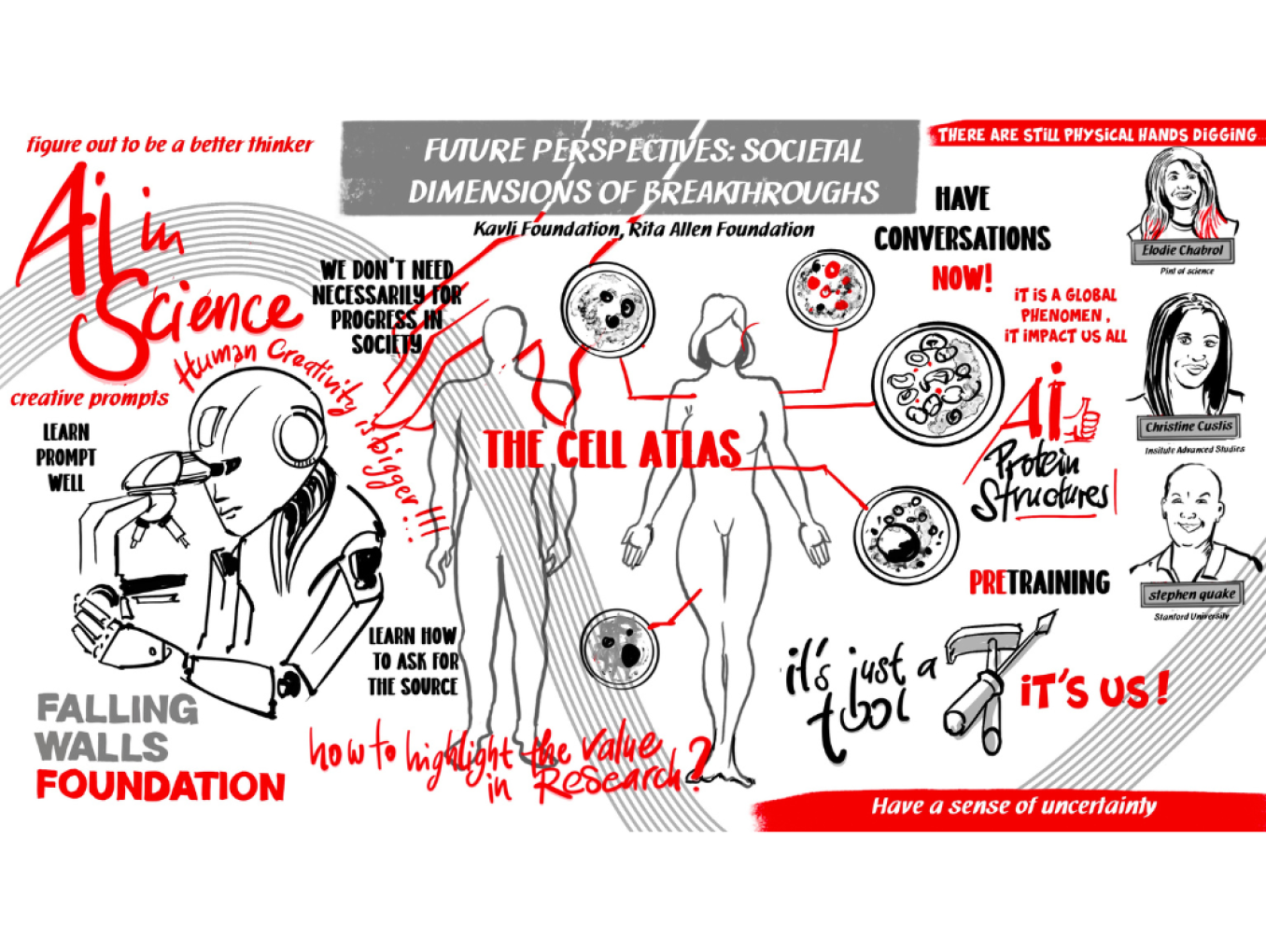
We invited attendees to an open stage dialogue where Breakthrough Day speaker Stephen Quake explored the role of AI in advancing the Human Cell Atlas, including automating cell type annotation in RNA sequencing. Christine Custis joined the discussion with her expertise in ethical AI innovation, sharing insights on the responsible use of AI across industries. In an engaging discussion, audience members were invited to address the societal and ethical considerations of this scientific breakthrough.
This event was supported by Kavli Foundation and Rita Allen Foundation.
With the following speakers:
- Christine Custis, Institute for Advanced Study
- Stephen Quake, Stanford University
- Moderator: Elodie Chabrol, Pint of Science
9 November 2025 | 15:30 - 16:30
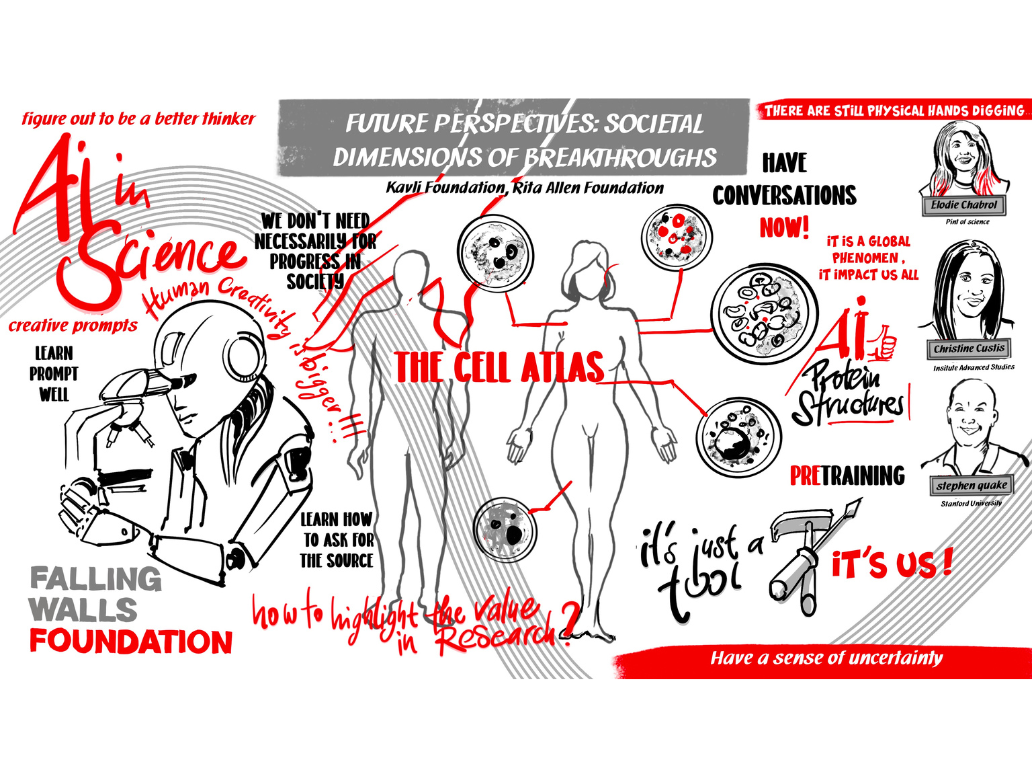
We invited attendees to an open stage dialogue where Breakthrough Day speaker Stephen Quake explored the role of AI in advancing the Human Cell Atlas, including automating cell type annotation in RNA sequencing. Christine Custis joined the discussion with her expertise in ethical AI innovation, sharing insights on the responsible use of AI across industries. In an engaging discussion, audience members were invited to address the societal and ethical considerations of this scientific breakthrough.
This event was supported by Kavli Foundation and Rita Allen Foundation.
With the following speakers:
- Christine Custis, Institute for Advanced Study
- Stephen Quake, Stanford University
- Moderator: Elodie Chabrol, Pint of Science
Prototyping a New Paradigm in Secure Quantum Communication (Executive Table)
The World of Quantum: Showcasing Cutting-edge Start-ups (Global Connections)
Data Infrastructures – Connected & Resilient AI Enablers (Executive Table)
MEDICINE & LIFE SCIENCES
7 November | 11:00 - 12:00
Download Key Results (PDF)
Biomedical ecosystems are the breeding ground for medical breakthroughs, innovative therapies and technology-driven healthcare solutions. Europe is at a turning point–facing the challenge of overcoming regional competition to achieve global competitiveness, closing the multiple gaps between academia and the private sector and building more resilient and sustainable healthcare systems. This discussion dived into the success stories and the remaining barriers that can be overcome with a collaborative approach.
This event was supported by the Berlin Institute of Health at Charité (BIH), Berlin University Alliance, and the University of Oxford.
With the following speakers:
- Trine Bartholdy, BioInnovation Institute
- Christopher Baum, Berlin Institute of Health at Charité (BIH)
- Dora Handrea, University of Oxford
- Alex Mihailidis, University of Toronto
- Alexander Betts, University of Oxford
7 November | 11:00 - 12:00
Download Key Results (PDF)
Biomedical ecosystems are the breeding ground for medical breakthroughs, innovative therapies and technology-driven healthcare solutions. Europe is at a turning point–facing the challenge of overcoming regional competition to achieve global competitiveness, closing the multiple gaps between academia and the private sector and building more resilient and sustainable healthcare systems. This discussion dived into the success stories and the remaining barriers that can be overcome with a collaborative approach.
This event was supported by the Berlin Institute of Health at Charité (BIH), Berlin University Alliance, and the University of Oxford.
With the following speakers:
- Trine Bartholdy, BioInnovation Institute
- Christopher Baum, Berlin Institute of Health at Charité (BIH)
- Dora Handrea, University of Oxford
- Alex Mihailidis, University of Toronto
- Alexander Betts, University of Oxford
7 November | 12:00 - 13:00
Download Key Results (PDF)
Abundant biotech innovations—from spatial biology to exposome analysis with AI-based modeling—can speed up the transition from research to precision medicine, care and practice. Speakers discuss how AI plays a central role in bringing together diverse technologies into a unified virtual patient model by pulling multiple data types into a single, joint framework.
This event was supported by Helmholtz Munich, German Rheumatology Research Center, Novartis.
With the following speakers:
- Caroline Gubser Keller, Novartis
- Eicke Latz, German Rheumatology Research Center (DRFZ)
- Fabian Theis, Helmholtz Munich
- Stephen Quake, Stanford University
- Moderator: Frank Laukien, Bruker Corporation
7 November | 12:00 - 13:00
Download Key Results (PDF)
Abundant biotech innovations—from spatial biology to exposome analysis with AI-based modeling—can speed up the transition from research to precision medicine, care and practice. Speakers discuss how AI plays a central role in bringing together diverse technologies into a unified virtual patient model by pulling multiple data types into a single, joint framework.
This event was supported by Helmholtz Munich, German Rheumatology Research Center, Novartis.
With the following speakers:
- Caroline Gubser Keller, Novartis
- Eicke Latz, German Rheumatology Research Center (DRFZ)
- Fabian Theis, Helmholtz Munich
- Stephen Quake, Stanford University
- Moderator: Frank Laukien, Bruker Corporation
7 November | 15:00-16:00
Download Key Results (PDF)
Recent advances in Alzheimer's research have revealed new insights into its mechanisms and potential treatments. Focused on early detection and disease-modifying therapies, the discussion highlights ongoing challenges in tackling the disease. This roundtable explored the accessibility of early diagnosis, as well as the role of international collaboration in driving breakthroughs to improve care and outcomes for patients.
This event was supported by vfa – Verband der forschenden Pharmaunternehmen.
With the following speakers:
- Frauke Pohlki, AbbVie
- Hanno Svoboda, Roche
- Joachim L. Schultze, Deutsche Zentrum für Neurodegenerative Erkrankungen (DZNE)
- Ludger Dinkelborg, Lantheus
- Moderator: David Patrician, RTL Nord
7 November | 15:00-16:00
Download Key Results (PDF)
Recent advances in Alzheimer's research have revealed new insights into its mechanisms and potential treatments. Focused on early detection and disease-modifying therapies, the discussion highlights ongoing challenges in tackling the disease. This roundtable explored the accessibility of early diagnosis, as well as the role of international collaboration in driving breakthroughs to improve care and outcomes for patients.
This event was supported by vfa – Verband der forschenden Pharmaunternehmen.
With the following speakers:
- Frauke Pohlki, AbbVie
- Hanno Svoboda, Roche
- Joachim L. Schultze, Deutsche Zentrum für Neurodegenerative Erkrankungen (DZNE)
- Ludger Dinkelborg, Lantheus
- Moderator: David Patrician, RTL Nord
7 November | 17:00 - 18:00
Download Key Results (PDF)
Despite decades of innovation, most drug candidates still fail in clinical trials—a striking illustration of the limitations in current research methodologies. Autonomous labs, where robotic systems, AI-driven decision-making and real-time simulations operate in concert, hold immense potential to unlock faster, smarter and more relevant medical breakthroughs. This panel unveiled how self-driving labs are already reshaping discovery pipelines and discussed challenges that need to be overcome.
This event was supported by Sartorius.
With the following speakers:
- Cord Dohrmann, Evotec
- Mark Owen, Sartorius
- Ola Engkvist, AstraZeneca, Chalmers University of Technology
- Rob Harkness, Biosero
- Moderator: Krysia Sommers, Bayer
7 November | 17:00 - 18:00
Download Key Results (PDF)
Despite decades of innovation, most drug candidates still fail in clinical trials—a striking illustration of the limitations in current research methodologies. Autonomous labs, where robotic systems, AI-driven decision-making and real-time simulations operate in concert, hold immense potential to unlock faster, smarter and more relevant medical breakthroughs. This panel unveiled how self-driving labs are already reshaping discovery pipelines and discussed challenges that need to be overcome.
This event was supported by Sartorius.
With the following speakers:
- Cord Dohrmann, Evotec
- Mark Owen, Sartorius
- Ola Engkvist, AstraZeneca, Chalmers University of Technology
- Rob Harkness, Biosero
- Moderator: Krysia Sommers, Bayer
9 November 2025 | 11:30 - 12:30
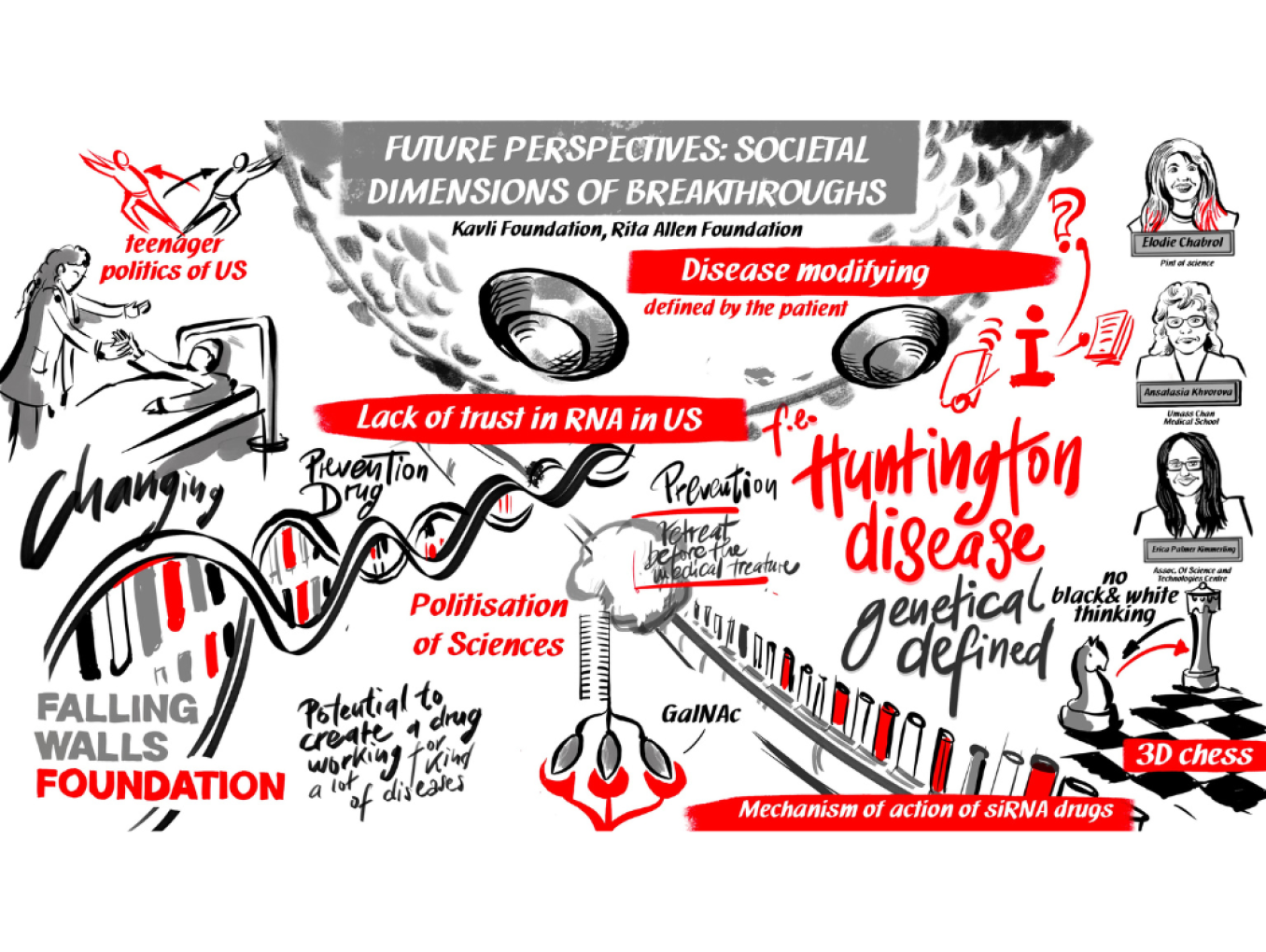
Breakthrough Day speaker Anastasia Khvorova explored the societal and ethical considerations of her research. She is developing groundbreaking RNA-based drugs that precisely regulate gene expression, a major step forward in the treatment of disease. Erica Kimmerling, with expertise in community-driven health policy and public attitudes toward science, joined the discussion. During the conversation, audience members had the opportunity to address their own aspirations and concerns related to these medical advances.
This event was supported by Kavli Foundation and Rita Allen Foundation.
With the following speakers:
- Anastasia Khvorova, UMass Chan Medical School
- Erica Palma Kimmerling, Association of Science and Technology Centers
- Moderator: Elodie Chabrol, Pint of Science
9 November 2025 | 11:30 - 12:30
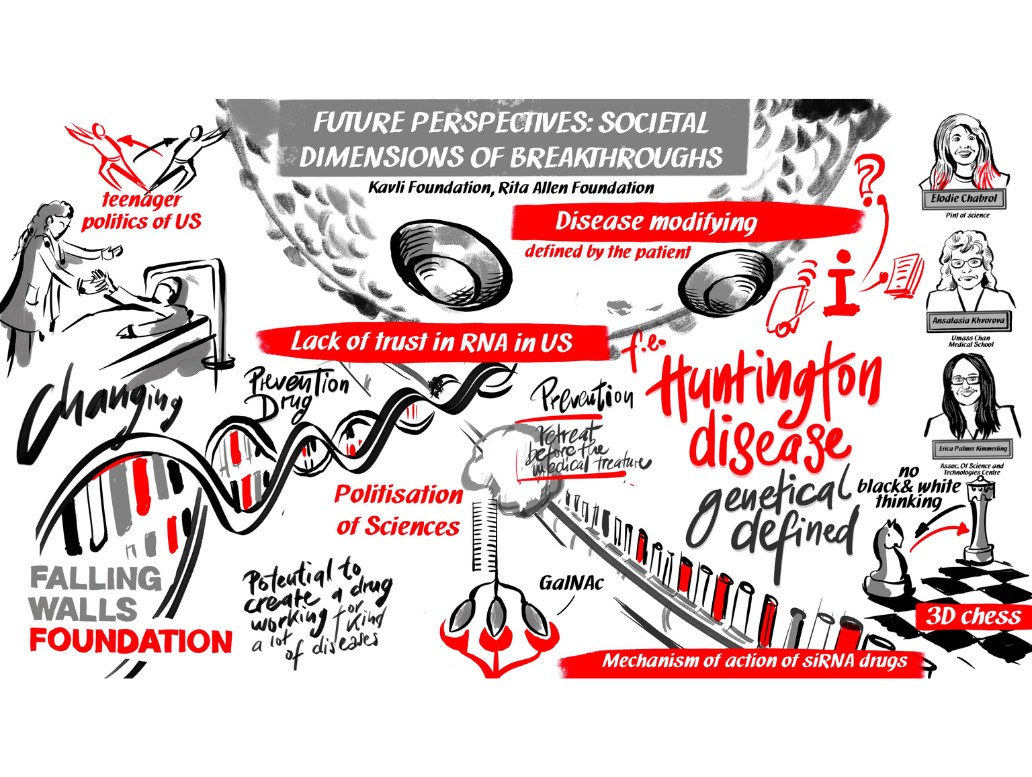
Breakthrough Day speaker Anastasia Khvorova explored the societal and ethical considerations of her research. She is developing groundbreaking RNA-based drugs that precisely regulate gene expression, a major step forward in the treatment of disease. Erica Kimmerling, with expertise in community-driven health policy and public attitudes toward science, joined the discussion. During the conversation, audience members had the opportunity to address their own aspirations and concerns related to these medical advances.
This event was supported by Kavli Foundation and Rita Allen Foundation.
With the following speakers:
- Anastasia Khvorova, UMass Chan Medical School
- Erica Palma Kimmerling, Association of Science and Technology Centers
- Moderator: Elodie Chabrol, Pint of Science
9 November | 13:00 - 14:00
Download Key Results (PDF)
Neurodegenerative diseases such as Huntington’s and Alzheimer’s disease present significant challenges, from early detection to slowing disease progression. This panel united leading scientists at the forefront of research to explore diverse strategies, including preventative measures and cutting-edge therapies. They addressed shared obstacles, highlighted emerging breakthroughs and discussed how cross-disease insights can drive progress toward more effective, tailored treatments.
This event was supported by the Else Kröner Fresenius Stiftung.
With the following speakers:
- Anastasia Khvorova, UMass Chan Medical School
- Angela Schulz, University Medical Center Hamburg-Eppendorf
- Mathias Jucker, German Center for Neurodegenerative Diseases (DZNE)
- Moderator: David Patrician, RTL Nord
9 November | 13:00 - 14:00
Download Key Results (PDF)
Neurodegenerative diseases such as Huntington’s and Alzheimer’s disease present significant challenges, from early detection to slowing disease progression. This panel united leading scientists at the forefront of research to explore diverse strategies, including preventative measures and cutting-edge therapies. They addressed shared obstacles, highlighted emerging breakthroughs and discussed how cross-disease insights can drive progress toward more effective, tailored treatments.
This event was supported by the Else Kröner Fresenius Stiftung.
With the following speakers:
- Anastasia Khvorova, UMass Chan Medical School
- Angela Schulz, University Medical Center Hamburg-Eppendorf
- Mathias Jucker, German Center for Neurodegenerative Diseases (DZNE)
- Moderator: David Patrician, RTL Nord
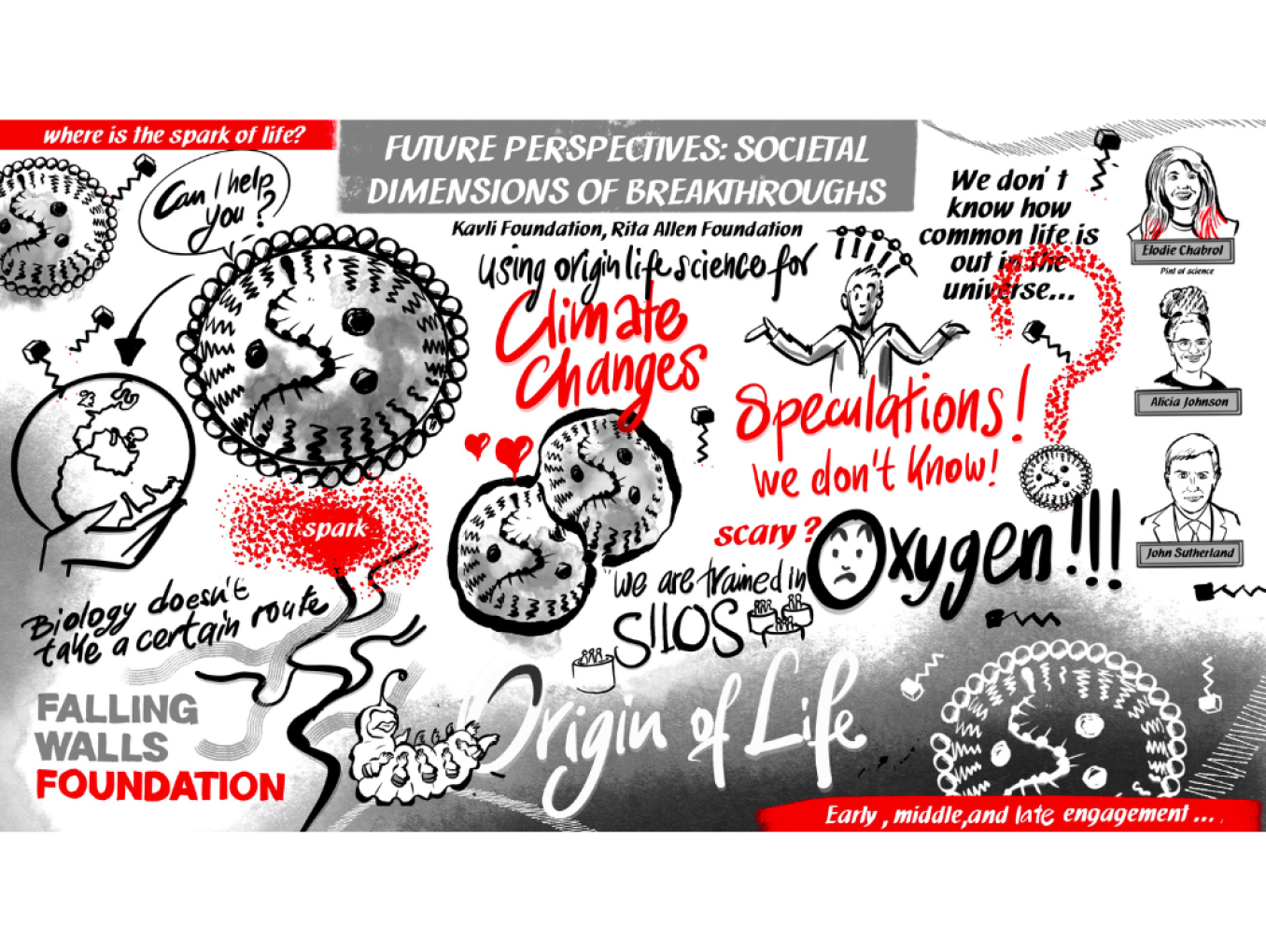
9 November 2025 | 14:00 - 15:00
Breakthrough Day speaker John Sutherland explored the societal and ethical considerations of his research—now and in the future. His work includes revolutionising the study of life's origin, replicating early conditions of earth and successfully creating RNA. Alicia Johnson, a biochemist working in public engagement in synthetic biology, joined this engaging, moderated talk that invited audience members to address aspirations and concerns around the implications of this scientific discovery.
This event was supported by Kavli Foundation and Rita Allen Foundation.
With the following speakers:
- John Sutherland, Medical Research Council Laboratory of Molecular Biology
- Alicia Johnson, Baker Institute for Public Policy
- Elodie Chabrol, Pint of Science
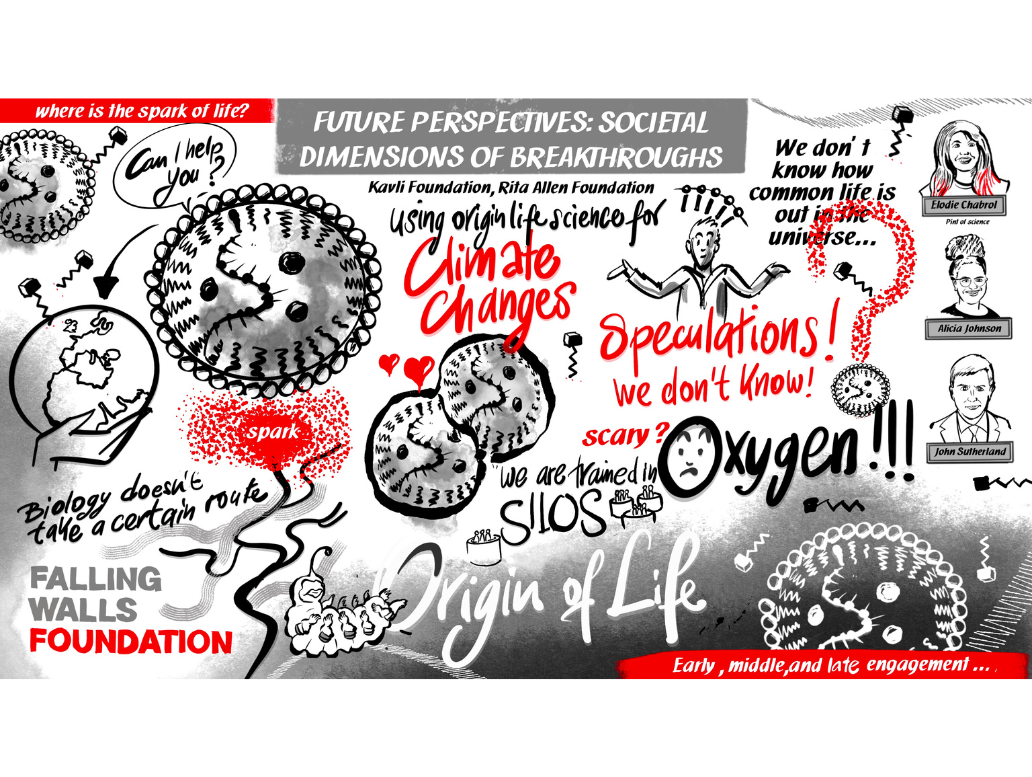
9 November 2025 | 14:00 - 15:00
Breakthrough Day speaker John Sutherland explored the societal and ethical considerations of his research—now and in the future. His work includes revolutionising the study of life's origin, replicating early conditions of earth and successfully creating RNA. Alicia Johnson, a biochemist working in public engagement in synthetic biology, joined this engaging, moderated talk that invited audience members to address aspirations and concerns around the implications of this scientific discovery.
This event was supported by Kavli Foundation and Rita Allen Foundation.
With the following speakers:
- John Sutherland, Medical Research Council Laboratory of Molecular Biology
- Alicia Johnson, Baker Institute for Public Policy
- Elodie Chabrol, Pint of Science
Advancing Innovation at Academic Medical Centers (Executive Table)
Medicine of the Future: Precision Health and Preceptive Care (Executive Table)
Strategic Prevention: Turning Health into Economic Value (Executive Table)
Advancing Innovation at Academic Medical Centers (Executive Table)
Breaking the Walls of Trauma: Psychedelics and Recovery (Global Connections)
INNOVATION & START-UPS
7 November | 9:00 - 14:00
Half a year after the formation of the new German government, the “Gipfel für Forschung und Innovation 2025” (Summit for Research and Innovation) offered a forum for politics, science, and business to place current developments in research and innovation policy at the centre of public debate.
The challenges for Germany and Europe as hubs of research and innovation are not new. However, the pressure for change is intensifying in an era of global upheavals, geopolitical tensions, and rapid technological progress.
This event was supported by Stifterverband.
With the following speakers:
- Dorothee Bär, Minister of Research, Technology and Space
- Volker Meyer-Guckel, Stiftverband
- Reinhold Geilsdörfer, Dieter Schwarz Foundation
- Holger Hanselka, Fraunhofer-Gesellschaft
- Sabine Klauka, Airbus
- Wolfgang Wick, Wissenschaftsrat
- Thomas Jarzombek, Federal Ministry of Digital Transformation and Government Modernisation
- Astrid Lambrecht, Forschungszentrum Jülich
- Thierry Coulhon, Institut Polytechnique de Paris
- Maria Leptin, European Research Council
- Hugh Brady, Imperial College London
- Stefan Asenkerschbaumer, Bosch
- Nils Schmid, Federal Ministry of Defence
- Christian Hummert, Cyberagentur
- Thomas Mason, Los Alamos National Laboratory
- Tanja Brühl, Technische Universität Darmstadt
- Chiara Pedersoli, OHB System AG
- Moderators:
- Irene Bertschek, Expert Commission for Research and Innovation (EFI)
- Bettina Rockenbach, National Academy of Sciences Leopoldina
- Georg Schütte, Volkswagen Foundation
- Andrea Frank, Stifterverband
7 November | 9:00 - 14:00
Half a year after the formation of the new German government, the “Gipfel für Forschung und Innovation 2025” (Summit for Research and Innovation) offered a forum for politics, science, and business to place current developments in research and innovation policy at the centre of public debate.
The challenges for Germany and Europe as hubs of research and innovation are not new. However, the pressure for change is intensifying in an era of global upheavals, geopolitical tensions, and rapid technological progress.
This event was supported by Stifterverband.
With the following speakers:
- Dorothee Bär, Minister of Research, Technology and Space
- Volker Meyer-Guckel, Stiftverband
- Reinhold Geilsdörfer, Dieter Schwarz Foundation
- Holger Hanselka, Fraunhofer-Gesellschaft
- Sabine Klauka, Airbus
- Wolfgang Wick, Wissenschaftsrat
- Thomas Jarzombek, Federal Ministry of Digital Transformation and Government Modernisation
- Astrid Lambrecht, Forschungszentrum Jülich
- Thierry Coulhon, Institut Polytechnique de Paris
- Maria Leptin, European Research Council
- Hugh Brady, Imperial College London
- Stefan Asenkerschbaumer, Bosch
- Nils Schmid, Federal Ministry of Defence
- Christian Hummert, Cyberagentur
- Thomas Mason, Los Alamos National Laboratory
- Tanja Brühl, Technische Universität Darmstadt
- Chiara Pedersoli, OHB System AG
- Moderators:
- Irene Bertschek, Expert Commission for Research and Innovation (EFI)
- Bettina Rockenbach, National Academy of Sciences Leopoldina
- Georg Schütte, Volkswagen Foundation
- Andrea Frank, Stifterverband
7 November | 10:00 - 11:00
Download Key Results (PDF)
Artificial intelligence is rapidly transforming the way knowledge is produced, exchanged and applied, with implications spanning scientific discovery and global industry. International experts explore the frontiers of AI research, the ethical frameworks shaping its development and its impact across fields such as healthcare, energy and mobility. The session highlights how global collaboration can unlock AI’s potential, combining human creativity and machine intelligence to drive innovation and sustainable progress.
With the following speakers:
- Daniel Senff, VDI Technologiezentrum
- Irit Hadar, University of Haifa
- Mikołaj Morzy, Poznan University of Technology
- Moderator: Hadas Erel, Reichman University
7 November | 10:00 - 11:00
Download Key Results (PDF)
Artificial intelligence is rapidly transforming the way knowledge is produced, exchanged and applied, with implications spanning scientific discovery and global industry. International experts explore the frontiers of AI research, the ethical frameworks shaping its development and its impact across fields such as healthcare, energy and mobility. The session highlights how global collaboration can unlock AI’s potential, combining human creativity and machine intelligence to drive innovation and sustainable progress.
With the following speakers:
- Daniel Senff, VDI Technologiezentrum
- Irit Hadar, University of Haifa
- Mikołaj Morzy, Poznan University of Technology
- Moderator: Hadas Erel, Reichman University
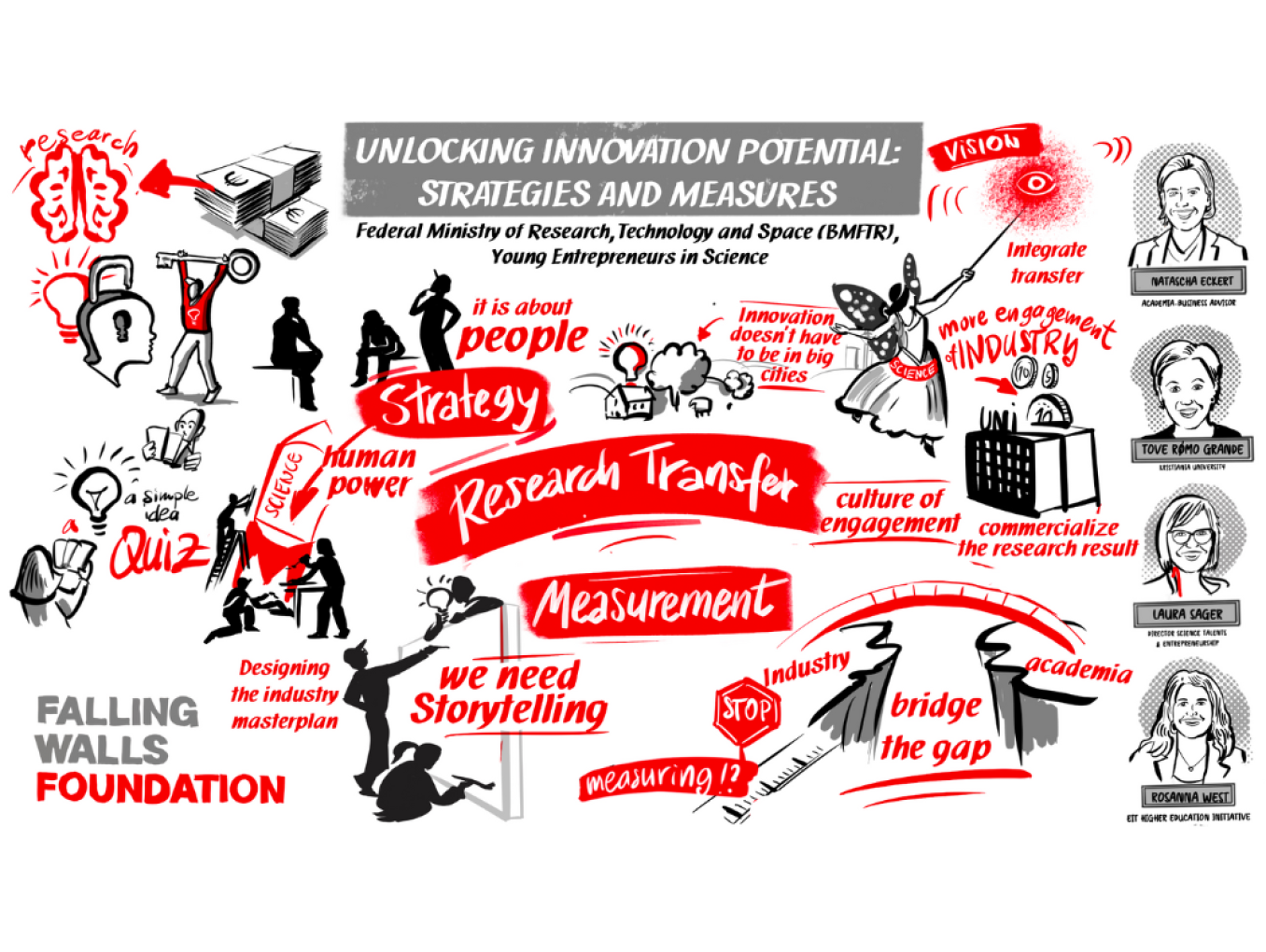
7 November 2025 | 10:00 - 10:50
Interested Summit visitors joined Young Entrepreneurs in Science for a compelling panel discussion exploring the pivotal role of research transfer in unlocking innovation potential. Experts from European countries discussed successful strategies and measures that enhance the transfer of research into innovative solutions, emphasizing the measurement and amplification of research impact. We engaged with experienced leaders and contributed to the dialogue on driving innovation through effective research transfer.
This event was supported by the Federal Ministry of Research, Technology and Space (BMFTR) and Young Entrepreneurs in Science.
With the following speakers:
- Natascha Eckert, Academia-Business Advisor, Senior Fellow UIDP
- Tove Rømo Grande, Kristiania University of Applied Sciences
- Laura Sager, Falling Walls Foundation
- Rosanna West, EIT Higher Education Initiative
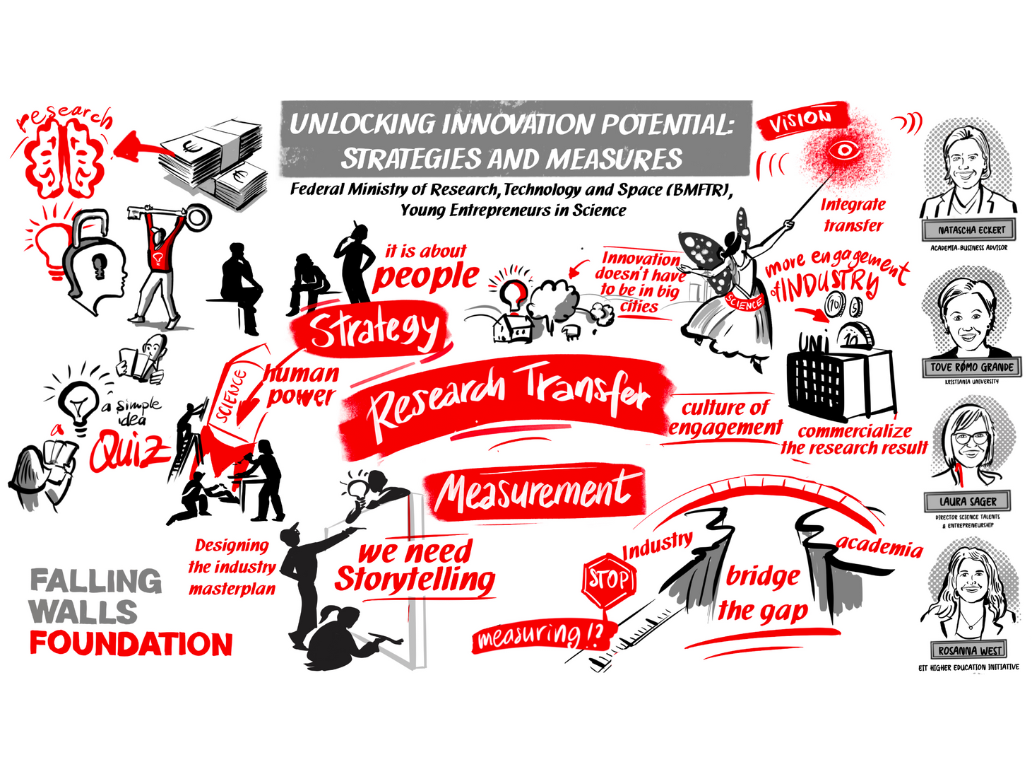
7 November 2025 | 10:00 - 10:50
Interested Summit visitors joined Young Entrepreneurs in Science for a compelling panel discussion exploring the pivotal role of research transfer in unlocking innovation potential. Experts from European countries discussed successful strategies and measures that enhance the transfer of research into innovative solutions, emphasizing the measurement and amplification of research impact. We engaged with experienced leaders and contributed to the dialogue on driving innovation through effective research transfer.
This event was supported by the Federal Ministry of Research, Technology and Space (BMFTR) and Young Entrepreneurs in Science.
With the following speakers:
- Natascha Eckert, Academia-Business Advisor, Senior Fellow UIDP
- Tove Rømo Grande, Kristiania University of Applied Sciences
- Laura Sager, Falling Walls Foundation
- Rosanna West, EIT Higher Education Initiative
7 November 2025 | 11:00 - 11:50
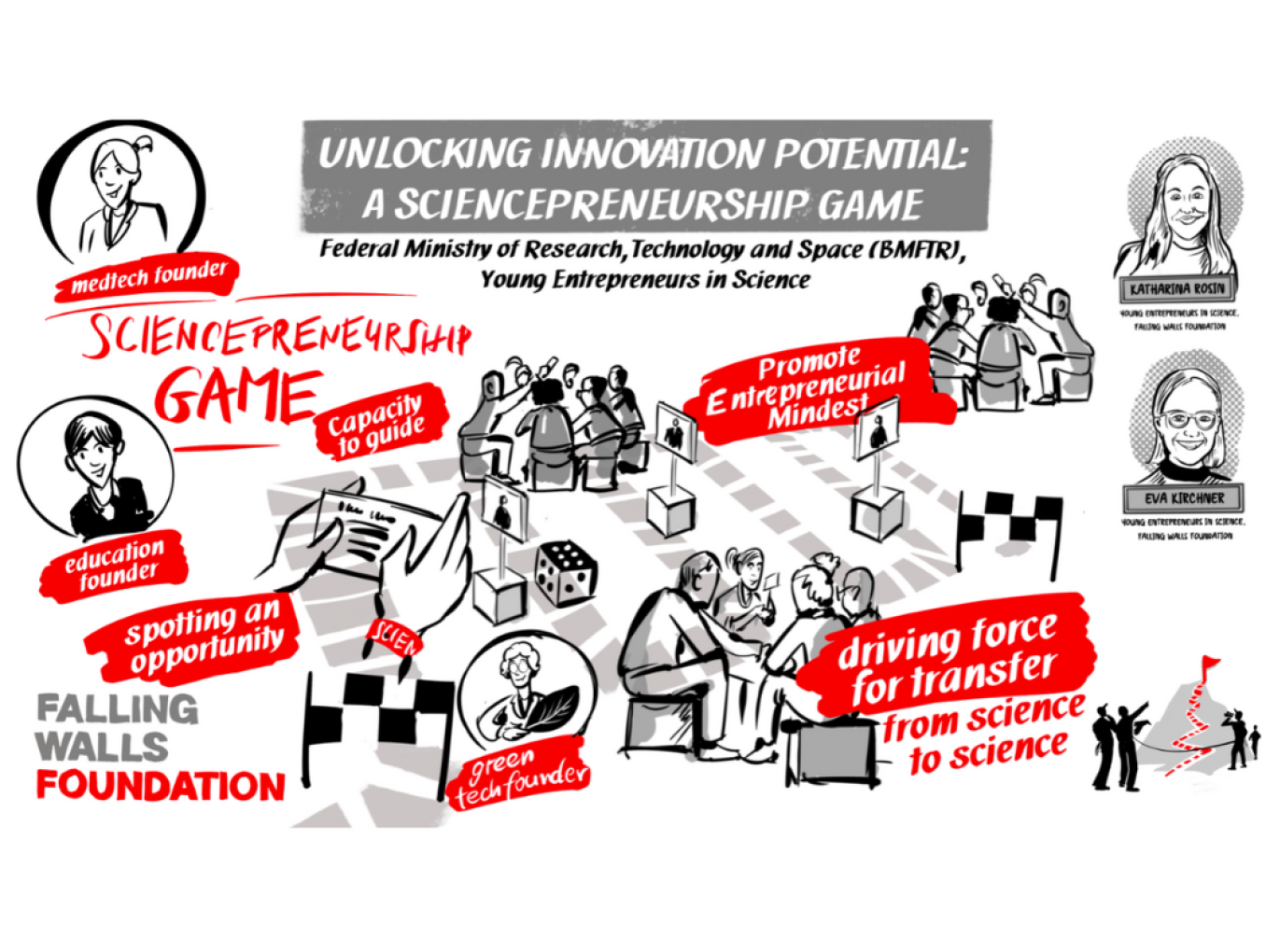
Interested Summit visitors experienced the sciencepreneurship journey in a dynamic board game. In small teams, players navigated key phases of turning a scientific idea into impactful solutions and start-ups, facing challenges like team dynamics, funding gaps and IP issues. The game made academic entrepreneurship tangible and fun, while showing the complexity and potential of spin-offs as a form of research transfer.
This event was supported by the Federal Ministry of Research, Technology and Space (BMFTR) and Young Entrepreneurs in Science.
With the following speakers:
- Eva Kirchner, Falling Walls Foundation
- Katharina Rosin, Falling Walls Foundation
7 November 2025 | 11:00 - 11:50
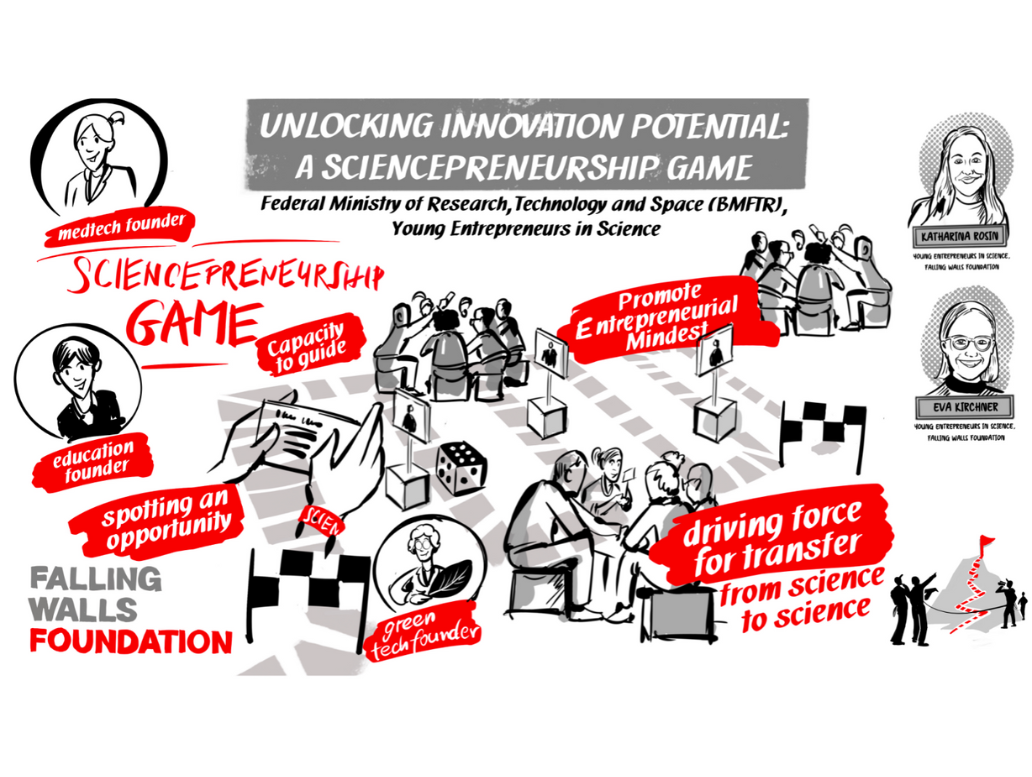
Interested Summit visitors experienced the sciencepreneurship journey in a dynamic board game. In small teams, players navigated key phases of turning a scientific idea into impactful solutions and start-ups, facing challenges like team dynamics, funding gaps and IP issues. The game made academic entrepreneurship tangible and fun, while showing the complexity and potential of spin-offs as a form of research transfer.
This event was supported by the Federal Ministry of Research, Technology and Space (BMFTR) and Young Entrepreneurs in Science.
With the following speakers:
- Eva Kirchner, Falling Walls Foundation
- Katharina Rosin, Falling Walls Foundation
7 November | 11:00 - 12:00
Download Key Results (PDF)
Deep-ultraviolet (DUV) light technologies based on aluminium nitride open up new frontiers in photonics; achieving efficient continuous-wave operation at room temperature. This breakthrough enables compact and powerful light sources with transformative potential across science and industry—from environmental sensing and precision manufacturing to healthcare and sustainable innovation—showcasing how advances in materials science drive real-world impact.
This event was supported by the Berthold Leibinger Foundation.
With the following speakers:
- Åsa Haglund, Chalmers University of Technology
- Martina Meinke, Charité
- Tanja Mehlstäubler, Physikalisch-Technische Bundesanstalt
- Moderator: Michael Kneissl, Technische Universität Berlin
7 November | 11:00 - 12:00
Download Key Results (PDF)
Deep-ultraviolet (DUV) light technologies based on aluminium nitride open up new frontiers in photonics; achieving efficient continuous-wave operation at room temperature. This breakthrough enables compact and powerful light sources with transformative potential across science and industry—from environmental sensing and precision manufacturing to healthcare and sustainable innovation—showcasing how advances in materials science drive real-world impact.
This event was supported by the Berthold Leibinger Foundation.
With the following speakers:
- Åsa Haglund, Chalmers University of Technology
- Martina Meinke, Charité
- Tanja Mehlstäubler, Physikalisch-Technische Bundesanstalt
- Moderator: Michael Kneissl, Technische Universität Berlin
7 November | 16:00 - 17:00
Download Key Results (PDF)
Industrial AI is Europe’s next big opportunity driving innovation, resilience and competitiveness. Unlike consumer AI, it must meet stricter requirements to power factories, energy grids and medical equipment. At this roundtable, hear from both a start-up and a large enterprise on how they work with Siemens to turn industrial AI into real impact—and why trusted ecosystems are key to unlocking its full potential. Together, we can create a better future for everyone with industrial AI.
This event was supported by Siemens.
With the following speakers:
- Michelangelo Canzoneri, Merck
- Moderator: Yvonne Rode, Siemens
7 November | 16:00 - 17:00
Download Key Results (PDF)
Industrial AI is Europe’s next big opportunity driving innovation, resilience and competitiveness. Unlike consumer AI, it must meet stricter requirements to power factories, energy grids and medical equipment. At this roundtable, hear from both a start-up and a large enterprise on how they work with Siemens to turn industrial AI into real impact—and why trusted ecosystems are key to unlocking its full potential. Together, we can create a better future for everyone with industrial AI.
This event was supported by Siemens.
With the following speakers:
- Michelangelo Canzoneri, Merck
- Moderator: Yvonne Rode, Siemens
7 November | 16:00 - 17:00
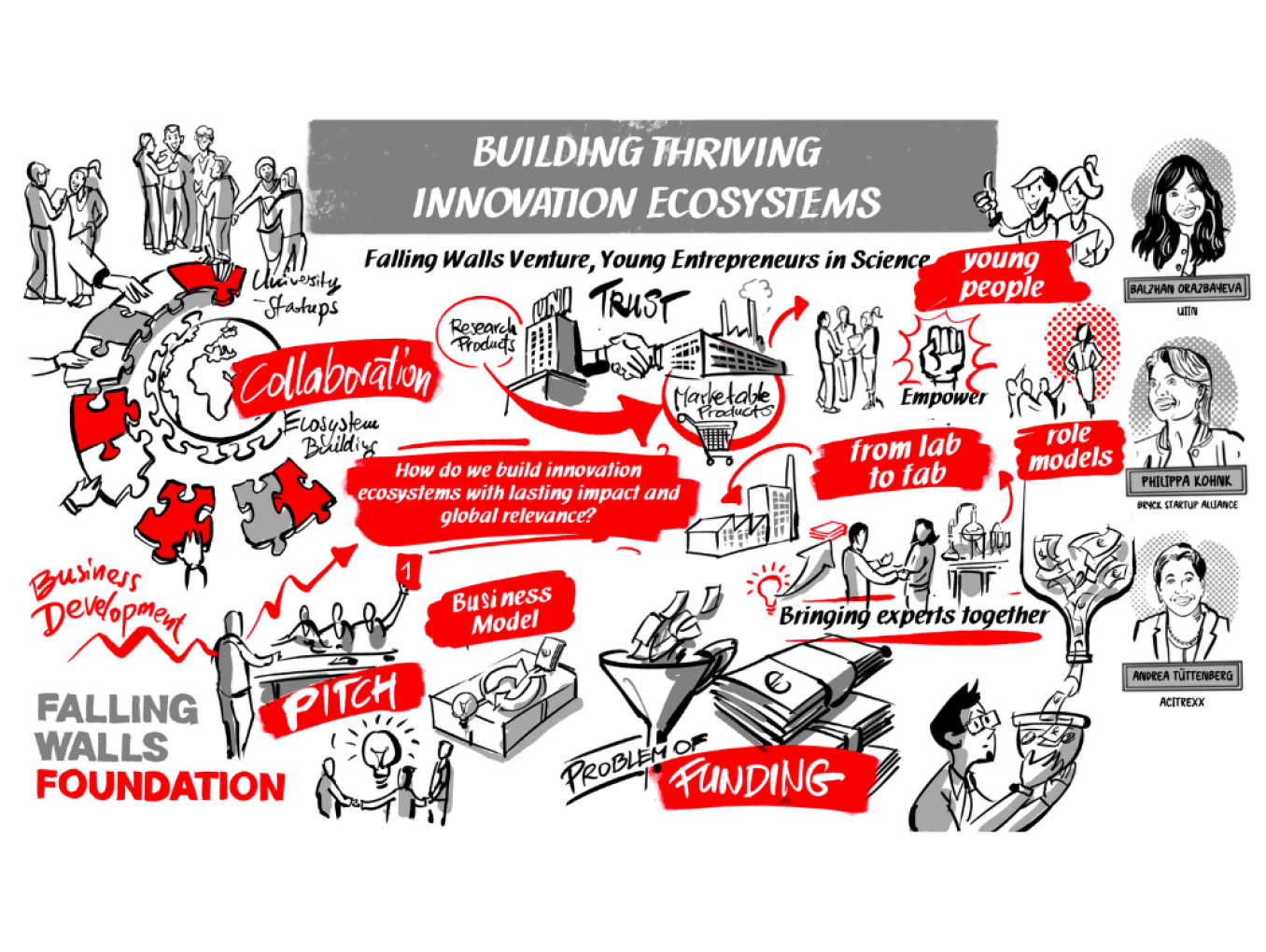
How do we build innovation ecosystems with lasting impact and global relevance? This panel brought together key ecosystem actors to explore strategies for advancing science-based entrepreneurship through collaborative, scalable structures. With insights from Germany’s emerging Startup Factories, the innovation network UIIN and Falling Walls' own science entrepreneurship programmes, we examined ways to embed innovation in institutions, align diverse stakeholders and boost impact globally.
This event was supported by Falling Walls Venture and Young Entrepreneurs in Science.
With the following speakers:
- Andrea Tüttenberg, ActiTrexx
- Philippa Köhnk, BRYCK Startup Alliance
- Balzhan Orazbayeva, UIIN
- Sarah Scheck, Falling Walls Foundation
7 November | 16:00 - 17:00
How do we build innovation ecosystems with lasting impact and global relevance? This panel brought together key ecosystem actors to explore strategies for advancing science-based entrepreneurship through collaborative, scalable structures. With insights from Germany’s emerging Startup Factories, the innovation network UIIN and Falling Walls' own science entrepreneurship programmes, we examined ways to embed innovation in institutions, align diverse stakeholders and boost impact globally.
This event was supported by Falling Walls Venture and Young Entrepreneurs in Science.
With the following speakers:
- Andrea Tüttenberg, ActiTrexx
- Philippa Köhnk, BRYCK Startup Alliance
- Balzhan Orazbayeva, UIIN
- Sarah Scheck, Falling Walls Foundation
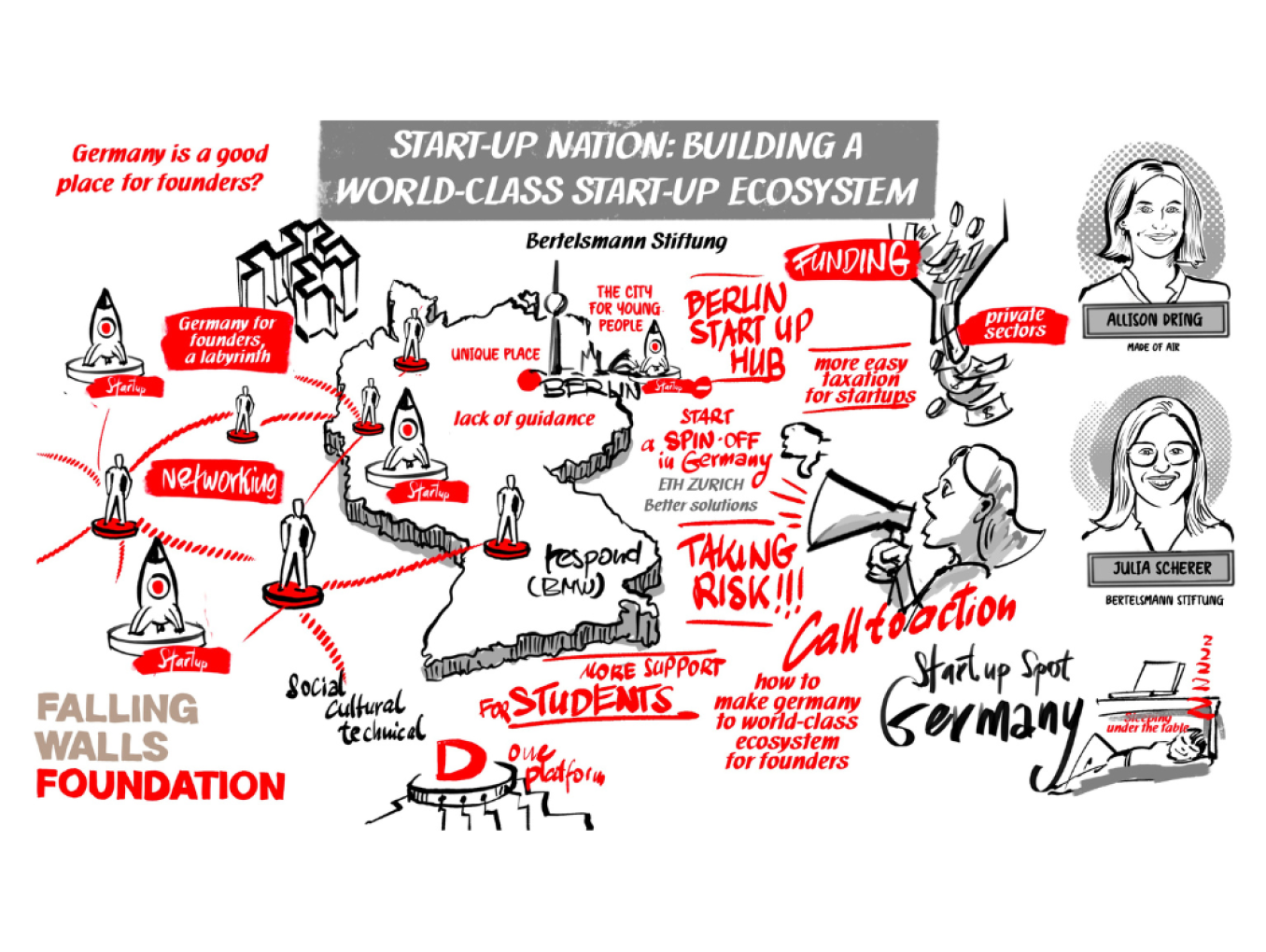
8 November 2025 | 10:00 - 11:00
Germany positions itself as a leading hub for entrepreneurship and innovation. This session invited strategic partners and key stakeholders to explore clear goals for enhancing the country’s appeal to founders and start-ups. Drawing on international best practices and successful global models, we examined how to build a competitive, future-oriented start-up ecosystem. Interested Summit visitors joined us for a forward-looking dialogue that shapes the next phase of Germany’s innovation landscape.
This event was supported by Bertelsmann Stiftung.
With the following speakers:
- Allison Dring, MADE OF AIR
- Julia Scheerer, Bertelsmann Stiftung
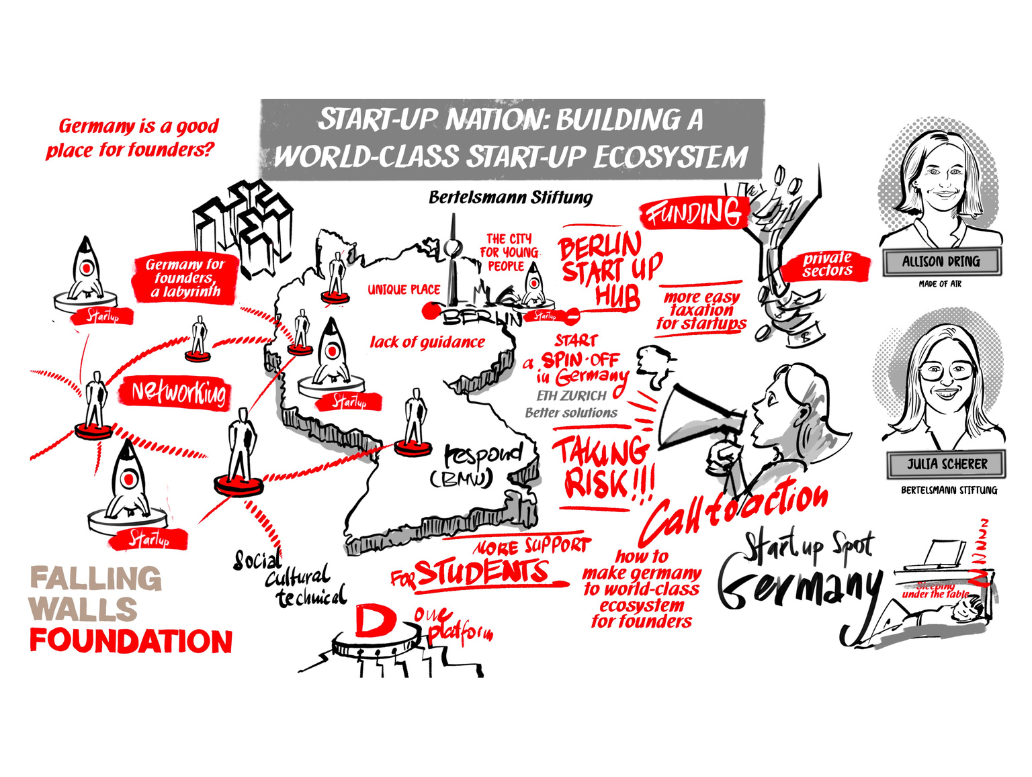
8 November 2025 | 10:00 - 11:00
Germany positions itself as a leading hub for entrepreneurship and innovation. This session invited strategic partners and key stakeholders to explore clear goals for enhancing the country’s appeal to founders and start-ups. Drawing on international best practices and successful global models, we examined how to build a competitive, future-oriented start-up ecosystem. Interested Summit visitors joined us for a forward-looking dialogue that shapes the next phase of Germany’s innovation landscape.
This event was supported by Bertelsmann Stiftung.
With the following speakers:
- Allison Dring, MADE OF AIR
- Julia Scheerer, Bertelsmann Stiftung
8 November | 12:00 -13:00
Download Key Results (PDF)
Anticipating change is key to staying ahead. This panel explores how technology foresight supports strategic planning and long-term innovation. Experts will discuss methods for identifying emerging trends, assessing uncertainty, and informing decision-making in research, policy, and industry. The session will highlight the value of anticipatory thinking and its role in shaping resilient, forward-looking innovation strategies across sectors.
This event was supported by the Volkswagen Foundation.
With the following speakers:
- Claudia Eckert, Fraunhofer Institute for Applied and Integrated Security AISEC
- Joël Mesot, ETH Zurich
- Nicola Fuchs-Schündeln, WZB Berlin Social Science Center
- Norbert Holtkamp, Hoover Institution, Stanford University
- Moderator: Georg Schütte, Volkswagen Foundation
8 November | 12:00 -13:00
Download Key Results (PDF)
Anticipating change is key to staying ahead. This panel explores how technology foresight supports strategic planning and long-term innovation. Experts will discuss methods for identifying emerging trends, assessing uncertainty, and informing decision-making in research, policy, and industry. The session will highlight the value of anticipatory thinking and its role in shaping resilient, forward-looking innovation strategies across sectors.
This event was supported by the Volkswagen Foundation.
With the following speakers:
- Claudia Eckert, Fraunhofer Institute for Applied and Integrated Security AISEC
- Joël Mesot, ETH Zurich
- Nicola Fuchs-Schündeln, WZB Berlin Social Science Center
- Norbert Holtkamp, Hoover Institution, Stanford University
- Moderator: Georg Schütte, Volkswagen Foundation
8 November | 15:00 - 16:00
Download Key Results (PDF)
Europe can only become an innovation leader by improving the path from fundamental research to breakthrough innovation. This requires bold private and public investment in translational talent development and “wild ideas” – high-risk, high-reward research – within and beyond higher education institutions (HEIs). This session explores how strategic funding and capacity building can unlock the full potential of HEIs to drive entrepreneurship, generate spin-offs and deliver impact across Europe.
This event was supported by EIT Higher Education Initiative, Federal Agency for Disruptive Innovation - SPRIND.
With the following speakers:
- Heinrich M. Arnold, EIT
- Orla Feely, University College Dublin
- Rafael Laguna de la Vera, Federal Agency for Disruptive Innovation - SPRIND
- Milena Stoycheva, The Edge
- Mark Thomson, CERN
- Moderator: Stacie Bloom, New York University
8 November | 15:00 - 16:00
Download Key Results (PDF)
Europe can only become an innovation leader by improving the path from fundamental research to breakthrough innovation. This requires bold private and public investment in translational talent development and “wild ideas” – high-risk, high-reward research – within and beyond higher education institutions (HEIs). This session explores how strategic funding and capacity building can unlock the full potential of HEIs to drive entrepreneurship, generate spin-offs and deliver impact across Europe.
This event was supported by EIT Higher Education Initiative, Federal Agency for Disruptive Innovation - SPRIND.
With the following speakers:
- Heinrich M. Arnold, EIT
- Orla Feely, University College Dublin
- Rafael Laguna de la Vera, Federal Agency for Disruptive Innovation - SPRIND
- Milena Stoycheva, The Edge
- Mark Thomson, CERN
- Moderator: Stacie Bloom, New York University
8 November | 16:00 - 17:00
Download Key Results (PDF)
We are honored to begin this prestigious symposium with an official opening led by our esteemed moderators and in collaboration with the Wilhelm and Else Heraeus Foundation, a long-standing partner dedicated to advancing science. Together, they will set the stage for a day of exciting discoveries and insightful discussions in the field of physical sciences.
This event was supported by the Wilhelm and Else Heraeus Foundation.
With following speakers:
- Brooke Smith, The Kavli Foundation
- David Spergel, Simons Foundation
- Rolf-Dieter Heuer, CERN
- Thomas Bjørnholm, Villum Foundation
- Moderator: Marte Kessler, Stifterverband
8 November | 16:00 - 17:00
Download Key Results (PDF)
We are honored to begin this prestigious symposium with an official opening led by our esteemed moderators and in collaboration with the Wilhelm and Else Heraeus Foundation, a long-standing partner dedicated to advancing science. Together, they will set the stage for a day of exciting discoveries and insightful discussions in the field of physical sciences.
This event was supported by the Wilhelm and Else Heraeus Foundation.
With following speakers:
- Brooke Smith, The Kavli Foundation
- David Spergel, Simons Foundation
- Rolf-Dieter Heuer, CERN
- Thomas Bjørnholm, Villum Foundation
- Moderator: Marte Kessler, Stifterverband
9 November | 11:00 -12:00
Download Key Results (PDF)
Rapid advances in AI and key technologies risk widening the gap between tech leaders and the rest. This discussion focused on how innovation can be made more inclusive—across sectors, company sizes and geographies—and what policies, partnerships and investments are needed to ensure broad access and benefits for small and medium-sized companies in particular.
This event was supported by Technical University of Munich (TUM).
With the following speakers:
- Constantin Häfner, Fraunhofer Institute for Lasertechnology ILT
- Gunther Wobser, LAUDA
- Hadas Erel, Reichman University
- Helmut Schönenberger, UnternehmerTUM
- Moderator: Dagmar Schuller, audEERING
9 November | 11:00 -12:00
Download Key Results (PDF)
Rapid advances in AI and key technologies risk widening the gap between tech leaders and the rest. This discussion focused on how innovation can be made more inclusive—across sectors, company sizes and geographies—and what policies, partnerships and investments are needed to ensure broad access and benefits for small and medium-sized companies in particular.
This event was supported by Technical University of Munich (TUM).
With the following speakers:
- Constantin Häfner, Fraunhofer Institute for Lasertechnology ILT
- Gunther Wobser, LAUDA
- Hadas Erel, Reichman University
- Helmut Schönenberger, UnternehmerTUM
- Moderator: Dagmar Schuller, audEERING
EU Tech Leadership: Aligning Research & Innovation Policies (Executive Table)
Philanthropy in Science in a Changing World (Executive Table)
Unlocking Growth Capital for Europe’s Deeptech Scaleups (Executive Table)
Building Sciencepreneurship in Europe (Executive Table)
Deep Dive Startups: Innovation Policy Behind the Scenes (Executive Table)
Leadership Dialogues: Innovating at Interfaces (Impact Dialogue)
Innovation Pathways: From Research to Real-World Impact (Impact Dialogue)
MUSA Innovations: Research and Impact (Global Connections)
Meet the Researchers: Ethics, Ecosystems, and Innovation (Global Connections)
Designing Tomorrow: Prototypes for a Sustainable Future (Global Connections)
Research to Reality: Italian Startups for Global Innovation (Global Connections)
BECOME A PARTNER
Your organisation would like to become a partner, to co-organise a Falling Walls Circle Format with us?
Please reach out to circle@falling-walls.com.
For further information, please download the Annual Report 2025.






























SHAPE THE FUTURE