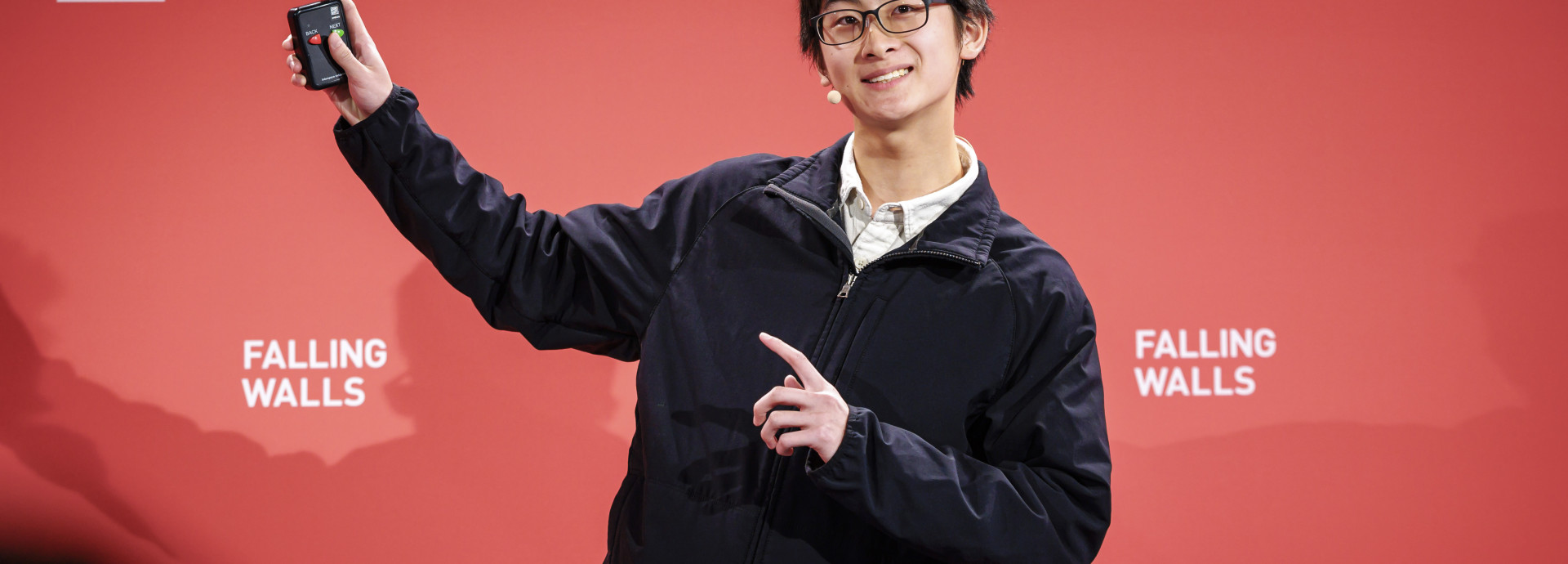
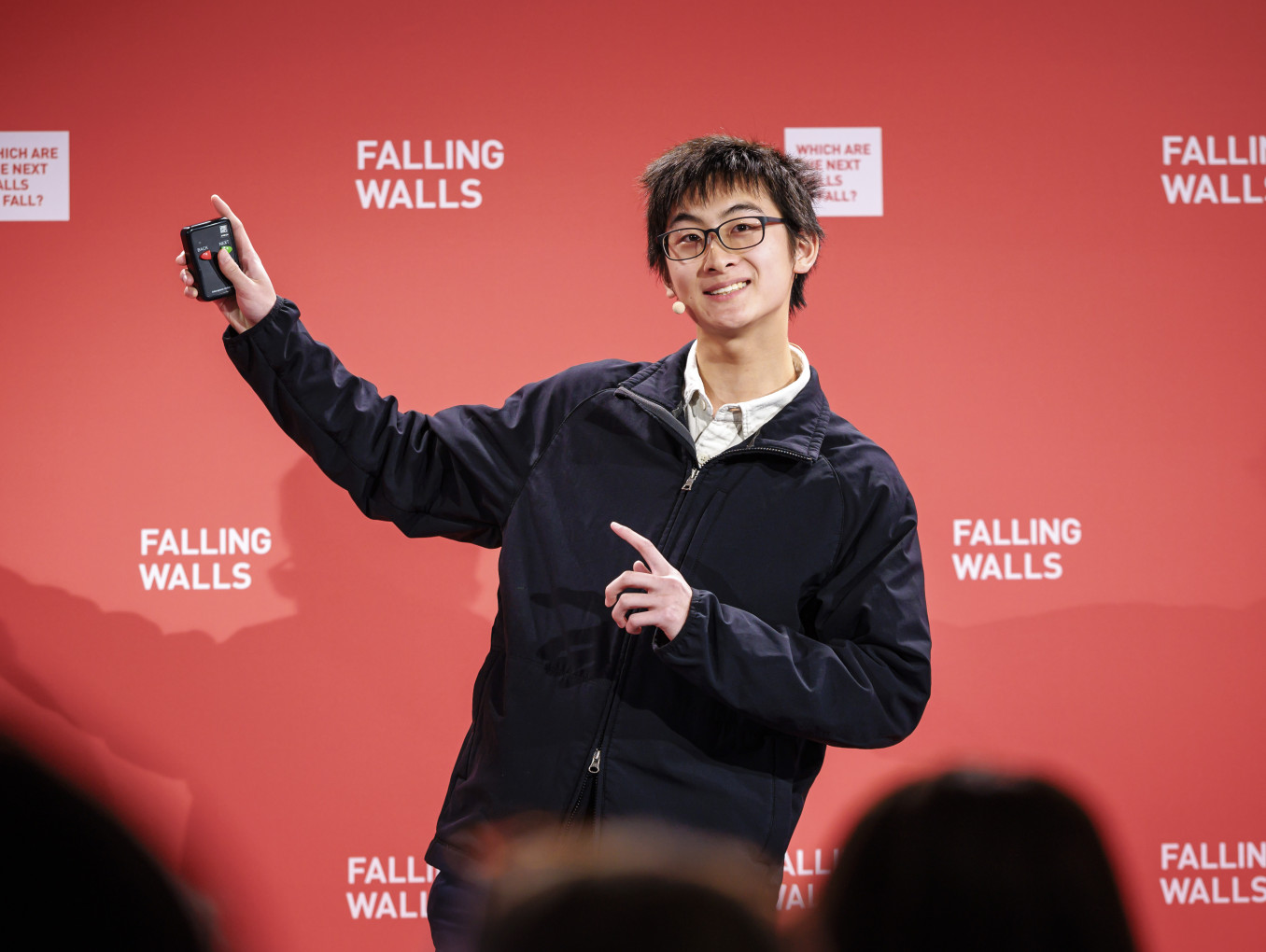
Kaelan Yim - 2025 Falling Walls Lab Finalist
Falling Walls Lab Winner: San Francisco Bay Area
Kaelan Yim is an undergraduate at UC Berkeley studying computer science, with a focus on machine learning and distributed computing. He has led AI research at Accenture, built an automated data pipeline for a Silicon Valley start-up, and is interested in developing sustainable innovations to address global challenges. In his free time, he enjoys hiking and birdwatching along the California coast.
Can you tell us about your breakthrough and the inspiration behind it?
The power of distributed computing allows us to fundamentally change how massive compute loads are handled and simultaneously address climate change. We can replace data centers with an interconnected network and repurpose the generated, wasted computational heat for sustainable heating. I initially started working on making distributed computing feasible at scale when I discovered how much waste data centers create, and my research stands on the shoulders of giants like Folding@home and BOINC.
How do you see the future of computing? What are the next big things to happen in this field?
I believe the future of computing will be dominated by AI training and inference, data centers will continue scaling, and hardware will become prohibitively expensive. I’m very interested in how physical infrastructure will play a role in improving hyperscaler energy efficiency and the long-term effects of reusing existing hardware. In the coming years, I hope to see distributed computing networks take over as the preferred approach for scientific computing, particularly in machine learning.
What real-world impact do you hope your breakthrough will have in the next 5–10 years?
There’s plenty of buzz around frontier AI labs, especially in Silicon Valley. I think investors and research institutions should broaden their horizons, and there should be more investing in deep tech. People are exploring complex solutions to hard problems across biology, chemistry, and materials science, especially as AI has become a force multiplier in accelerating research.
In your view, what should investors/funding bodies be focusing on right now?
Investors should focus more on deep-tech innovation that connects fundamental research with real-world applications. Many breakthroughs in materials science already exist in laboratories but need support to reach industry. Funding sources that bridge research, prototyping, and production are essential, and while being risky, crossing the valley of death is one of the hardest steps for a young company.
How has participation in the Falling Walls Lab supported or influenced your work?
Falling Walls gave me the opportunity to support my research by presenting to a global audience. Listening to other breakthroughs from leading researchers reinforced my confidence and conviction, and I discovered the importance of communicating research impact for a wider audience.
What are the next walls to fall? And, in your view, what are the next walls which should fall?
I think the next major walls to fall will be in fusion energy, quantum computing, and autonomous robotics, all of which will usher in a new paradigm for humanity and redefine technological limits. But I believe that the most urgent one is educational inequality: we need to remove barriers so that the next generation of young scientists, regardless of their background, can aspire to their dreams.
Unsubscribe any time. You’ll find our data privacy policy here.