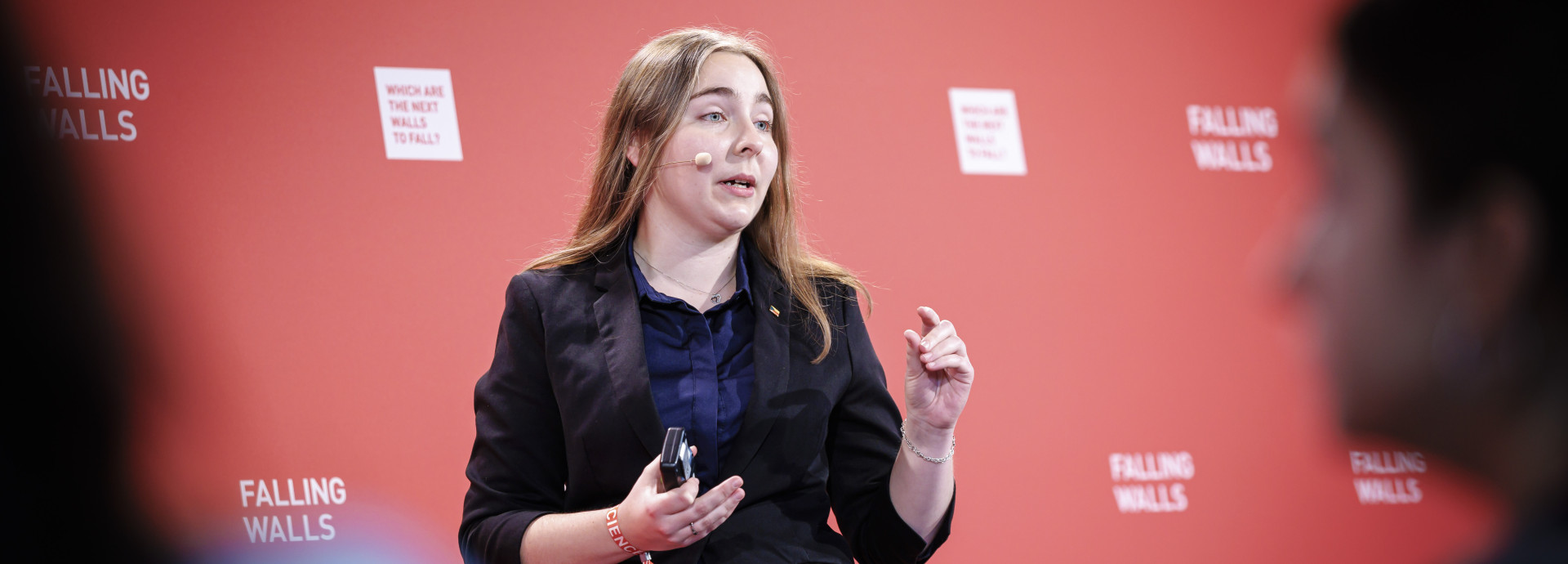
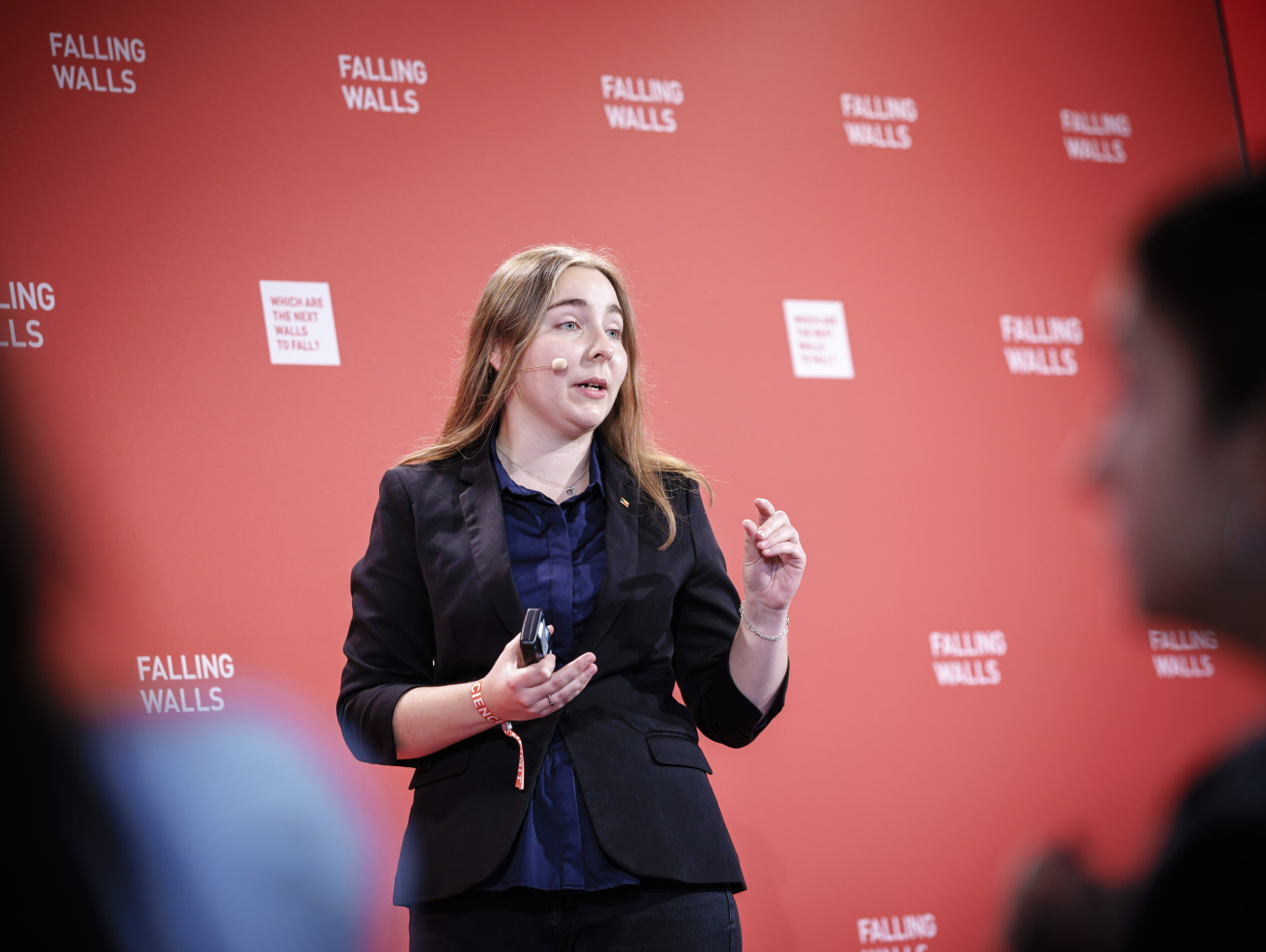
Veronika Šedajová - 2025 Falling Walls Lab Finalist
Falling Walls Lab Winner: Czech Republic
Veronika Šedajová is a physical chemist specialising in novel graphene derivatives for energy storage. She earned her PhD at Palacký University Olomouc, where she focused on the development of advanced materials for supercapacitors. As a postdoctoral fellow at the University of Cambridge, she studied materials for lithium-ion batteries. She is now a researcher at Palacký University Olomouc and CTO of Atomiver, a spin-out company translating her research into commercial applications.
Can you tell us about your breakthrough and the inspiration behind it?
Our breakthrough is a graphene-based material that enables a new generation of supercapacitors for medical implants. Devices like pacemakers rely on batteries that degrade and must be surgically replaced. Using our materials science background, we developed a novel material that can provide a safer and longer-lasting energy source inside the body. Our material allows faster charging, safer energy storage, and fewer replacement surgeries.
How do you see the future of energy storage? What are the next big things to happen in this field?
The future of energy storage will, in my opinion, focus on systems that are smaller, safer, and longer-lasting. We will see advanced hybrid solutions combining different types of batteries and advanced supercapacitors. New materials such as graphene will definitely play a major role, as will solving engineering challenges in the design and construction of energy storage devices.
What real-world impact do you hope your breakthrough will have in the next 5–10 years?
In the next decade, I hope our technology and other smart materials will help create pacemakers that last much longer and require fewer replacement surgeries. For many patients, avoiding surgery means less risk and a better quality of life. More efficient energy storage could also enable new implantable devices, wearable medical technologies, and applications that go beyond the medical field, for example in the aerospace sector.
In your view, what should investors/funding bodies be focusing on right now?
Investors should focus more on deep-tech innovation that connects fundamental research with real-world applications. Many breakthroughs in materials science already exist in laboratories but need support to reach industry. Funding sources that bridge research, prototyping, and production are essential, and while being risky, crossing the valley of death is one of the hardest steps for a young company.
How has participation in the Falling Walls Lab supported or influenced your work?
Falling Walls Lab gave me a platform to share my research beyond academia in a room full of like-minded people. The atmosphere was incredible. It helped me think about how to communicate the real-world impact of our work to investors, innovators, and industry partners. It also connected me with a global community working to break barriers in science and technology.
What are the next walls to fall? And, in your view, what are the next walls which should fall?
In the energy storage field, the next walls to fall should be the limits of size, lifetime, and safety in current energy and power sources. Beyond technology, I would also like to see barriers fall in areas such as gender inequality and broader societal disparities. Science and innovation should benefit everyone. Breaking these barriers will make progress more inclusive and impactful.



Unsubscribe any time. You’ll find our data privacy policy here.