Science Breakthroughs Success Stories: Rafael Prieto-Curiel
Global Call Category: Science Breakthrough in Social Sciences & Humanities
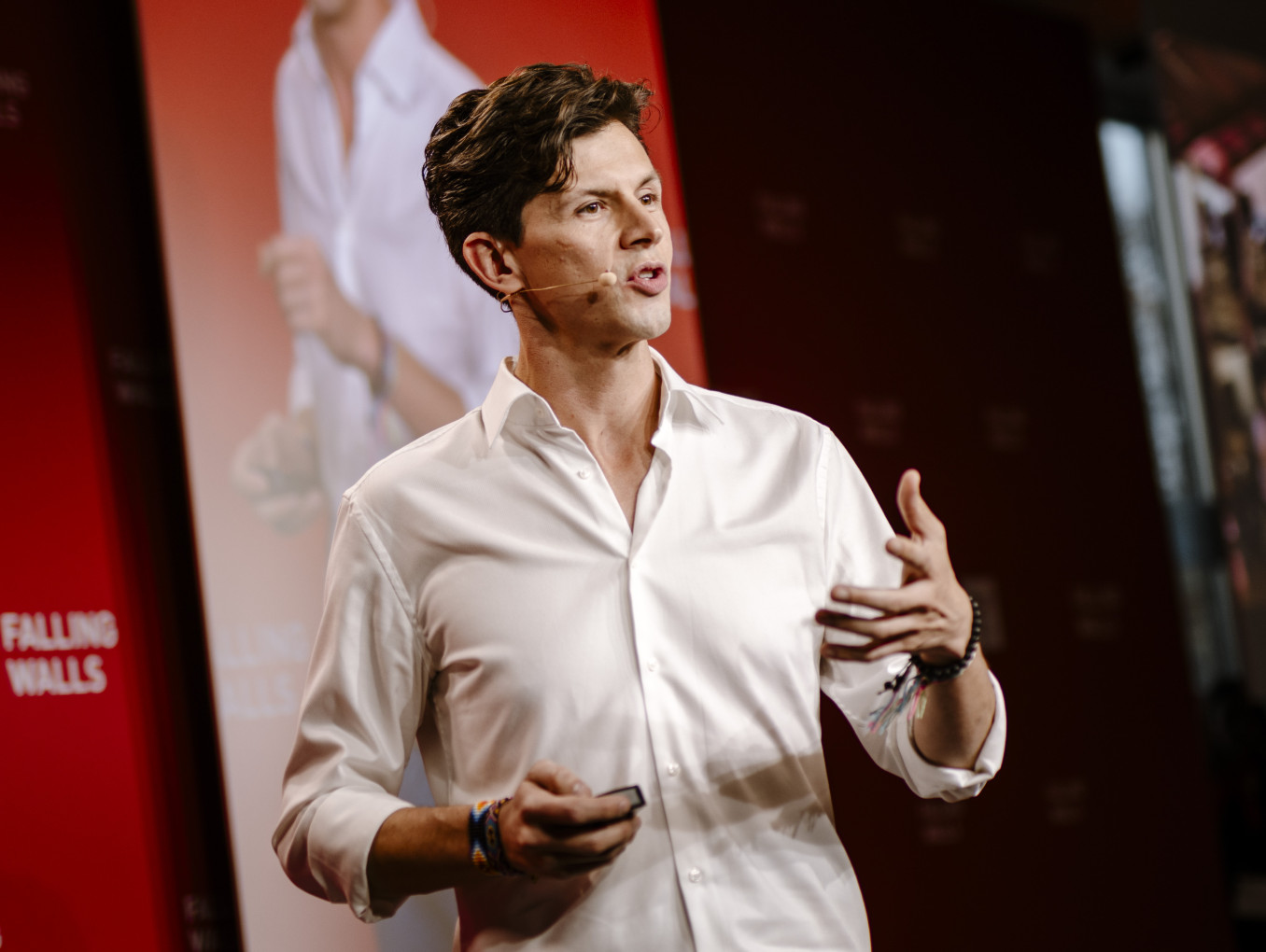
The Mexican complexity scientist using mathematics and spatial analytics to reduce organised crime and violence in Latin America
Rafael Prieto-Curiel is a Faculty Member at the Complexity Science Hub, where he studies the dynamics of violence, mobility, migration and urban evolution. Drawing on mathematics, spatial analytics and demographic data, his work bridges academia and policy, collaborating with institutions such as the OECD and the World Bank, and informed by his previous leadership in crime forecasting at Mexico City’s Emergency Attention Centre (C5).
At the Falling Walls Science Summit in 2024, he was named Science Breakthrough of the Year in the Social Sciences and Humanities category for his research modelling organised crime cartels. By analysing how cartels respond to arrests and losses through increased recruitment, his work challenges conventional approaches to crime prevention and calls for science-based policies that address recruitment, poverty and structural inequality.
We spoke to Rafael about the inspiration behind his breakthrough, the future of crime science and complex social systems, the real-world impact he hopes to achieve and the next walls that must fall in research and society.
What is your breakthrough, and what is the inspiration behind it?
My breakthrough is in identifying ways to reduce the burden of organised crime cartels. By modelling the size of cartels, we detected that when it has lost members because they were arrested or killed, it compensates for the loss by recruiting even more members. My inspiration is my conviction that Latin America should become a more peaceful region and that we need more science to address the threats we face.
How do you see the future of the science of crime, violence and complex social systems? What are the next big things to happen in this field?
I see stronger bridges between different fields of science. How can we understand why a person is recruited by a cartel without examining the psychology of violence, the economy that employs thousands of people in illicit activities (such as extortion or kidnapping), and the influence of social media on young people? No single field of science can address a threat of this scale.
What real-world impact do you hope your breakthrough will have in the next 5–10 years?
We need better, science-based policies that address the various aspects of organised crime. Without reducing cartel recruitment, it is almost impossible to prevent violence in the long run. If people living in poverty are more easily recruited by organised crime, how can we effectively reduce recruitment in Latin America, a region that is home to nearly 90 million people living in poverty? I hope we can scale up solutions for vulnerable populations.
In your view, what should investors/funding bodies be focusing on right now?
Latin America is a promising region, still many years away from its ageing decline, but already past its period of rapid expansion due to high fertility. Today, the region has a demographic bonus, but it is being partly lost to violence. To realise the region’s full potential, we must invest in keeping young people away from organised crime. In Mexico, for example, the economic impact of violence is staggering, estimated at almost 20% of its GDP.
You applied to the Global Call in the category of Social Sciences & Humanities. How has this programme supported or influenced your work?
The Falling Walls spotlight has been highly influential in my work. I am a mathematician trying to contribute to the social sciences, which brings the challenge of showing how quantitative methods can deepen our understanding of society. With the recognition of Breakthrough of the Year, my work has been more widely appreciated beyond the sphere of quantitative research.
What are the next walls to fall in research? And, in your view, what are the next walls which should fall in research?
The next walls to fall are those that limit researchers from Asia, Africa and Latin America. Unfortunately, science still has many glass ceilings that affect many minority groups. For example, in 2025, at the most prestigious global conferences in my area, all keynote speakers were European or from the United States. Systemic issues that are widespread outside academia are also reproduced within research groups. I am the first person from Latin America to be recognised as Breakthrough of the Year, but I hope not to be the last.

Unsubscribe any time. You’ll find our data privacy policy here.