Lab Success Stories: Nithin Sadeesh
Falling Walls Lab Winner: Eastern Finland
The biomedical researcher developing optical sensing technology to make engineered cartilage safer for patients with osteoarthritis
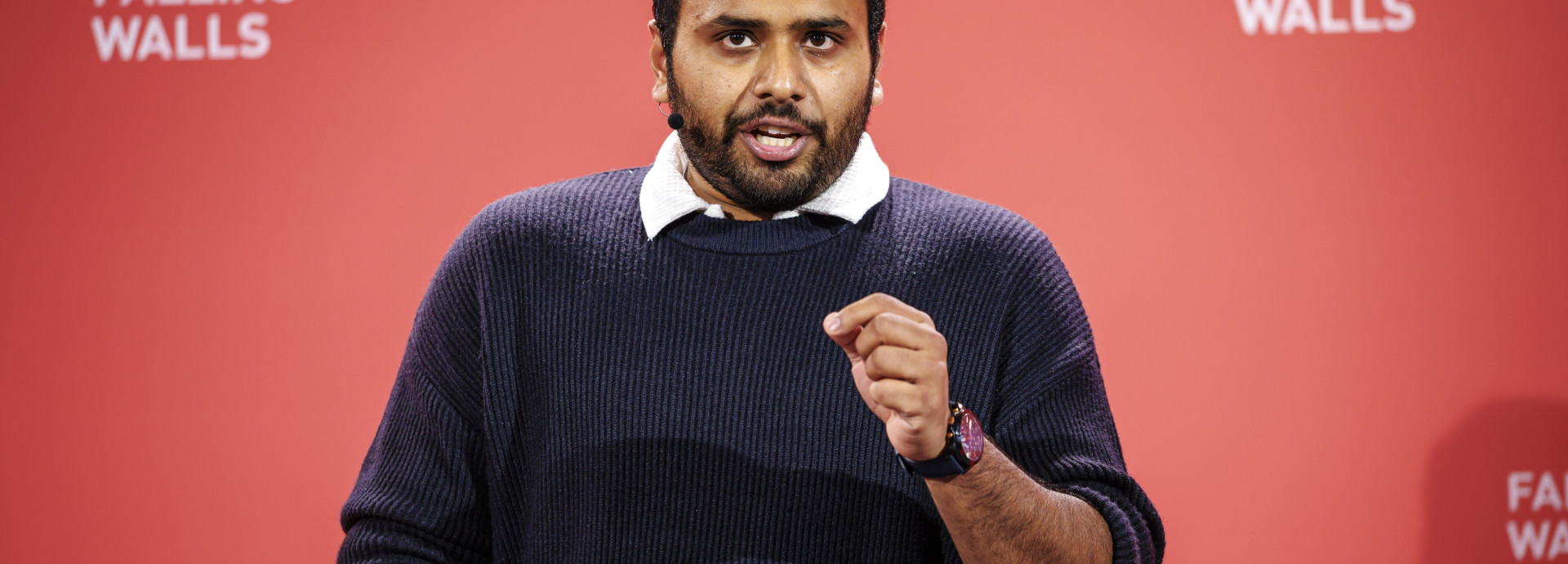
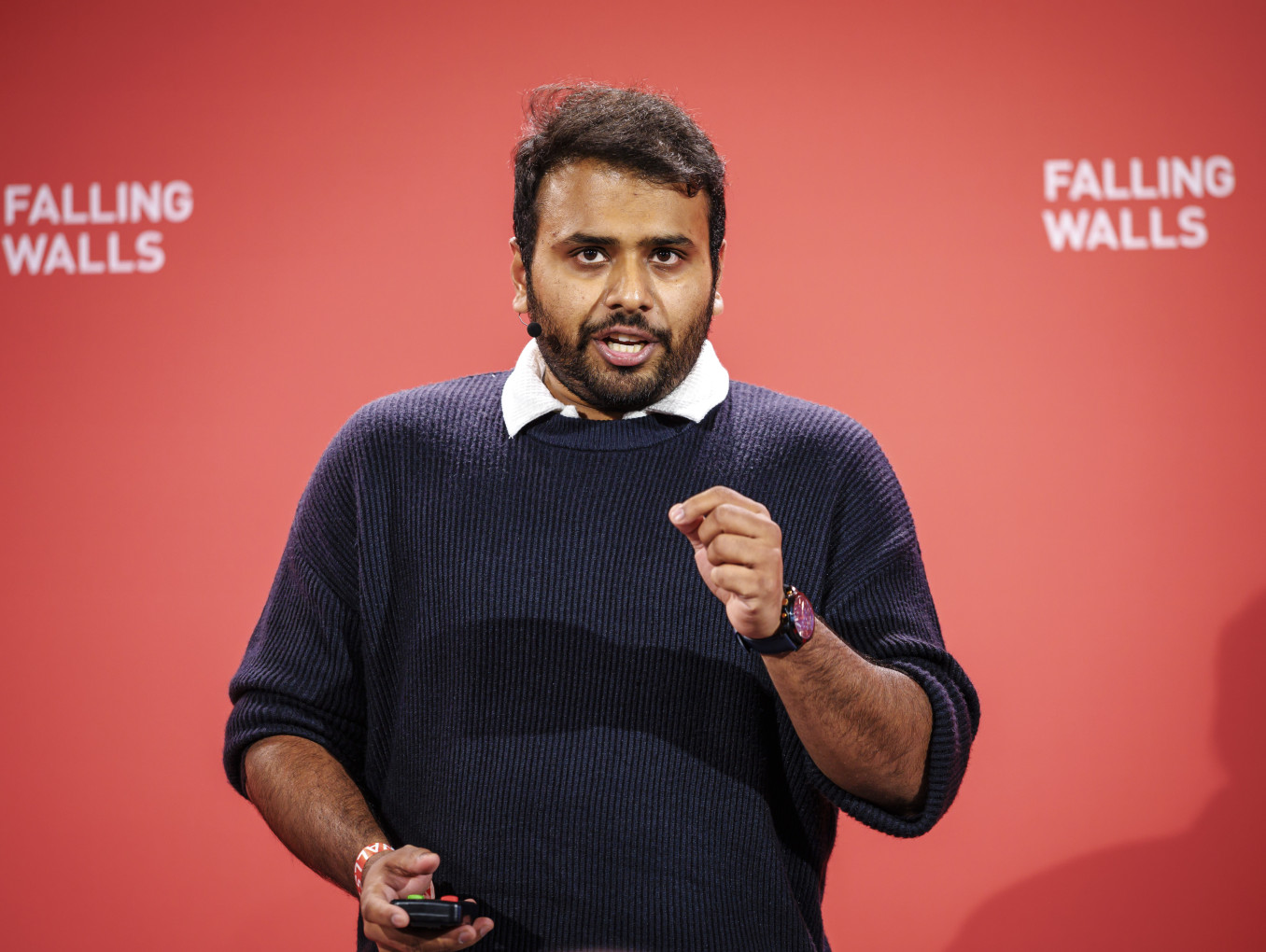
Nithin Sadeesh is a PhD researcher at the Biomedical Spectroscopy Laboratory at the University of Eastern Finland, focusing on advancing tissue engineering and optical sensing technologies for regenerative medicine. His breakthrough project, NIRSense, uses light-based sensing to monitor the growth of engineered cartilage in real time, helping scientists determine when artificial tissue is ready for safe transplantation. By enabling non-destructive monitoring during tissue development, the technology aims to improve the reliability and safety of cartilage implants for people living with osteoarthritis.
Nithin was selected as the winner at the Falling Walls Lab Finland in 2025 and invited to present his breakthrough at the Falling Walls Science Summit in Berlin. We spoke to Nithin about the inspiration behind NIRSense, the future of cartilage tissue engineering and the next walls to fall in regenerative medicine.
Can you tell us about your breakthrough and the inspiration behind it?
Over 600 million people worldwide struggle with everyday activities because of osteoarthritis, which destroys cartilage and has no curative treatment. Tissue engineering offers hope by creating artificial cartilage, but monitoring its growth remains a major challenge. Our innovation, NIRSense, uses light-based sensing to track cartilage development in real time, helping ensure that engineered tissue is ready for safe transplantation.
How do you see the future of cartilage tissue engineering? What are the next big things to happen in this field?
The future of cartilage tissue engineering is moving towards a real-time, non-destructive monitoring of how tissue grows and responds in diseased conditions. The next big steps will be combing optical sensing systems and automated bioreactors to create safer, more personalised cartilage implants. As we learn to track the biomolecular and biomechanical properties of the engineered tissue, we will be able to grow tissue that is more predictable, functional and ready for clinical use.
What real-world impact do you hope your breakthrough will have in the next 5–10 years?
In the next decade or so, we hope NIRSense will help create safer, more reliable cartilage implants for people living with osteoarthritis. We believe that with NIRSense we could reduce failed implants and accelerate personalised treatments. Ultimately, we want this technology to bring us closer to a future where osteoarthritis is managed and treated proactively.
In your view, what should investors/funding bodies be focusing on right now?
I believe there's a lot of research around the world that requires the focus of investors and funding bodies. But I believe the focus should be on technologies that can help in the real-time and non-destructive monitoring of biological systems, specifically optical sensing tools. This will help to accelerate diagnostics, tissue engineering and personalised medicine. Funding innovations like NIR-based biosensors will help bridge the research done in lab with real clinical impact. The next major breakthrough will come from supporting these scalable, cross-disciplinary technologies.
How has the participation in the Falling Walls Lab supported or influenced your work?
I think participating in Falling Walls Lab gave our research international visibility. We were also able to secure a Proof of Concept (PoC) grant to further advance our work. It also strengthened our confidence in translating our laboratory findings into a real-world solution.
What are the next walls to fall? And, in your view, what are the next walls which should fall?
We believe that the next walls to fall are those which prevent the real-time and non-destructive understanding of how our tissues heal, degrade or respond in disease conditions. I believe that the next walls that should fall include the gap between the translation of laboratory innovations into clinical application. Breaking down these walls will help in the development of non-invasive sensing tools that will accelerate personalised, predictive and preventative healthcare.
Can you tell us more about the team behind this breakthrough and how they contributed to the project?
As a PhD student, I am fortunate to work within the Biomedical Spectroscopy Laboratory (BSL) at the University of Eastern Finland, led by Associate Professor Isaac Afara. Our work is strongly supported by an exceptional team, including Ervin Nippolainen, Arjen Gebraad, Susanna Miettinen, Harini Karunarathna and Omar Elkadi. Their expertise in spectroscopy, tissue engineering and data analysis has been essential to this breakthrough.
How was it to attend the Falling Walls Science Summit in Berlin?
Attending the Falling Walls Science Summit was truly inspiring, as it showcased incredible research from around the world. It was a wonderful reminder of how science brings people from different cultures and backgrounds together. I had the chance to meet amazing researchers and make lasting friendships. Thanks to the Summit, I’m confident that many more scientific ‘walls’ will continue to fall.
Unsubscribe any time. You’ll find our data privacy policy here.