Science Breakthroughs Success Stories: Nondas Ferreira da Silva
Global Call Category Science Engagement
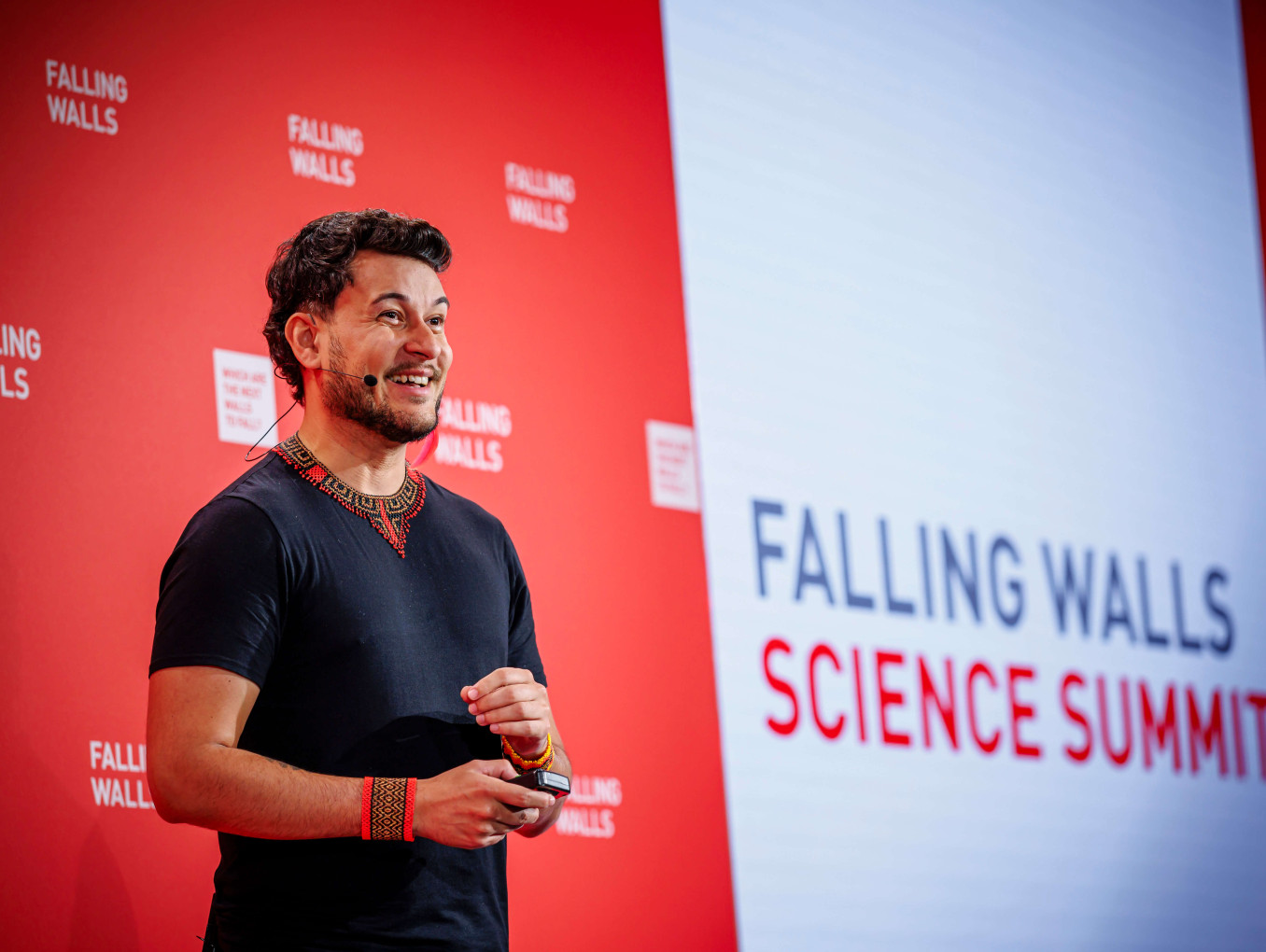
The Brazilian Forest Engineer and entrepreneur fostering inclusive climate-resilient development in Brazil
Nondas Ferreira da Silva is a Brazilian Forest Engineer and founder of Instituto New Era. At the Falling Walls Science Summit in 2025, he was awarded the Science Breakthrough of the Year in Science Engagement for Seeds of Change, a project which seeks to break the wall of restoration with Indigenous knowledge. His community-driven initiative empowers traditional communities and indigenous Xacriabá people to restore degraded ecosystems in Brazil’s Cerrado biome, bridging the gap between science and traditional knowledge.
We spoke to Nondas about where he found inspiration for his breakthrough idea, the future of biome restoration, and the value of humility in the ongoing fight to restore our planet’s natural resources.
Can you tell us about your breakthrough and the inspiration behind it?
My breakthrough with Seeds of Change was born from dreams, memory and hope. It is about restoring the Cerrado by bringing science together with Indigenous and traditional knowledge, but also restoring dignity, identity and meaning. I grew up watching forests disappear, rivers dry up and people—including myself—leave their land to survive elsewhere. One question stayed with me: what if restoration could reconnect people to their territories and open space for a future rooted in dignity and possibility?
How do you see the future of biome restoration? What are the next big things to happen in this field?
I see restoration becoming a matter of survival, not choice. Climate change is forcing us to look back at what we destroyed in the name of “development” and ask how to repair it. The Cerrado has the power to regenerate water, food and life, but only if we act now. I cannot imagine a future without rivers to swim in, without birds, without shade. I dream that my children will have the same deep connection with nature that my ancestors and I once knew.
What real-world impact do you hope your breakthrough will have in the next five to ten years?
I hope this work helps show the world that Brazil—and especially its rural and traditional territories—can be leaders in healing the planet. I want young people to believe they don’t need to abandon their land to have a future. Forests grow slowly, but hope grows when people feel seen and valued and supported. In ten years, we want to restore ten million hectares and create opportunities for ten million people. I know this movement will help reconnect people to their territories and transform restoration into a real pathway for dignity, belonging and long-term prosperity.
In your view, what should investors/funding bodies be focusing on right now?
They should invest in people, not just projects. Supporting local organizations, education and long-term learning create roots that last beyond funding cycles. Many powerful ideas are born far from the spotlight, in places rarely seen by the media. Restoration funding is not charity—it is an investment in our collective future, in water, food, climate balance and human dignity.
You applied to the Global Call in the category of Science Engagement. How has this programme supported or influenced your work?
Falling Walls Engage felt like someone finally watering a seed I had been protecting for years. I met people who helped me see my work not as something small or local, but as part of a global movement. For the first time, I truly felt that my knowledge, my story and my territory mattered. Science engagement became a form of care—for ideas, for dreams and for people who refuse to give up.
What are the next walls to fall? And, in your view, what are the next walls which should fall?
The next walls to fall are the ones that silence traditional peoples and those living in vulnerable conditions. Wisdom does not only exist in universities—it lives in communities, rivers, seeds and memory. We need more voices at the table, more listening, more humility. We only have one planet, and this is our moment to make it better. We are the generation for restoration, and the Earth is counting on us.
Unsubscribe any time. You’ll find our data privacy policy here.