Breaking the Wall of Living Electronics
Breaking the Wall of Living Electronics
Global Call 2026 Finalist Interview: Engineering & Technology
Dr. Shiming Zhang earned his PhD in Chemical Engineering at École Polytechnique, University of Montreal, and received postdoctoral training at UCLA. He joined the University of Hong Kong as Assistant Professor in 2020, where he leads the Wearable, Intelligent and Soft Electronics (HKU-WISE) group in Electrical and Computer Engineering. He serves on the international advisory boards of Advanced Electronic Materials and Advanced Biosensors, and is a member of the IEEE Electron Device Society's Biomedical Device Committee.
Which wall does your research or project break?
We break the wall between electronics and biology. Transistors, the building blocks of electronics, are rigid, flat, and 2D, while living tissue is soft, irregular, and 3D. This mismatch has long limited how well devices can work with the body.
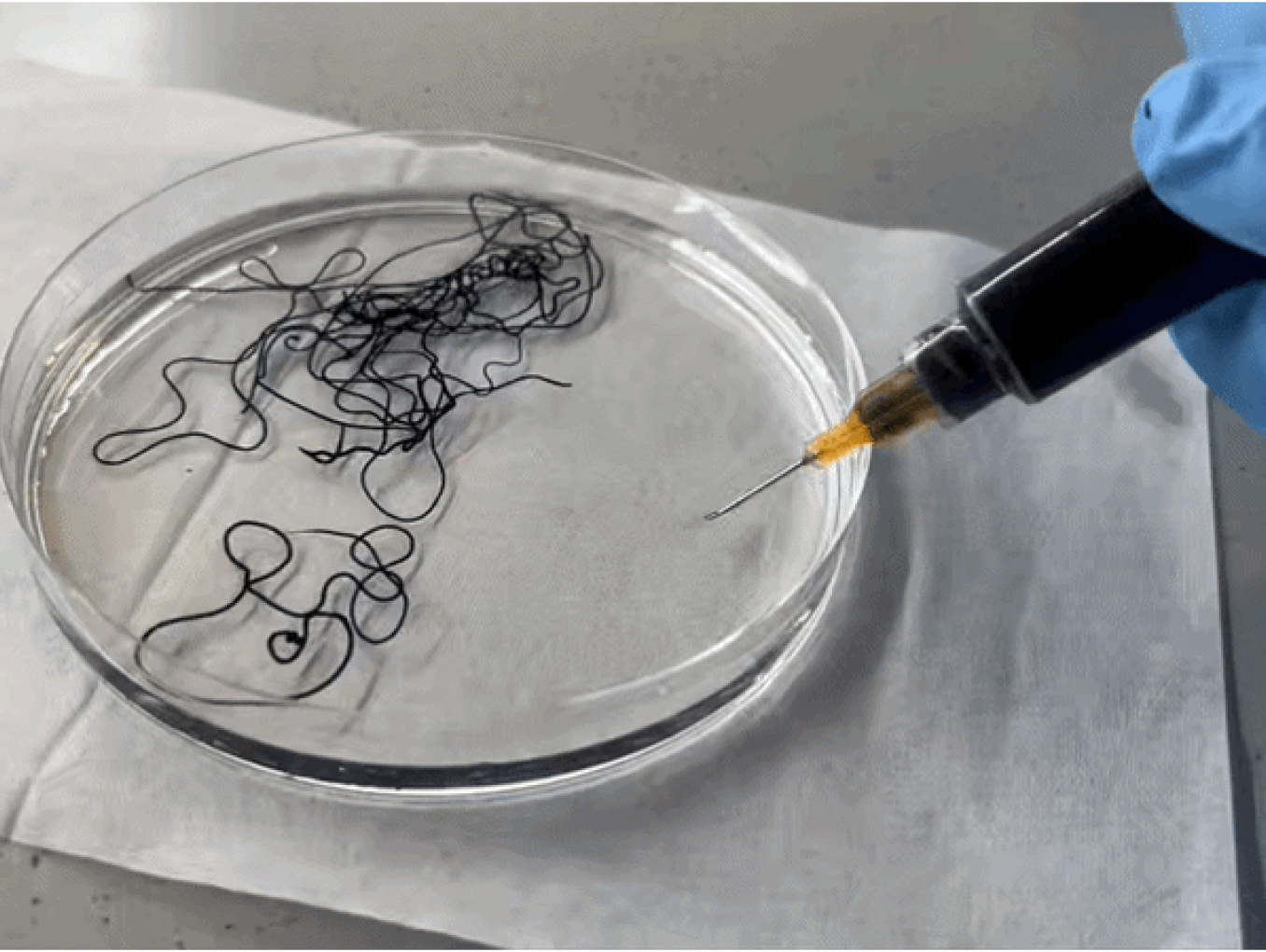
For decades, scientists believed transistors could only work as thin, flat films, and that semiconducting behavior was impossible in soft, water-rich materials. We proved this wrong. We discovered that soft hydrogels can carry electronic signals, and we built the first 3D transistors that host living cells (Science, 2025, Cover).
We also break a mindset. Until now, the approach was to adapt electronics to biology—making devices thinner and softer—while the device stayed a foreign object sitting on tissue. We reverse this. By building transistors from the same materials as living systems, the device itself becomes tissue-like: soft, wet, 3D, and alive.
The transistor is no longer just an observer of biology, but a true participant in it. This shift from interfacing to merging opens the door to a new era of living electronics.
What is the main goal of your research or project?
Our goal is twofold: to develop immune-compatible medical electronics, and to enrich the toolbox for advanced biological research. To do this, we redesign electronics for biology, creating "living electronics" where devices and tissue truly merge.
Our first step was to prove that transistors can be built from soft, water-rich, living materials. We succeeded by discovering that hydrogels can act as semiconductors, and by building the first 3D transistors that host living cells (Science, 2025, Cover). Because these devices are soft and tissue-like, they promise medical implants that the body accepts, without the rejection and inflammation caused by today's rigid electronics.
Our second goal is to use these living transistors to program cells. Today, biology is mostly controlled at the molecular level through gene editing. We want to add control at the cellular level, using electronic signals to guide how cells behave. This makes cell programming a powerful partner to gene editing.
Looking ahead, we aim to build a foundation spanning materials, electronics, and medicine—from wearable sensors to regenerative implants. Ultimately, we want to open and grow an entirely new research frontier that reshapes how machines and living systems connect.
What impact does your research or project have on society?
Our work changes how people imagine electronics. Most picture hard silicon chips, but our research (Science, 2025, Cover) shows a new possibility: soft, 3D, jelly-like transistors that can host living cells. The most direct impact is on medical electronics. Because our devices are soft and tissue-like, they can work with the body far more naturally than rigid implants, reducing rejection and inflammation. In the near term, this enables better wearable and implantable sensors for health monitoring, diagnostics, and treatment. In the longer term, implants that merge with tissue could transform regenerative medicine and help heal the body. The second impact is on biological research. Our living transistors give scientists a new tool to electronically probe and program cells. By making cell programming a complement to gene editing, we open fresh ways to guide stem cells and solve problems that molecules alone cannot. Our work also inspires the wider scientific community. Our 2020 hydrogel semiconductor idea sparked follow-up studies worldwide in top journals like Science. In short, our research helps solve global health challenges and advances humanity's ability to build technology that works in harmony with life, in line with the Sustainable Development Goals.
What advice would you give to young scientists or students interested in pursuing a career in research, or to your younger self starting in science?
My first advice: let curiosity lead, but stay focused. Great science often starts with a question you cannot stop thinking about—but curiosity alone is not enough. Choose what matters most and pursue it with patience. Our 2020 idea took years to grow into the 2025 breakthrough.
Second, work across disciplines. Our research sits between materials, electronics, and biology, and the best opportunities often hide in the gaps between fields. Don't fear being a beginner in a new area—that is where original ideas are born. Learn a field deeply enough to know why people call something impossible, then test that belief yourself.
Third, and most important: technology is never an end in itself. As we chase new breakthroughs, we must also think about their social, ethical, philosophical, and even spiritual meaning. Technology moves fast, but human norms move slowly, and this gap is risky. Universities especially must nurture this awareness, not just build capability.
Everything we do should serve a better life for humanity—not the blind pursuit of a single goal. To my younger self, I would say: be bold enough to break walls, but wise enough to ask which walls are worth breaking, and for whom.
What inspired you to be in the profession you are today?
Pure curiosity.
What is one surprising fact about your research or project that people might not know?
Major discoveries often come by accident and cannot be predicted, but long, patient wandering within a field is exactly what creates the chance to stumble upon them.
What’s the most exciting moment you've experienced over the course of your research or project?
The moment we observed a paradigm-breaking experimental result, and we confirmed it was real. That feeling of achievement was unforgettable. It is something you can only truly understand by experiencing it yourself.