Science Breakthroughs Success Stories: Omneya Attallah
Global Call Category Women's Impact Award
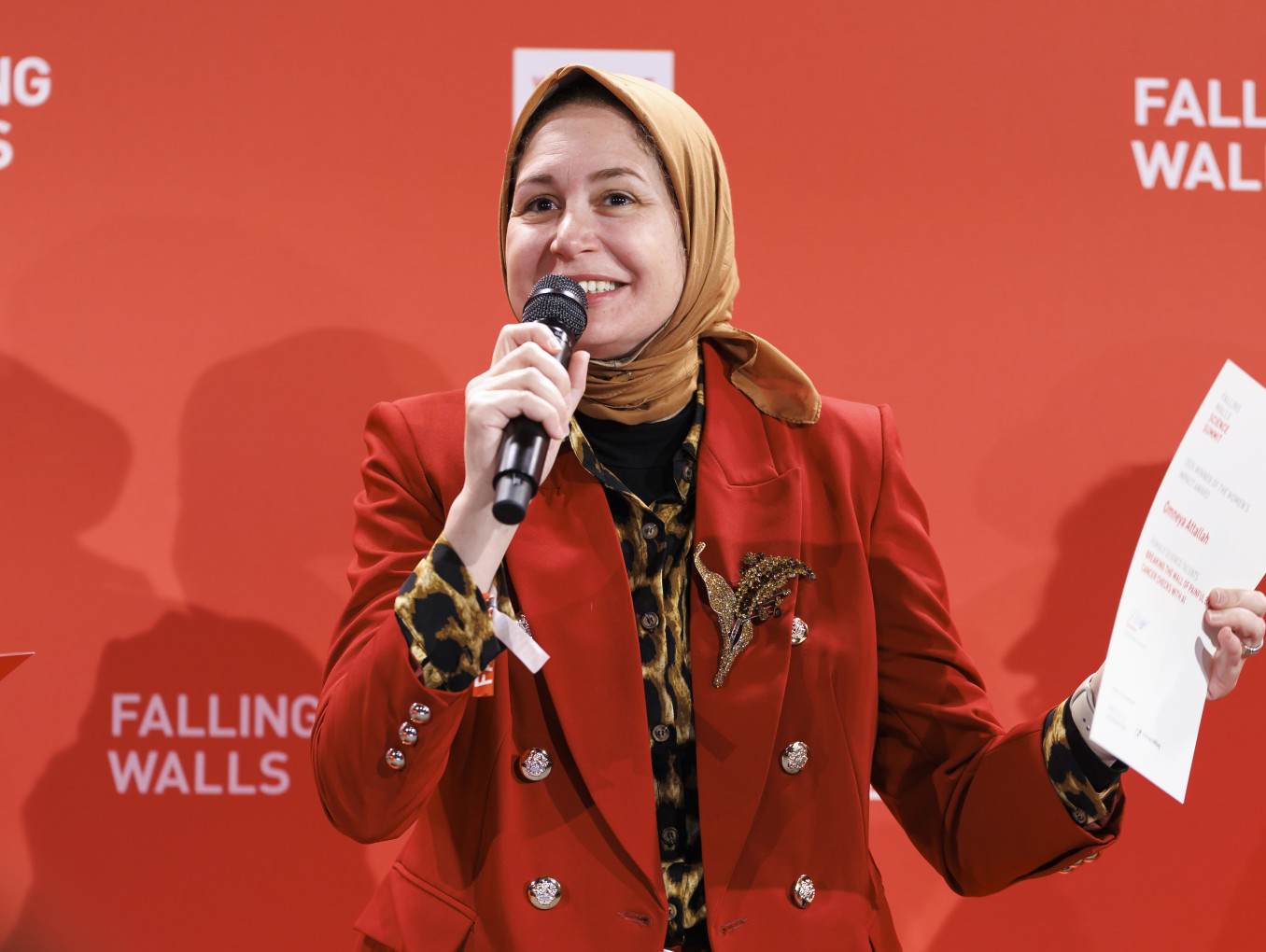
The Egyptian AI and biosignal processing pioneer advancing affordable, non-invasive breast cancer detection for women in underserved communities
Omneya Attallah is a Professor of Biosignal Processing and Artificial Intelligence in Medicine and Healthcare at the Arab Academy for Science, Technology and Maritime Transport (AASTMT) in Egypt and a founding member of the WeBios Lab. At the Falling Walls Science Summit in 2025, she was named a Winner in the Women’s Impact Award category for BrAID, a project which seeks to break the wall of limited access to early breast cancer detection in resource-limited settings. Her work combines novel, cost-effective non-invasive biomarkers with artificial intelligence to create a portable, painless diagnostic tool—bringing life-saving early detection to women in underserved communities.
We spoke to Omneya about what motivated her to apply for the Women’s Impact Award, the inspiration behind BrAID, the future of AI-driven disease detection and the next walls that must fall in science and society.
Looking back, what motivated you to apply for the Women’s Impact Award in 2025? What advice would you give to researchers considering applying for the Women’s Impact Award 2026?
I applied because the Women’s Impact Award celebrates research that truly changes lives, especially for women and underserved communities. My advice is simple: believe in your impact, tell your story with confidence and apply even if you doubt yourself—progress starts with courage.
Can you tell us more about your project and the inspiration or need behind it?
My project develops AI-driven, non-invasive diagnostic tools to support early disease detection, particularly for women. It was inspired by real experiences with healthcare gaps and the belief that technology can bring dignity, access and hope to underserved communities. It also stemmed from the urgent need for affordable, culturally acceptable solutions in underserved regions.
Looking ahead, how do you see the future of disease detection through the use of artificial intelligence? What are the next big things to happen in this field?
AI will transform healthcare from reacting to illness into predicting and preventing disease. The next big step is human-centered, explainable and affordable AI that supports clinicians and reaches people regardless of location or resources.
What key insight, inspiration or personal takeaway did you gain from attending the Falling Walls Science Summit 2025? What was the added value of being there in person?
The Summit reinforced the power of interdisciplinary collaboration and bold thinking. Being there in person showed me that dreams can become reality through hard work, resilience and never losing hope—turning ideas once invisible into visible impact through science.
In your view, what are the next walls which should fall in science and society?
The next walls are inequality in healthcare access, resistance to innovation and barriers facing women in science. Breaking them requires inclusive technologies, bold thinking, and empowering voices that have long been unheard.
Unsubscribe any time. You’ll find our data privacy policy here.