Breaking the Wall of Germany's Invisible Divide
Breaking the Wall of Germany's Invisible Divide
Global Call 2026 Finalist Interview: Social Sciences & Humanities
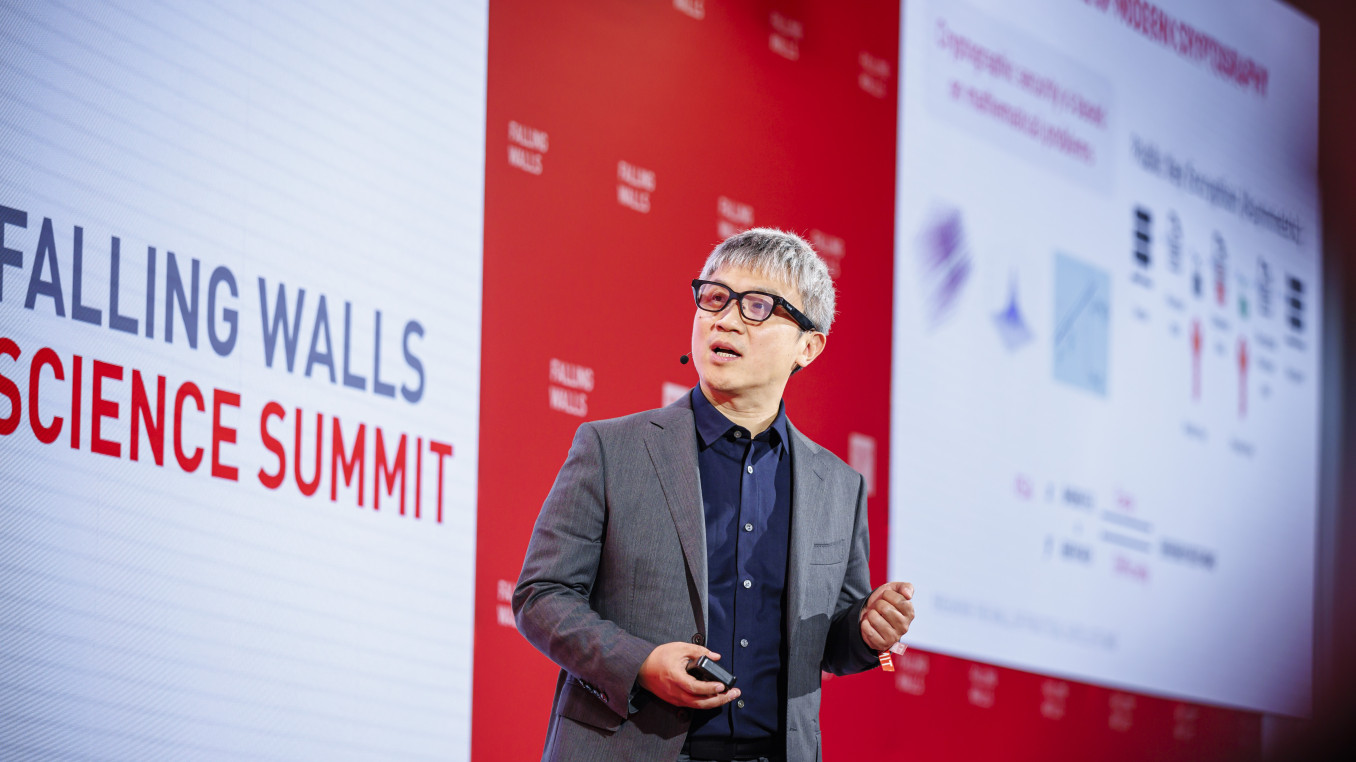
Ufuk Akcigit is a Professor of Economics at the University of Chicago and Deputy Chief Economist of the World Bank. He is internationally recognized for his research on innovation, productivity, and economic growth. He is the recipient of the €1.5 million Max Planck-Humboldt Research Award and the Kiel Institute Global Economy Prize. He leads a major research program at the Halle Institute for Economic Research on the persistent productivity gap between East and West Germany. He also serves on the Committee of Experts of the German Excellence Strategy.
Which wall does your research or project break?
The Berlin Wall fell more than three decades ago, but an invisible economic wall still remains. Workers in East Germany continue to earn less, firms are less productive, and innovative businesses are less likely to emerge and grow. My research asks a simple but fundamental question: Why do these gaps persist, despite enormous public investment and political commitment?
To answer this question, my team assembled unique historical and administrative data covering virtually every German firm since reunification and combined it with new economic models of innovation, entrepreneurship, and firm dynamics. Rather than viewing reunification as a one-time event, we study it as a long process of economic transformation.
Our findings challenge conventional wisdom. We show that productivity differences are not merely the result of historical circumstances or capital shortages. They are also shaped by incentives, firm dynamics, entrepreneurial activity, and the speed at which new technologies and management practices spread through the economy. Some well-intended policies accelerated employment in the short run but unintentionally slowed innovation and productivity growth over the longer run.
By identifying these mechanisms, our work helps policymakers distinguish between policies that create temporary convergence and those that generate lasting prosperity.
The wall we seek to break is therefore not a physical barrier, but the invisible divide separating opportunity, productivity, and innovation. While Germany motivates our research, the lessons extend far beyond its borders to any country seeking to reduce regional inequalities and build inclusive long-run growth.
What is the main goal of your research or project?
Our goal is to understand how East and West Germany can truly converge—not only in terms of income, but also in innovation, entrepreneurship, and productivity.
Economic development is often viewed as a question of infrastructure, education, or financial transfers. While these are important, they are only part of the story. Sustainable prosperity ultimately depends on whether firms innovate, entrepreneurs create new businesses, talented workers find productive opportunities, and successful ideas spread throughout the economy.
Our research develops new ways of measuring these processes and combines detailed firm-level evidence from Treuhandanstalt archives and German administrative data with modern economic theory to identify the policies that strengthen them.
Germany provides a unique natural laboratory because reunification created one of the largest economic integration experiments in modern history. By understanding why convergence has been slower than expected, we can learn broader lessons about regional development, structural transformation, and economic resilience.
Ultimately, our ambition is not simply to explain economic disparities but to provide governments with evidence-based tools for overcoming them. We want policymakers to move beyond short-term fixes toward policies that encourage innovation, entrepreneurship, and productive firms—the true engines of long-run prosperity.
What impact does your research or project have on society?
Economic growth matters because it determines people's opportunities, wages, and quality of life. Yet growth is not automatic—it depends on whether societies create an environment where ideas become innovations, innovations become businesses, and businesses create better jobs. Our research provides policymakers with a deeper understanding of these mechanisms. Rather than relying on broad averages, we analyze millions of observations on firms, workers, and innovators to identify which policies encourage productivity growth and which unintentionally hold it back. In Germany, our work offers new evidence on one of the country's most important long-term challenges: closing the economic divide between East and West. More broadly, the same framework is now being applied to countries ranging from Ukraine and South Africa to emerging economies working with the World Bank. The broader societal impact is helping governments design smarter industrial, innovation, and entrepreneurship policies that create sustainable growth rather than temporary gains. By improving the allocation of talent, supporting productive firms, and fostering innovation, these policies can raise living standards, strengthen economic resilience, and expand opportunities for future generations. Ultimately, our objective is simple but ambitious: to turn rigorous economic research into practical knowledge that helps societies become more innovative, more productive, and more inclusive.
What advice would you give to young scientists or students interested in pursuing a career in research, or to your younger self starting in science?
Choose important questions, not fashionable ones.
Many research topics become popular for a few years and then disappear. The questions that matter most, the ones that improve our understanding of society or solve real problems, remain important regardless of academic trends.
Second, become fluent in multiple languages, not spoken languages, but the languages of ideas. Learn theory, data, history, and institutions. The most influential research often comes from combining perspectives that are rarely brought together.
Third, do not be discouraged by failure. Every worthwhile research project begins with confusion. If you always know the answer, you are probably asking questions that are too easy.
Finally, remember that research is not about proving you are right; it is about discovering when you are wrong. Curiosity, humility, and persistence matter far more than brilliance alone.
The goal of science is not simply to publish papers. It is to generate knowledge that changes how people understand the world—and, if you are fortunate, helps make that world a little better.