Breaking the Wall of Reversible Male Contraception
Breaking the Wall of Reversible Male Contraception
Global Call 2026 Finalist Interview: Life Sciences
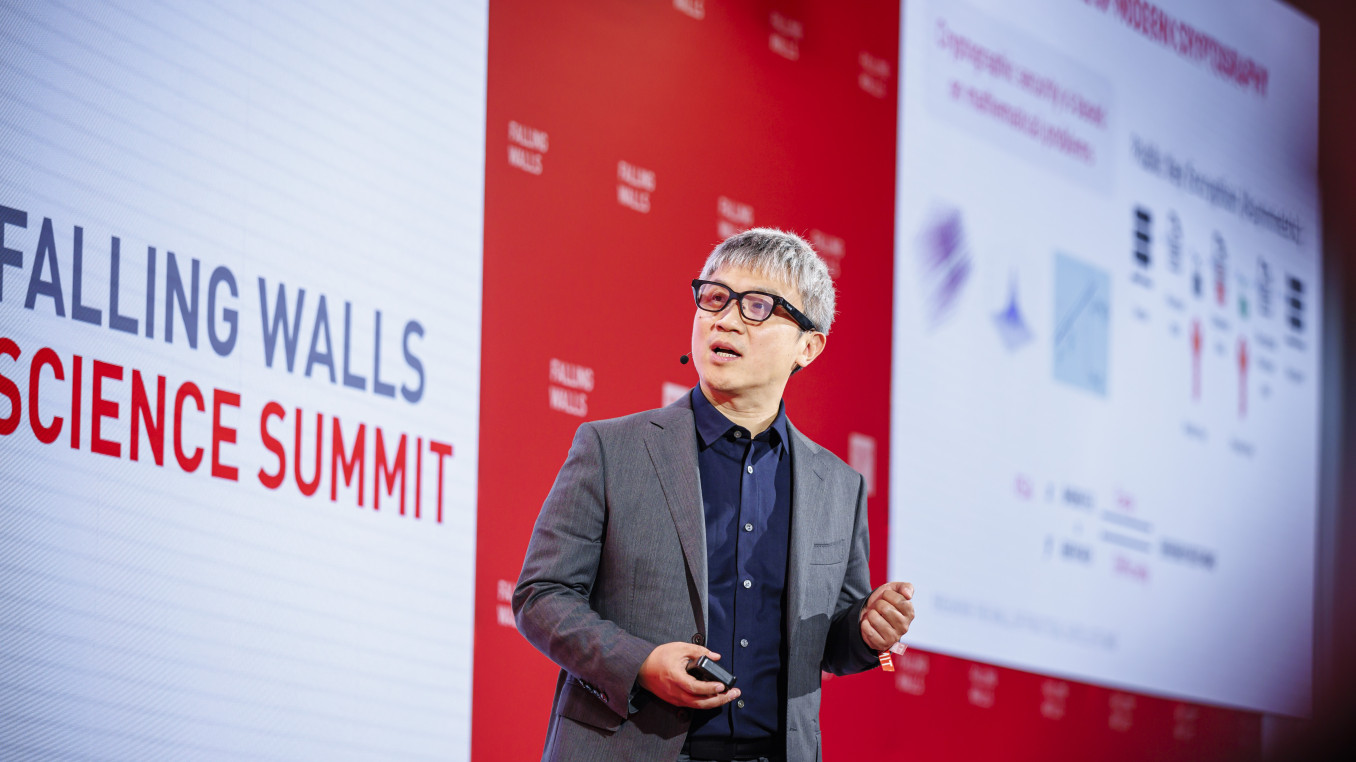
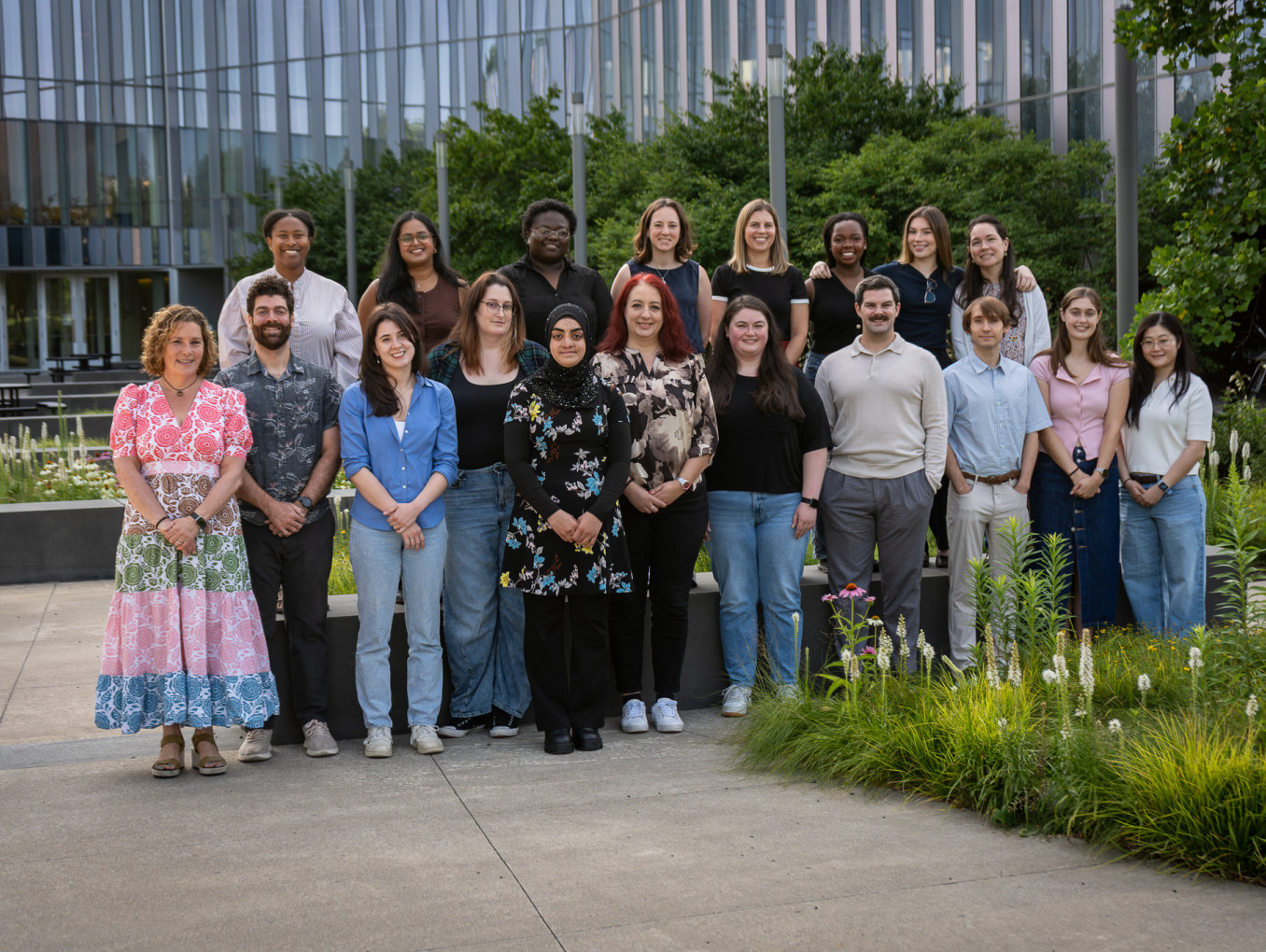
Paula Cohen has built her career defining the molecular mechanisms regulating meiosis and the production of healthy gametes. Over the past decade, she has begun to leverage this knowledge to develop innovative, long-acting, non-hormonal strategies for male contraception. Dr. Cohen is an AAAS Fellow and the recipient of multiple mentoring awards, reflecting her deep commitment to training the next generation of scientists to solve major issues in reproductive health.
Which wall does your research or project break?
Dr. Cohen’s research breaks the wall of contraceptive inequity: the long-standing assumption that the burden of preventing pregnancy must fall primarily on women. For decades, women have carried most of the physical, hormonal, financial, and social costs of contraception, while men have had few reliable options beyond condoms or vasectomy. This imbalance limits shared responsibility within families and restricts reproductive choice around the world.
Her work challenges the idea that male contraception must be either permanent, hormonally disruptive, or dependent on perfect timing. Many emerging male contraceptive approaches are designed for on-demand use, but coitally timed methods are vulnerable to user error, inconsistent access, negotiation between partners, and failure at the moment when protection is most needed. They also do not solve the need for continuous contraceptive coverage.
Dr. Cohen’s research instead envisions a long-acting, reversible, non-hormonal contraceptive that men could use continuously for 2–4 months at a time, delivered conveniently by injection or patch. This approach would give men a real, sustained role in family planning, while reducing the risk of missed doses, incorrect timing, or inconsistent use. By shifting contraception from a woman-centered responsibility to a shared biological and social responsibility, her work addresses a profound gap in reproductive health.
The wall she seeks to break is therefore not only scientific, but societal: the lack of safe, practical, reversible, and reliable contraceptive options for men. Success would expand reproductive autonomy for individuals and couples, reduce unintended pregnancies, and create a more equitable model of family planning across diverse global settings.
What is the main goal of your research or project?
The main goal of Dr. Cohen’s project is to develop a safe, reversible, long-acting, non-hormonal contraceptive for men that works by temporarily blocking the production of sperm at its source. Rather than targeting testosterone or mature sperm function, her strategy focuses on the earliest stages of sperm development, specifically the molecular switch that allows developing germ cells to enter meiosis, the specialized cell division required to generate sperm. Importantly, her approach is highly specific to sperm biology, preventing any risk of off-target effects.
This is a fundamentally different approach to male contraception. By intervening before sperm are produced, the project aims to create a biologically robust form of contraception with a very low risk of failure. Methods that act on mature sperm must block every sperm from reaching or fertilizing an egg, because even one escaping sperm can result in pregnancy. Dr. Cohen’s approach is designed to prevent sperm production upstream, while preserving the underlying stem cell population so that normal fertility can return after treatment is stopped.
The envisioned product would provide 2–4 months of continuous contraceptive protection through a convenient injection or patch. This would make it more reliable than daily or on-demand methods, while avoiding the systemic side effects associated with hormonal approaches. The goal is not simply to add another contraceptive option, but to create one that is practical for real-world use: long-acting, reversible, non-hormonal, low-error, and acceptable to men and couples across different health care settings.
Ultimately, the project seeks to translate decades of discovery in meiosis and healthy germ cell production into a new class of male contraceptives. If successful, it could open a major new market in reproductive health and provide a scalable tool for reducing unintended pregnancy while making family planning more equally shared.
What impact does your research or project have on society?
Dr. Cohen’s research could reshape society by addressing one of the most persistent inequities in reproductive health: the fact that women still bear most of the burden of pregnancy prevention. Globally, an estimated 121 million unintended pregnancies occurred each year between 2015 and 2019, and 61% of those ended in abortion, representing roughly 73 million abortions annually. These numbers underscore both the scale of unmet contraceptive need and the limitations of current options. The impact on women is profound. Unintended pregnancy can interrupt education, employment, financial stability, and personal autonomy, while also increasing exposure to medical, emotional, and social risk. WHO notes that access to family planning helps prevent unintended pregnancies, reduces pregnancy-related health risks, and enables women to pursue education and employment opportunities. Yet 164 million women of reproductive age worldwide still have an unmet need for contraception. Dr. Cohen’s work would add something fundamentally new: a long-acting, reversible, non-hormonal contraceptive for men that could provide 2–4 months of continuous protection through an injection or patch. Such an option could reduce reliance on female-controlled methods, daily adherence, or coitally timed contraception, thereby lowering user error and making pregnancy prevention a more genuinely shared responsibility. The global implications are substantial. In settings where women face limited access to contraception, stigma, medical contraindications, or restricted reproductive health services, a practical male contraceptive could expand reproductive choice for couples while reducing the burden placed on women’s bodies and lives. It could also reduce the number of unintended pregnancies that lead to unsafe abortion; WHO estimates that around 45% of abortions are unsafe and that unsafe abortion remains a preventable cause of maternal death and morbidity. By translating fundamental discoveries in meiosis and sperm production into a real-world contraceptive, this research could improve women’s health, strengthen reproductive autonomy, and redefine family planning as a shared societal responsibility.
What advice would you give to young scientists or students interested in pursuing a career in research, or to your younger self starting in science?
My advice to young scientists would be to choose a question that truly matters to you, because passion is what carries you through the hard parts. Research is not glamorous most of the time. The hours are long, the work can be grueling, and failure is built into the process. Experiments do not work, papers are rejected, grants are not funded, and progress often feels painfully slow. But if you are driven by the possibility that your work could have a long-term impact — on health, on society, on the way we understand the world — then the difficulty becomes part of the purpose.
Science offers an extraordinary privilege: the chance to discover something that no one else knows. For one brief moment, when the result first appears, it is like holding a secret about the universe. That feeling is rare, but it is powerful enough to sustain a lifetime in research.
I would also tell young scientists never to give up too quickly. Be rigorous, be humble, listen to criticism, but trust your instincts. Some of the most important discoveries come from following an observation that does not fit, or from believing that a question others have overlooked is worth pursuing.
Most importantly, never lose sight of what you are doing and who you are doing it for. Science is not only about data, publications, or recognition. It is about using knowledge to change lives. And perhaps the greatest impact one can have is not through one’s own discoveries alone, but through the scientists one nurtures, mentors, and sends out into the world. Their questions, their courage, and their discoveries become part of your legacy. In that way, the impact of a scientist can multiply far beyond any single paper or experiment — through the people they train to think deeply, act boldly, and use science to make the world better.
Finally, I would tell the “young me” to go back and finish that really exciting experiment I never completed during my PhD – it’s still exciting and still worth getting the answer.