Breaking the Wall of Apolitical Climate Futures
Breaking the Wall of Apolitical Climate Futures
Global Call 2026 Finalist Interview: Social Sciences & Humanities
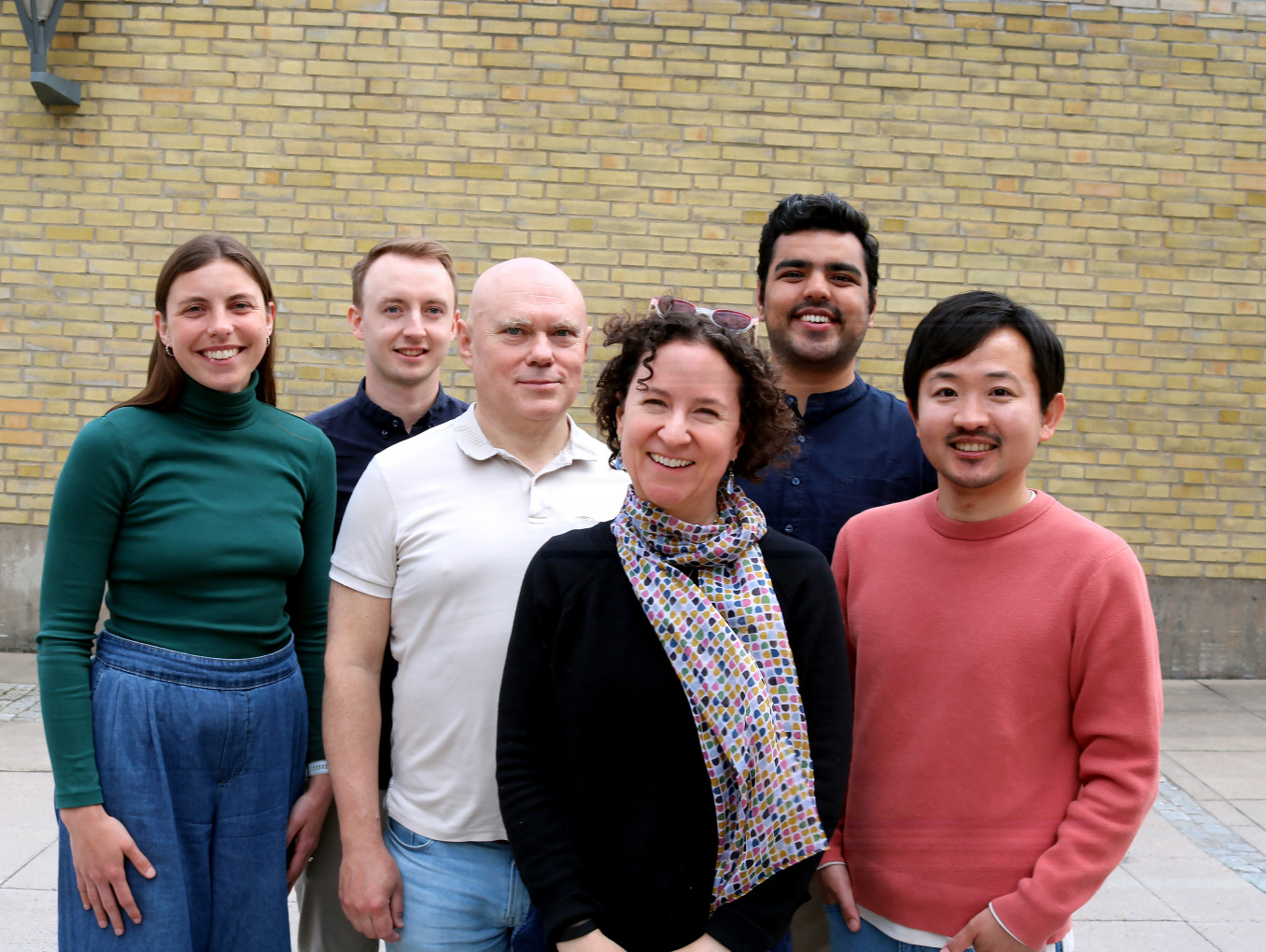
Jessica Jewell is a Professor in Technology and Society at Chalmers University where she runs the Energy Technology and Policy Group. Her research focuses on developing methods for assessing the feasibility of climate action and developing most-likely technology projections for new technologies. She holds an ERC Starting Grant and is a member of the Swedish Young Academy and holds honorary positions at IIASA and the Breakthrough Institute. Previously, she worked at IIASA and the IEA.
Which wall does your research or project break?
Climate policy rests on scenarios that assume technologies will grow as fast as we need them to. They won’t. The IPCC lays out numerous pathways to avoid dangerous climate change, but there are serious concerns about whether these pathways are feasible given the inertia and opposition that characterise real-world energy systems. The wall my research breaks is the wall of apolitical climate futures: the treatment of transitions as if they were purely technical and economic problems, stripped of the politics that actually determines whether they happen.
This problem is not new. Since climate scenarios first emerged in the 1990s, climate and energy models have incorporated techno-economic constraints such as technology costs and resource availability, while treating socio-political constraints as unquantifiable. Public opposition, institutional inertia, the political difficulty of phasing out incumbent industries have been acknowledged as caveats but excluded from the models themselves, on the grounds that they cannot be quantified. Calls to evaluate which pathways are most feasible or most likely have been repeatedly dismissed for lack of data.
The consequence is that policymakers are handed portfolios of pathways with no evidence-based way to judge which are achievable. Feasibility becomes a matter of assumption rather than evidence, and the socio-political constraints that most often derail transitions in practice remain invisible in the tools meant to guide them. Treating climate futures as apolitical does not make them so – it simply moves the politics out of view. Breaking this wall means turning feasibility from an untestable caveat into something measurable.
What is the main goal of your research or project?
The main goal of my research is to identify which technologies are most likely to deliver on climate goals given not just techno-economic constraints but also socio-political ones. My approach builds on a simple premise: the future is already here, it is just unevenly distributed. Past and ongoing energy transitions are evidence of what is socio-politically feasible, not merely what is technically possible. Using historical deployment data across diverse technologies and contexts, I detect the implicit imprint of socio-political constraints even where they cannot be directly observed – and in cases like coal phase-out, quantify the cost of overcoming them. Politics, in other words, leaves measurable traces. My research tries to uncover them.
Focusing on technologies – which I show are targeted by 70% of climate policies – I find that change fast enough for 2°C is feasible, but not for 1.5°C. Both sides of the transition face non-economic constraints that are quantifiable and can be addressed by policy. Coal phase-out fast enough for 2°C is politically achievable but requires compensating affected actors; countries that have done so spent billions, yet at rates consistent with carbon prices. Renewables growth, despite dramatic cost declines, faces non-economic barriers that slow deployment earlier than expected, showing the importance of policies beyond just making technologies cheap.
The broader aim is to complement the “what-if” thinking that shapes so much of climate research with evidence-based projections of which futures are most likely. Climate futures that take socio-political forces seriously need not be less rigorous than apolitical ones; done right, they are more rigorous.
What impact does your research or project have on society?
My research gives decision-makers a clearer picture of which energy transitions are not only techno-economically feasible but also which are most socio-politically feasible too. This matters for how societies set and pursue climate targets. My work points to cases where the required policy effort is underestimated, such as solar and wind, where non-economic barriers mean that making technologies cheap is not enough. It also speaks to technologies where optimism may be excessive, such as CCS where launching into commercial success is fraught with uncertainty. Above all, my work enables more realistic assessments of which climate targets are achievable. For most technologies my group has looked at: 2°C is firmly within reach while 1.5°C is not. Knowing this helps decision-makers prepare for the most likely level of warming rather than planning around targets the evidence suggests are out of reach. More generally, my work helps to reframe how climate futures are conceptualised and constructed. By grounding projections in historical growth dynamics rather than overly optimistic or pessimistic assumptions, my research shows which climate pathways not just internally consistent but also socio-politically realistic. In an era of rising populism and retreating climate commitments, climate futures that face up to socio-political reality are more urgent than ever – durable climate policy has to be built on a clear-eyed account of what societies can actually be moved to do.
What advice would you give to young scientists or students interested in pursuing a career in research, or to your younger self starting in science?
Find people who inspire you – intellectually and as human beings. Being a scientist is an extraordinary privilege, and one of the best parts of it is the people you get to work with along the way. When you're choosing where to go and what to work on, pay as much attention to who you'll be with as to the institution or the topic itself. A brilliant person who you can’t stand to be around will teach you less than a good one you actually want to think with.
Ideas live in the ether. Nobody owns them, and nobody produces them alone. Catching them is easier when you're surrounded by great people – people who ask the question you hadn’t thought to ask, who notice the flaw you missed, who find a solution you’d never dreamed of. Most of what I've figured out, I’ve figured out in conversation. That’s not a failure of individual genius; it’s how science is actually done.
The work itself is hard. Breaking walls is hard. Progress is slow, rejection is routine, and the problems worth working on are worth working on precisely because they are hard. If you count on results for motivation, you'll be waiting a long time between them. So have fun with the people you’re breaking the walls with. The debates, the jokes, the shared frustration at a model that won't converge are not a distraction from the science. Most days they are the science. Enjoy it.
And lift up the people you work with. Give credit generously and early. Tell people what you appreciate and be grateful for your coauthors. Make room for people to be wrong in front of you without cost, because that's the only condition under which anyone thinks freely. Academia has enough structures that push in the other direction; you don't need to add to them. The people you bring along will do better work, and so will you.
None of this is a substitute for rigour, ambition, or the willingness to spend years on something that might not work. But it’s the people that you work with that makes those things bearable – and, more than that, what makes them worth doing. The science matters. But the people are what makes it a life.