Breaking the Wall of Optical Amplification
Breaking the Wall of Optical Amplification
Global Call 2026 Finalist Interview: Engineering & Technology
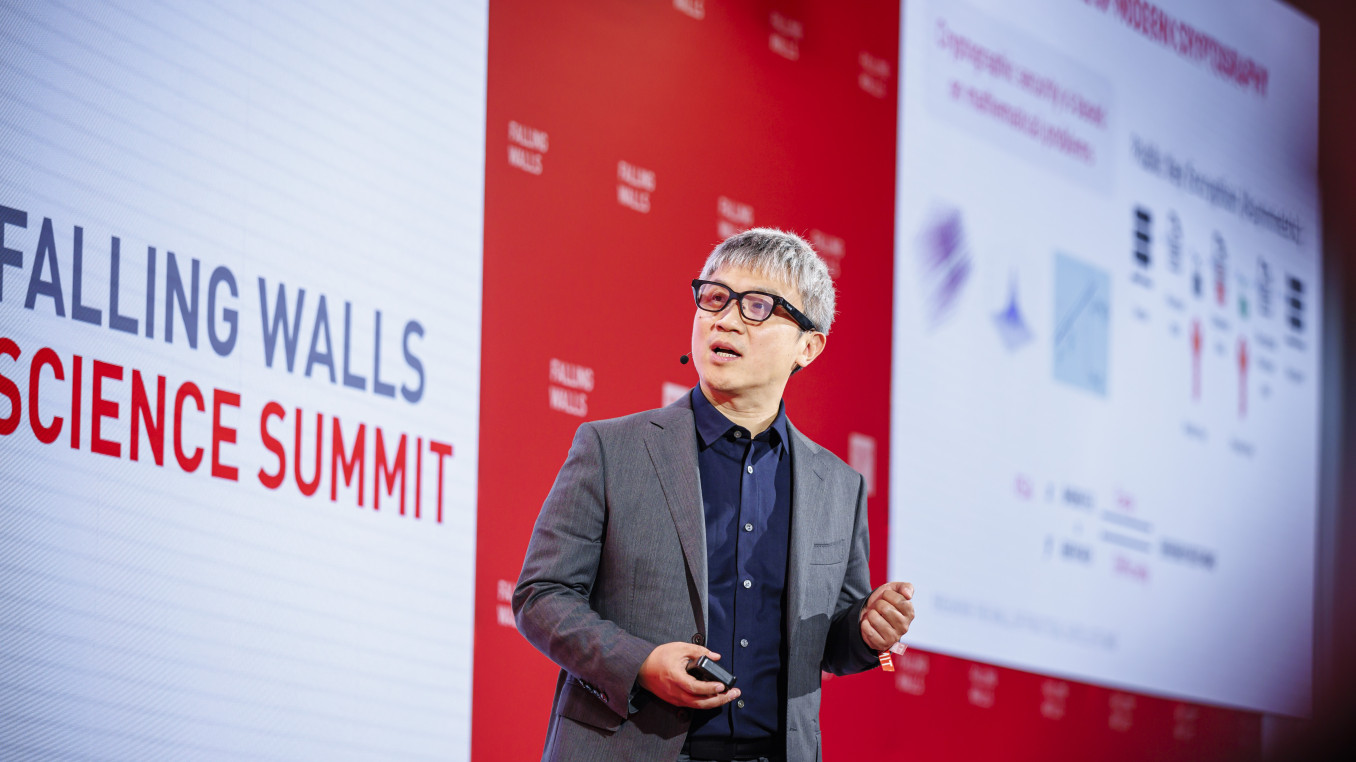
Amir Safavi-Naeini is a Stanford Associate Professor of Applied Physics and co-founder of Ely Sensor Technologies. A recipient of the Presidential Early Career Award (PECASE) and the Packard, Sloan, and Moore Inventor Fellowships, he pioneers chip-scale quantum devices in thin-film lithium niobate for sensing, communication, and computing -- including the first observation of energy quantization in a mechanical oscillator and low-noise on-chip optical amplification.
Which wall does your research or project break?
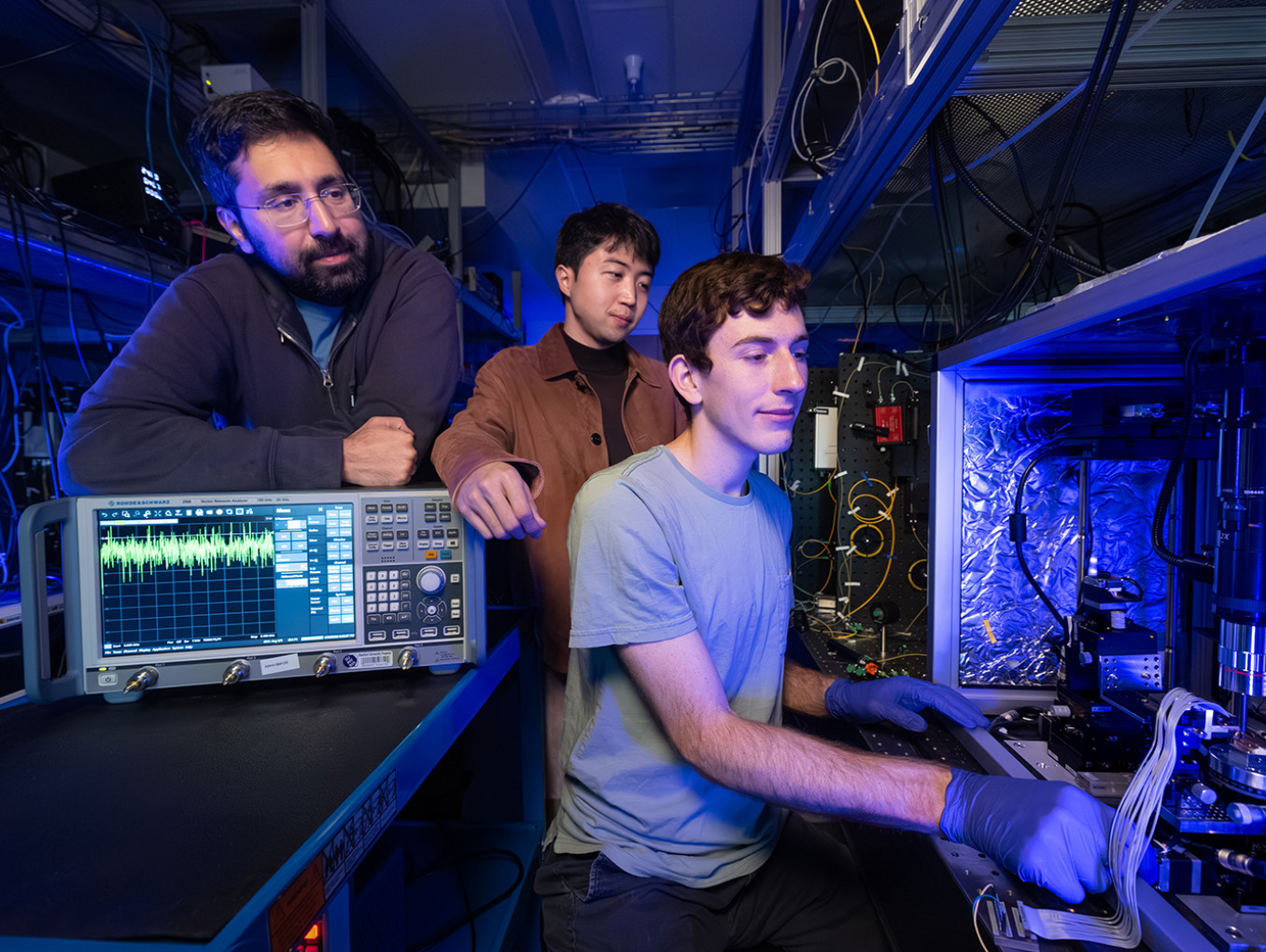
We built a high-performance optical amplifier on a chip. Amplifying light, boosting a weak optical signal without drowning it in noise, is one of the most important operations in modern technology, underpinning the internet, data centers, and precision sensors. Yet the best optical amplifiers have stayed bulky, power-hungry, and hard to integrate. We showed that a millimeter-scale device of thin-film lithium niobate can amplify light efficiently, at low power, and with very little added noise, using the material's own optical nonlinearity, bringing clean optical gain onto the same chips that will run future photonic computers, communication links, and quantum machines.
What is the main goal of your research or project?
Almost every optical technology has to amplify light at some point, but optical gain has resisted miniaturization. The amplifiers that carry the internet, e.g. erbium-doped fiber amplifiers, are meters of specialty fiber; the semiconductor amplifiers that fit on a chip add substantial heat, noise and work only over narrow bands. As photonics moves toward dense integration for AI hardware, sensing, and quantum information, the inability to put clean, efficient, broadband gain directly on a chip has been a fundamental bottleneck.
We have demonstrated a compact, low-power integrated amplifier with gain across a broad wavelength range that adds far less noise than conventional on-chip approaches, in principle approaching the fundamental quantum limit. Built on a scalable, foundry-compatible platform, it can be made alongside the other building blocks of a photonic chip and enable new capabilities and lower power in future datacenters.
What impact does your research or project have on society?
Cheap, low-noise optical gain on a chip has enormous impact across fields: it makes photonic and optical-AI processors more scalable, extends the reach and cuts the energy cost of optical communication, sharpens the optical sensors and spectrometers used in health and environmental monitoring, and supplies the quiet gain quantum technologies need to route photons without corrupting them. It shrinks a function that today fills a rack into something much smaller that can be integrated into a phone.
What advice would you give to young scientists or students interested in pursuing a career in research, or to your younger self starting in science?
Spend real time understanding things deeply. It's tempting to rush toward results, but the core ideas are the ones worth digging into slowly and carefully... just don't lose the big picture while you do it. And learn by doing: take on projects, build things, and let the questions they raise pull you in further. AI tools make this very easy and fun these days.
Most of all, keep asking "why." As a physicist I ask it constantly, and I never stop being amazed that we now have the tools to understand the world around us in a way no generation before us ever could. Try to understand almost everything. My best ideas have almost always come not when I was chasing them, but when I was simply trying to understand something deeply.