Breaking the Wall of Preeclampsia Care with Remote Monitoring
Breaking the Wall of Preeclampsia Care with Remote Monitoring
Global Call 2026 Winner Interview: Women's Impact Award
Anam Shahil-Feroz is an Assistant Professor at Western University, Ontario. Her research program leverages digital health technologies to improve maternal health outcomes among underserved pregnant individuals globally. Working primarily in the Global South, she collaborates with patients, caregivers, researchers, clinicians, and communities to co-design equitable solutions. She has over 75 publications, secured $190K as PI and $2.4M as co-investigator, and received numerous awards for her contributions to maternal health research and innovation.
Which wall does your research or project break?
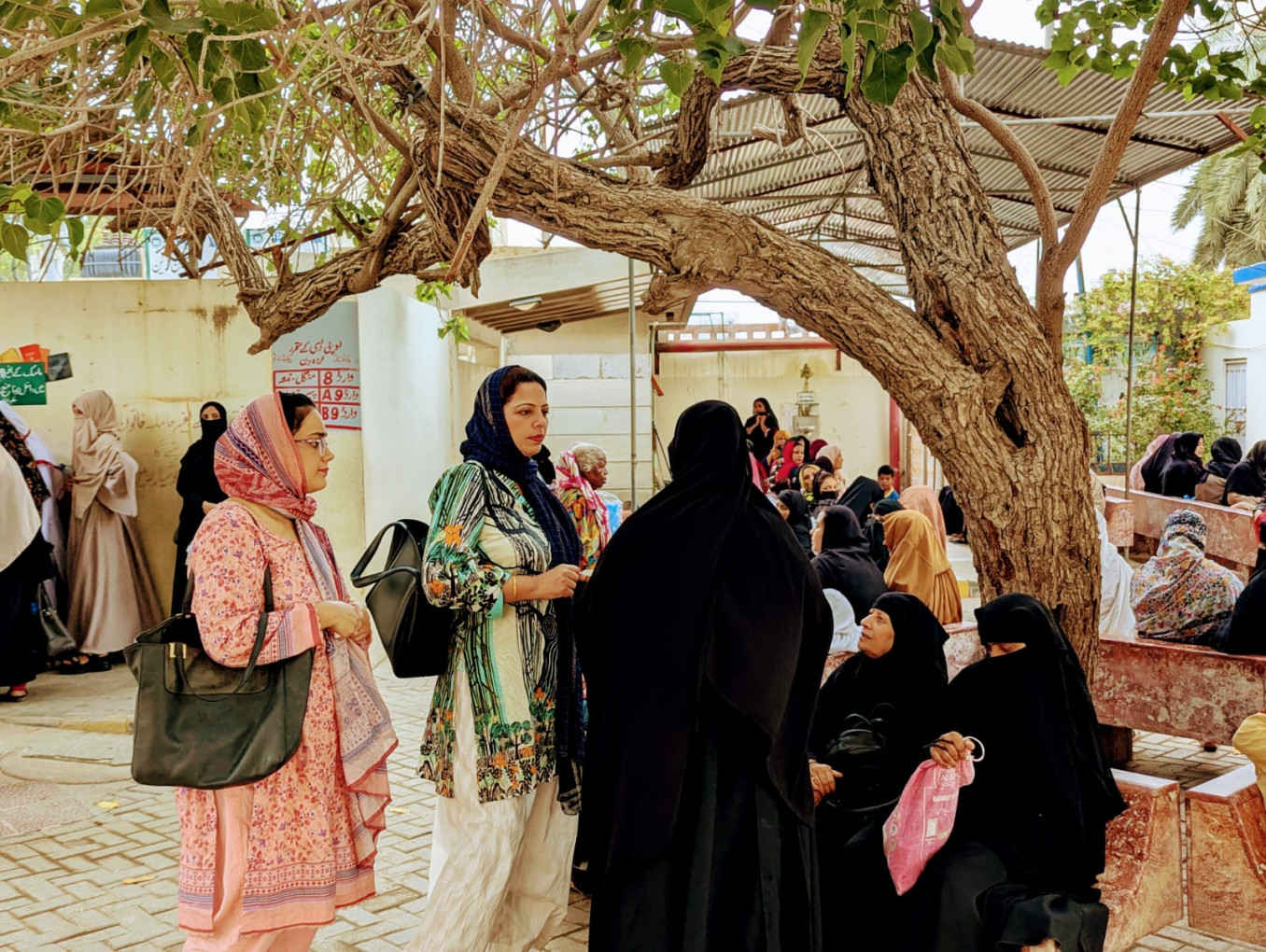
My research seeks to break the wall of inequitable access to life-saving maternal care for pregnant individuals at high risk of preeclampsia. Despite advances in maternal healthcare, preventable maternal deaths and complications remain disproportionately high among underserved populations, particularly in low- and middle-income countries. In Pakistan, many pregnant individuals face gender-based and structural barriers that limit their ability to access timely antenatal care, including restricted mobility, limited decision-making power, financial constraints, and dependence on family members for healthcare access. These barriers are especially dangerous in high-risk pregnancies, where early detection and timely management of complications such as preeclampsia can save lives.
The wall is not only a lack of healthcare resources—it is a system that often requires pregnant individuals to overcome significant social, economic, and geographic barriers before receiving care. For many living in underserved communities, reaching a healthcare facility requires long travel, financial costs, and support from family members. As a result, symptoms may be recognized too late, and opportunities for early intervention may be missed.
My research breaks this wall through Raabta, a culturally tailored, mobile-based telemonitoring program designed to bring essential elements of high-risk pregnancy care closer to individuals’ homes. Raabta enables pregnant individuals to monitor their blood pressure and symptoms using a mobile application while allowing healthcare providers to remotely review information and support timely clinical decision-making. By shifting care from a facility-dependent model to continuous, home-based monitoring, Raabta reduces barriers created by distance, limited mobility, and unequal access to healthcare services.
Importantly, Raabta was not developed as a technology imposed on communities; it was co-designed with the people it aims to serve. Pregnant individuals, caregivers, and healthcare providers were engaged throughout the research process to ensure that the intervention reflected their realities, needs, and preferences. The program incorporates Urdu-language interfaces, simplified visual features, traffic-light risk alerts, and voice-based notifications to support individuals with varying levels of health and digital literacy.
Breaking this wall is about more than introducing a digital health tool. It is about transforming maternal healthcare into a more equitable, accessible, and responsive system where every pregnant individual—regardless of geography, socioeconomic status, or social circumstances—has the opportunity for a safe pregnancy. Through Raabta, my research aims to empower underserved pregnant individuals, strengthen self-care agency, and contribute to a future where preventable maternal complications are identified earlier and managed more effectively.
What is the main goal of your research or project?
The main goal of this research is to transform high-risk pregnancy care in Pakistan by developing and evaluating an equitable, culturally responsive digital health solution that empowers pregnant individuals and enables timely clinical support. Specifically, this project aims to strengthen self-care agency among pregnant individuals at high risk of preeclampsia by providing accessible tools for monitoring blood pressure and symptoms from home while connecting them with healthcare providers for timely decision-making.
To achieve this goal, the project developed Raabta, a mobile-based telemonitoring program co-designed with pregnant individuals, caregivers, and healthcare providers. Unlike traditional models of maternal care that rely primarily on facility-based visits, Raabta enables continuous monitoring between appointments through a patient-facing mobile application and a clinician-facing dashboard. The program was designed to address real-world challenges faced by underserved communities, including limited mobility, geographic barriers, low health literacy, and unequal access to healthcare resources.
Through a participatory research approach, this program of work explored community needs, developed and tested the Raabta system, and evaluated its feasibility within a public-sector hospital setting in Pakistan. The research goal extends beyond creating a digital tool; it aims to establish a scalable model of maternal healthcare that is accessible, acceptable, and responsive to the needs of underserved pregnant individuals.
Ultimately, this research seeks to generate evidence for integrating remote monitoring into maternal healthcare systems in low-resource settings, with the long-term goal of reducing preventable maternal and neonatal complications associated with preeclampsia and advancing more equitable pathways to safe motherhood.
What impact does your research or project have on society?
This research has the potential to transform maternal healthcare by addressing gender-based and structural inequities that prevent underserved pregnant individuals from accessing timely, high-quality care. In Pakistan, pregnant individuals—particularly those at high risk of preeclampsia—often face barriers related to restricted mobility, limited decision-making autonomy, financial constraints, and unequal access to healthcare resources. These barriers can delay recognition and management of life-threatening pregnancy complications. The Raabta program directly addresses these inequities by bringing essential elements of high-risk pregnancy care closer to individuals’ homes. Through a culturally tailored mobile-based telemonitoring platform, pregnant individuals can monitor blood pressure and symptoms remotely while healthcare providers receive timely information to support clinical decision-making. This approach shifts maternal care from a reactive, facility-dependent model toward proactive, continuous, and patient-centred care. Early findings from Raabta have demonstrated promising impacts on the accessibility, feasibility, and acceptability of digital maternal healthcare among underserved pregnant individuals. Participants have reported that remote monitoring provides greater convenience by reducing the need for frequent hospital visits solely for blood pressure assessment and routine monitoring. By minimizing travel requirements, the program has the potential to reduce transportation expenses, time away from household responsibilities, and reliance on caregivers for accessing care. For families who often travel long distances to tertiary hospitals, this represents a meaningful reduction in financial and logistical burden. Importantly, Raabta may help address one of the greatest challenges in high-risk pregnancy care: delays in recognizing and responding to complications. By enabling regular home-based monitoring and communication with healthcare providers, the program supports earlier identification of concerning changes, timely clinical guidance, and potentially fewer avoidable emergency presentations. These benefits are particularly important for communities where geographic and socioeconomic barriers limit timely access to healthcare. A key societal contribution of this work is that Raabta was developed with communities rather than for communities. Pregnant individuals, caregivers, and healthcare providers shaped the intervention through participatory research, ensuring that it reflected local needs and realities. Features such as Urdu-language interfaces, low-literacy visual tools, and accessible messaging were incorporated to promote inclusion.
What advice would you give to young scientists or students interested in pursuing a career in research, or to your younger self starting in science?
I would tell young scientists to stay connected to the reason they entered research in the first place. A research career is not only about publications, funding, or recognition; it is about asking meaningful questions and using knowledge to improve people’s lives.
To my younger self, I would say: do not underestimate how your lived experiences can shape your science. Growing up as a Pakistani woman, I witnessed how social and cultural factors influence women’s opportunities, autonomy, and access to healthcare. Later, as a nurse, I saw pregnant women experience preventable complications because of barriers that extended beyond clinical care. These experiences made me realize that improving maternal health requires more than medical knowledge—it requires understanding the social realities that shape women’s ability to access care and make decisions about their health.
Those experiences became the foundation of my research journey. They motivated me to explore how digital health solutions could support pregnant individuals, particularly those who face barriers to timely and equitable care. Over time, I learned that the most impactful research is not created by working in isolation, but by listening to communities, building partnerships, and designing solutions together.
I would also remind young researchers that setbacks are a normal part of science. There will be rejected grants, unsuccessful applications, critical reviews, and moments of self-doubt. I have experienced these challenges throughout my own journey. However, these moments have shaped me as a researcher and helped me become more resilient, reflective, and open to learning. Even difficult feedback, whether on research proposals, publications, or teaching, can become an opportunity to improve.
Find mentors who believe in your potential, surround yourself with people who challenge your thinking, and do not be afraid to ask difficult questions. Your career may not always follow a predictable path, but every experience contributes to the scientist you become.
Most importantly, remember that science is a privilege and a responsibility. The purpose of our work should be to leave this world a little better than we found it—to create knowledge that matters, amplify voices that are often overlooked, and develop solutions that improve lives.
What inspired you to be in the profession you are today?
My journey into research began with witnessing how social circumstances can shape health opportunities. Growing up as a Pakistani woman, I saw how gender-based barriers could influence women’s autonomy, mobility, and access to essential resources. These experiences shaped my belief that improving health requires addressing not only medical challenges, but also the social systems that create inequities.
As a nurse, I witnessed pregnant women experience preventable complications because of delayed access to care, limited resources, and structural barriers. These moments inspired me to move beyond providing care at the bedside and pursue research that could transform how healthcare is designed and delivered.
Today, my work focuses on developing equitable digital health solutions that empower underserved pregnant individuals and strengthen maternal healthcare systems. What inspires me most is the opportunity to turn the experiences of communities into meaningful research and solutions that improve lives.
I believe science is not only about generating knowledge—it is about using that knowledge to create a more compassionate, inclusive, and healthier world. My goal is to ensure that where someone is born, their gender, or their social circumstances do not determine their opportunity for safe and dignified care.
What is one surprising fact about your research or project that people might not know?
One surprising fact about Raabta is that the biggest innovation was not the technology itself—it was realizing that technology alone cannot solve healthcare inequities. The real breakthrough was designing a model of care around the technology that reflected the everyday realities of pregnant individuals in Pakistan.
Early in the project, we learned that barriers to maternal healthcare were not only related to access to hospitals or information. They were shaped by social and cultural factors, including limited mobility, financial challenges, dependence on family members for healthcare decisions, and difficulties accessing timely care. Therefore, we did not simply create an app; we co-designed a support system that could work within these realities.
Raabta was tailored specifically for the community it was designed to serve. We incorporated Urdu-language content, voice messages for women with varying literacy levels, simple images and visual cues, and a traffic-light alert system to make monitoring blood pressure and symptoms easier to understand. The program also connected pregnant individuals with healthcare providers through a clinician dashboard, ensuring that monitoring at home was supported by timely clinical oversight.
The lesson we learned was that successful digital health solutions are not created by technology alone. They require listening to communities, understanding their challenges, and building solutions that fit into people’s lives.
What’s the most exciting moment you've experienced over the course of your research or project?
The most exciting moment in this journey has been seeing an idea that started as a research question become something that could genuinely support pregnant individuals and their families. I still remember the feeling of seeing women engage with Raabta and realizing that something we had designed by listening to their experiences was making their care journey a little easier.
Seeing pregnant individuals use simple features like Urdu messages, voice reminders, and visual alerts to monitor their health from home showed me the real value of designing technology around people’s lives.