Breaking the Wall of AI-Engineered Phages
Breaking the Wall of AI-Engineered Phages
Global Call 2026 Finalist Interview: Life Sciences
Brian Hi is an Assistant Professor of Chemical Engineering at Stanford University, the Dieter Schwarz Foundation Stanford Data Science Faculty Fellow, and an Innovation Investigator at Arc Institute, where his group conducts research at the intersection of biology and AI. He was previously a Stanford Science Fellow in the Stanford University School of Medicine, a researcher at Meta AI, and completed his Ph.D. at MIT CSAIL.
Which wall does your research or project break?
For decades, the design of biology has been confined to individual molecules, such as a single protein, a single gene, a short regulatory element. Even the most powerful AI models for biology operate at this scale, as they can propose a better enzyme or a tighter-binding antibody. However, a genome is not a bag of independent parts. It is a tightly interwoven program in which genes, regulatory sequences, and structural elements must function together, at the right time and in the right amounts, for the whole to replicate and survive. The wall our work breaks is the barrier between designing parts and designing whole functional genomes.
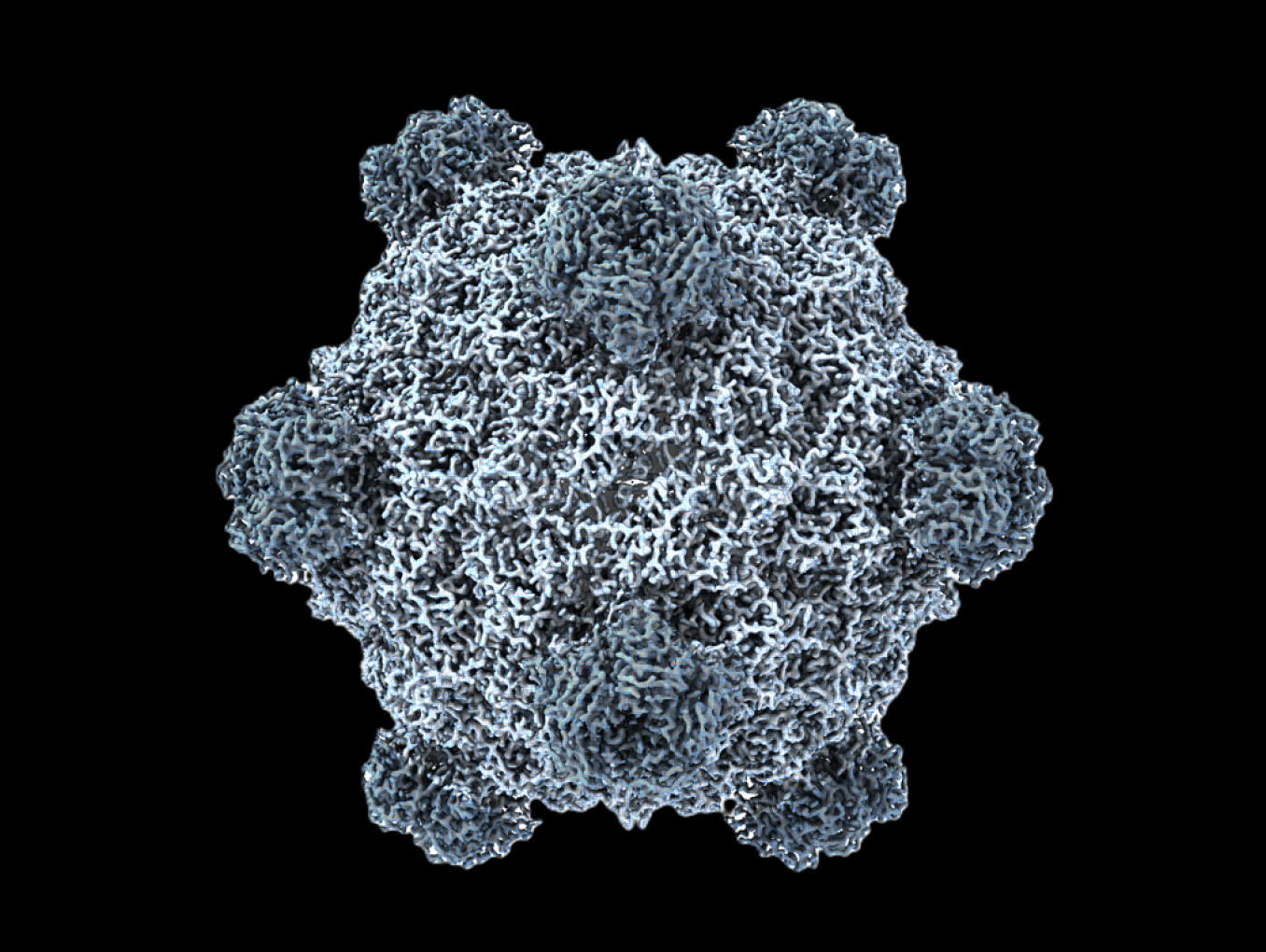
Bacteriophages, viruses that infect bacteria, are the ideal system to overcome this wall. While their genomes are compact, making them easy to be tested in the lab, this compactness hides enormous complexity, with overlapping genes, densely packed regulatory logic, and long-range interactions that make rational, part-by-part engineering intractable. Traditional phage engineering modifies naturally occurring phages one edit at a time, which is a slow, largely trial-and-error process. Designing a coherent phage genome from scratch, rather than editing an existing one, has simply not been possible.
Our project uses genome language models -- AI systems trained on the evolutionary record of millions of natural sequences -- to generate entire bacteriophage genomes computationally, and then validates in the laboratory that these AI-designed genomes give rise to functional phages that can rapidly overcome bacterial resistance. This closes the loop from generative model to whole-genome design, moving generative biology past the single molecule and toward the design of complete biological systems, a foundation for programming biology as deliberately as we now program computers.
What is the main goal of your research or project?
The main goal of our project is to establish that artificial intelligence can design functional life at the scale of whole genomes, and to turn that capability into a practical platform for creating bacteriophages that combat antibiotic-resistant infections.
There are two intertwined ambitions. The first is scientific, namely to show that genome language models trained on the vast diversity of natural sequences have learned the underlying grammar of biology deeply enough to write new, coherent genomes. The models do this not by copying nature, but by generating novel sequences that fold, express, and replicate. Demonstrating this in bacteriophages, where a designed genome can be tested end-to-end by asking whether it produces phages that actually infect and kill their bacterial targets, provides the clearest possible proof that generative design has reached genome scale.
The second ambition is translational. Phages can specifically target certain strains of bacteria, and they have long been recognized as a promising alternative to antibiotics, but finding or engineering the right phage for a given pathogen has been a persistent bottleneck. If we can generate and tailor phage genomes on demand, we can design phages against specific drug-resistant bacteria, diversify them to stay ahead of bacterial resistance, and iterate far faster than natural discovery allows. Our aim is to build a generative pipeline that takes a target pathogen as input and produces candidate therapeutic phages as output.
Beyond phages, the broader goal is to lay the groundwork for designing biological systems of increasing size and sophistication with the reliability and intentionality we associate with engineering. Phages are the proving ground, but the same principles point toward programmable biology for medicine, biomanufacturing, and beyond, a future in which we design complex systems to solve human problems rather than only discovering them by chance.
What impact does your research or project have on society?
Antimicrobial resistance is one of the defining health threats of our century. The most comprehensive global analysis to date, from the Global Research on Antimicrobial Resistance (GRAM) project, attributes more than one million deaths each year directly to drug-resistant bacterial infections, and forecasts that AMR could directly cause more than 39 million deaths between 2025 and 2050. Bacteriophages offer a fundamentally different line of defense. Because a phage kills bacteria through mechanisms unrelated to how antibiotics work, it can remain effective against strains that have defeated every available drug. Because phages are highly specific, they can also target a dangerous pathogen while sparing the beneficial microbiome that broad-spectrum antibiotics devastate. And because phages evolve alongside bacteria, they can, in principle, be more resilient as evolutionary resistance emerges. By making phage genomes designable, our work aims to improve the ability to design new phages. A generative approach could compress what now takes months or years of generating new phage diversity into a days-long pipeline for producing custom phages for a resistant infection and continually diversifying them to counter bacterial escape. This has direct implications for patients facing untreatable infections today, and longer-term implications for how the world responds to outbreaks and to the relentless evolution of bacterial resistance. More broadly, showing that AI can design functional genomes changes what is possible in biotechnology, providing a template for other novel therapeutics or sustainable manufacturing via generative design rather than relying on serendipitous discovery. Our hope is that programmable biology becomes a durable tool for protecting human health against evolving threats.
What advice would you give to young scientists or students interested in pursuing a career in research, or to your younger self starting in science?
Work on problems that feel almost unreasonably ambitious, but insist on being able to test whether you are right and to ground your work in reality. The most exciting work lives at the intersection of a bold question and a concrete experiment, for example, when we asked if we could design complete genomes and then actually check, in the lab, whether the designed genome was real.
Second, work at the frontier is incredibly exciting, even if it may seem early and premature to a lot of people. Some of the most important directions by definition seem not useful to entrenched people in the field at first, and the people best positioned to pursue them are often those early enough in their careers to not yet know what is "supposed" to be impossible.
Third, science is increasingly interdisciplinary, for example, between machine learning and molecular biology, or between computation and the wet lab. Learn across multiple fields enough to speak its language and respect its knowledge, which will provide you with the opportunity to make new connections that other people miss.